Springs · North Middlesex
Garage Door Roller Replacement in North Middlesex
Every morning the door announces itself: a rattle on the way up, a grinding squeal on the way down, loud enough that the neighbours know when you leave.
In plain words
Winter is hard on rollers. Slush carried in on the tires freezes in the foot of the track, wheels skid across the ice instead of turning and wear flat spots, and salt eats into steel stems and bearings at the lowest positions first. By spring a door that was merely a little noisy is juddering. Roller replacement after a hard season puts fresh wheels and bearings under the door, and the technician clears the salt from the lower track and inspects the bottom brackets and cables that share the same wet corner, so the door heads into the next winter in better shape.
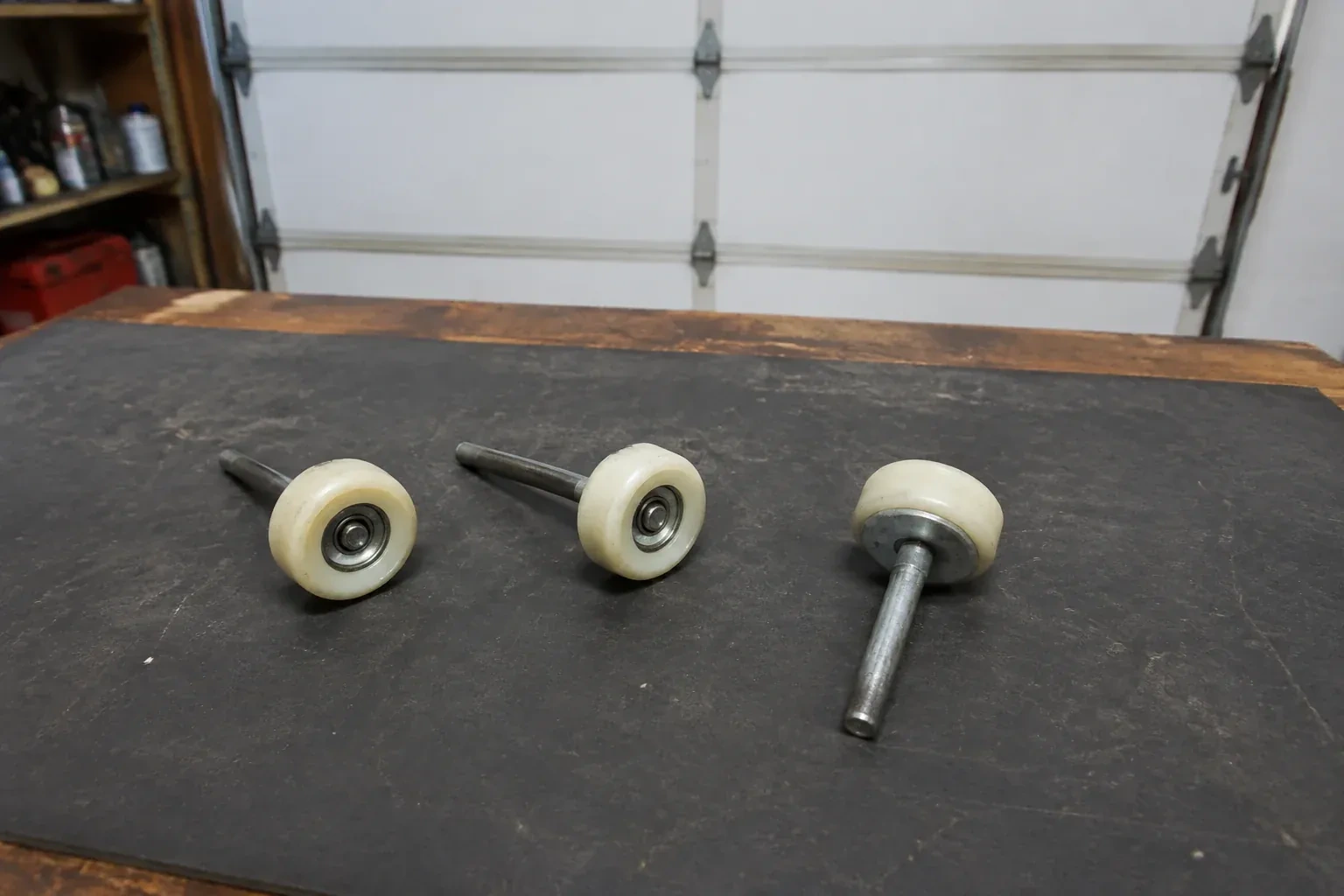
How the visit goesThe door is the one the builder installed and has never had a part changed. It works, but it clatters, the wheels are hard white plastic with no bearings in them, and the opener sounds like it is labouring more each season.
Garage Door Roller Replacement
How the visit goes
The hardware the rollers live in
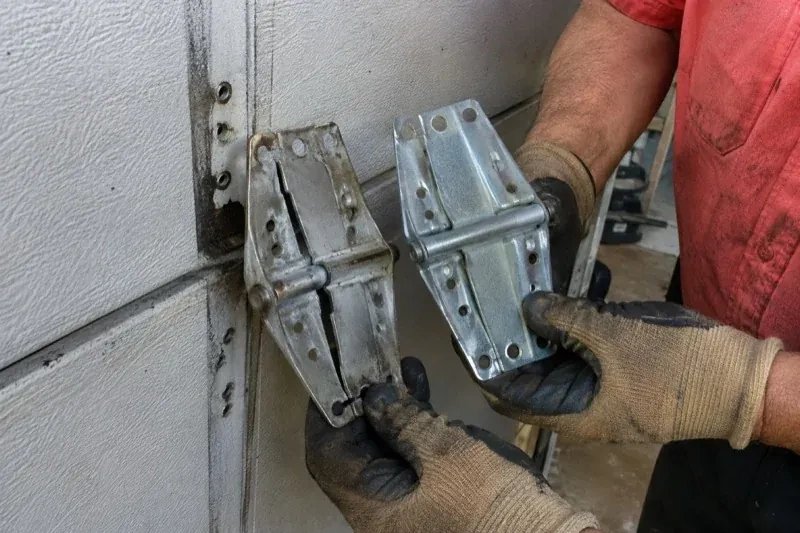
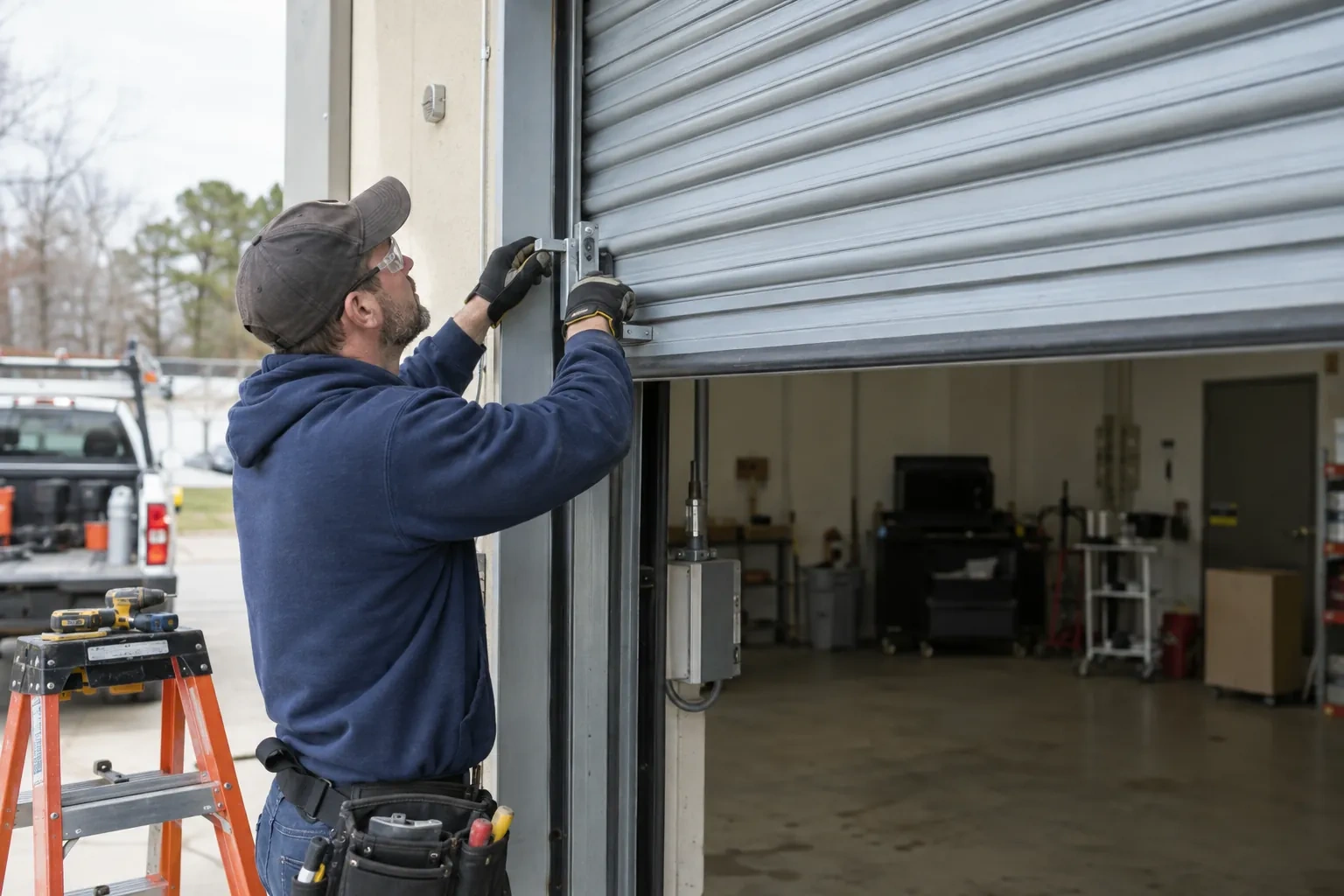
A roller is only as good as the bracket that holds it. The technician inspects every hinge for cracks at the knuckle, elongated holes and loose or missing fasteners, checks that the top fixtures still adjust and hold their setting, and looks over the bottom brackets for rust, deformation and the condition of the cable attachment. Jamb brackets and the flag brackets at the top of the vertical track are checked for movement. A door moves more than a thousand times a year and that vibration loosens bolts, so a hinge that has been working loose is often the reason a wheel wore crooked, and it is refastened or replaced as part of the same visit.
Top rollers and the adjustable fixtures
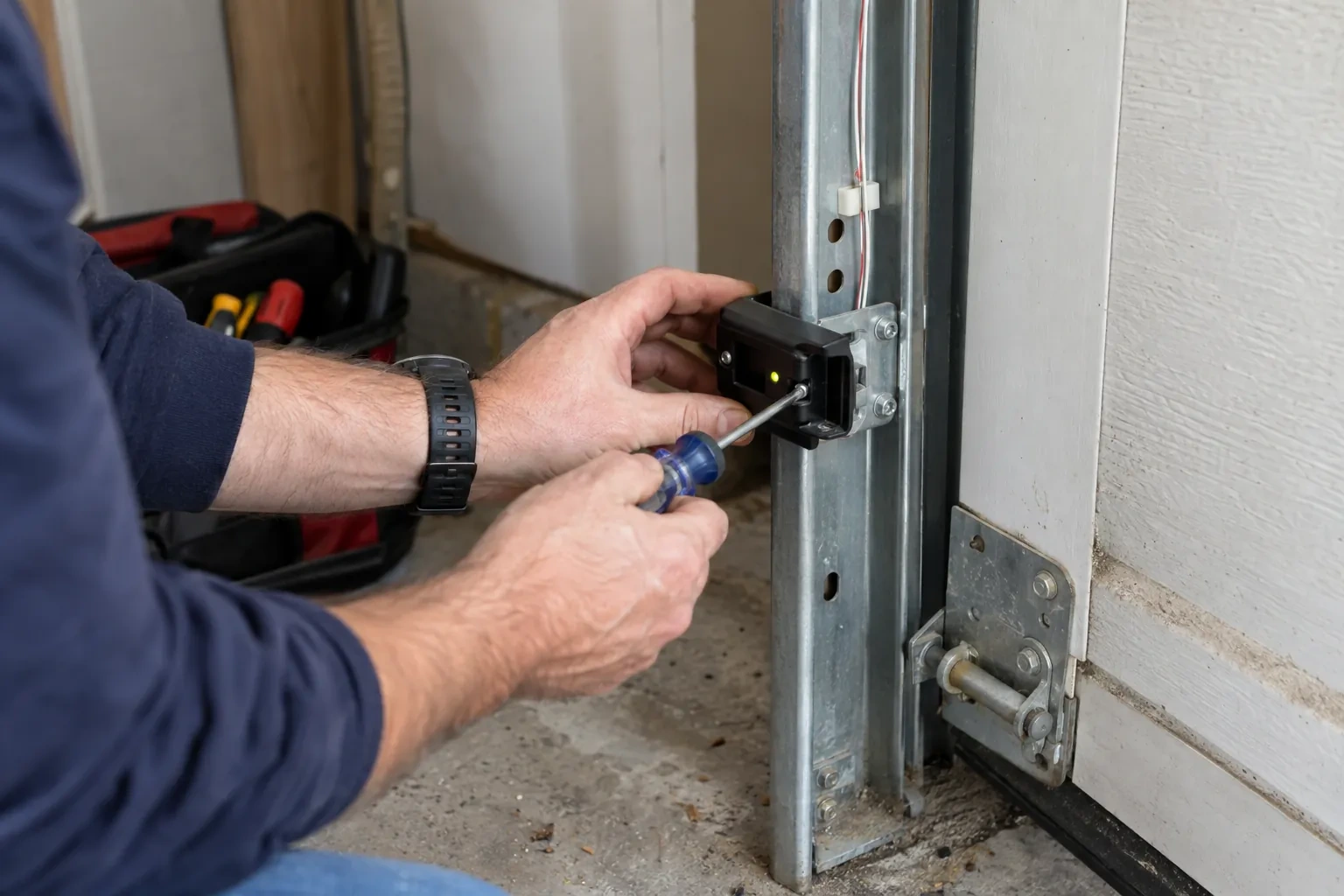
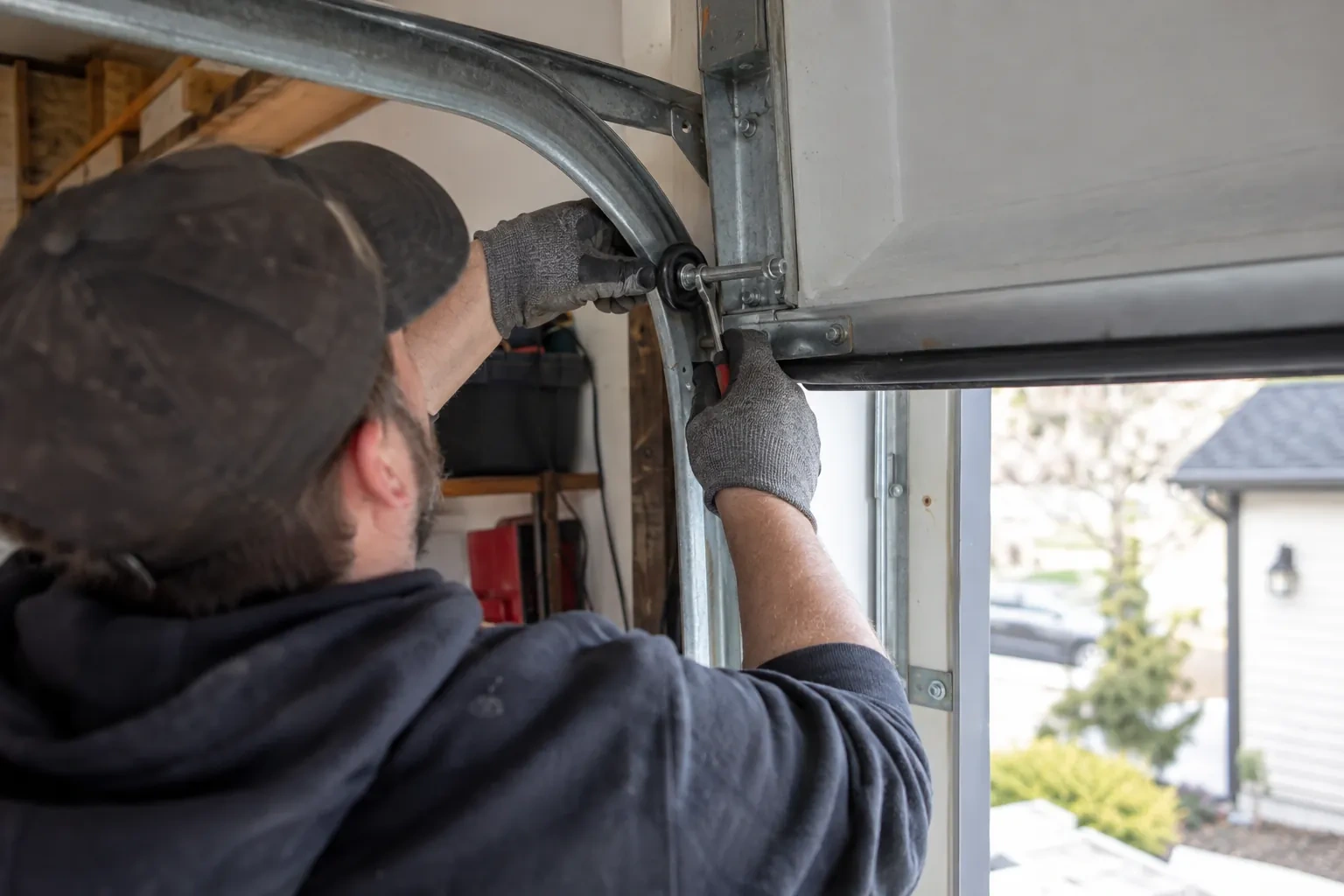
The top rollers sit in fixtures that slide in and out on the top section rather than in fixed hinges. The technician loosens the fixture, swaps the roller and then sets the fixture position with care, because that adjustment is what pushes the top section snug against the header seal when the door closes and keeps the wheel riding in the track rather than binding against it as the door starts to open. On heavy doors the top rollers do the most work of any on the door, so this is also where a higher load rating or a longer stem earns its place.
Keeping salt and slush out of the track
Winter is where roller care pays off. Knock snow and slush off the car before pulling in when you can, and sweep or wipe the foot of the tracks after a heavy salt spell so brine and grit do not sit against the bottom rollers and brackets. If ice forms in the lower track, clear it by hand with warm water and a cloth rather than running the door through it, since wheels that skid across ice ridges wear flat spots. The bottom weather seal should sit fully on the floor; a gap lets meltwater run under the door and into the track.
Garage Door Roller Replacement
In the van
Sealed-bearing nylon rollers
Steel ball-bearing rollers
Track clamps or locking pliers
1-1/2 inch reversal test block
Long-stem rollers for double hinges
Garage Door Roller Replacement
What affects the quote
Track alignment and repair
Realigning jamb brackets, straightening a dented lip or replacing a damaged length of track is separate from the roller work and quoted as such when the inspection finds it.
Door height and high-lift track
Tall doors, and high-lift or follow-the-roof track, put the horizontal run high overhead, so ladder work and the extra sections lengthen the visit.
When the visit is booked
Evening, weekend and holiday calls cost the same amount as a weekday appointment for roller replacement. The technician confirms the exact figure once the rollers, hinges and track have been looked at on site.
What to have ready
- Is the opener straining, reversing partway, or working harder than it used to?
- Is there rust, slush or salt residue in the bottom of the track?
- Where in the travel does the noise, shake or hesitation happen?
Garage Door Roller Replacement: questions
QuestionsWhat is the difference between two-inch and three-inch rollers?
The figure is the wheel diameter, and it has to match the track. Residential sectional doors run on two-inch track and take a two-inch wheel; commercial doors can run on either two-inch or three-inch track, so the wheel is matched to what is actually installed. Wheel size has little to do with noise, which comes from the wheel material and bearings. The technician measures the track and the existing wheel before ordering so the set fits, since a mismatched wheel either jams in the channel or rattles around in it.
What happens during the visit, and do I need to move the car?
The technician needs clear access to both tracks from floor to ceiling, so moving vehicles out and shifting anything stored against the walls near the tracks helps. The visit itself runs in order: the door is watched in motion, every roller and its hardware is inspected, the door's balance is tested, the door is secured and the rollers are changed one position at a time, the track is cleaned and squared, moving parts are lubricated, and the door and opener are tested.
Will new rollers make my door quieter?
Usually, and often dramatically. Rollers are the only part of the door that touches the track, so most of a door's clatter starts there. Moving from worn steel or bare plastic wheels to nylon ball-bearing rollers changes the sound more than any other single part. The rest of the quiet comes from the same visit: hinges lubricated, loose bolts tightened, the track squared so nothing rubs. Springs can still squeak on their own, and the technician can treat those separately.
Related services
- Garage Door Track Repair or ReplacementThe horizontal rail toward the back of the garage sags noticeably.
- Garage Door Cable ReplacementSomeone left the snow shovel leaning in the opening and the door came down on it.
- Torsion Spring ReplacementAfter pulling the red release cord, you tried lifting the door yourself and it would barely leave the floor.