Garage Doors in Adelaide-Metcalfe, OntarioRollers, hingesand the small parts.
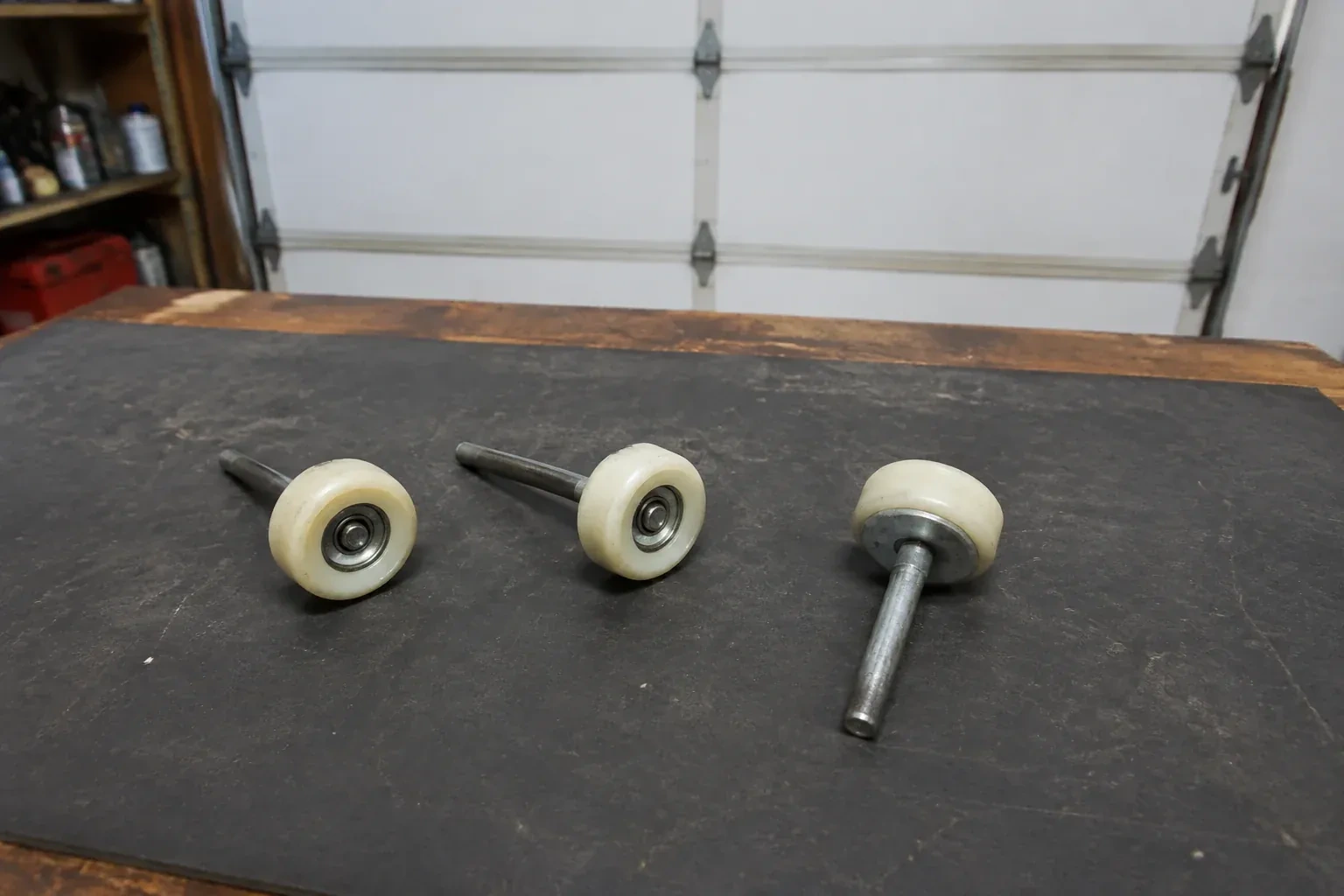
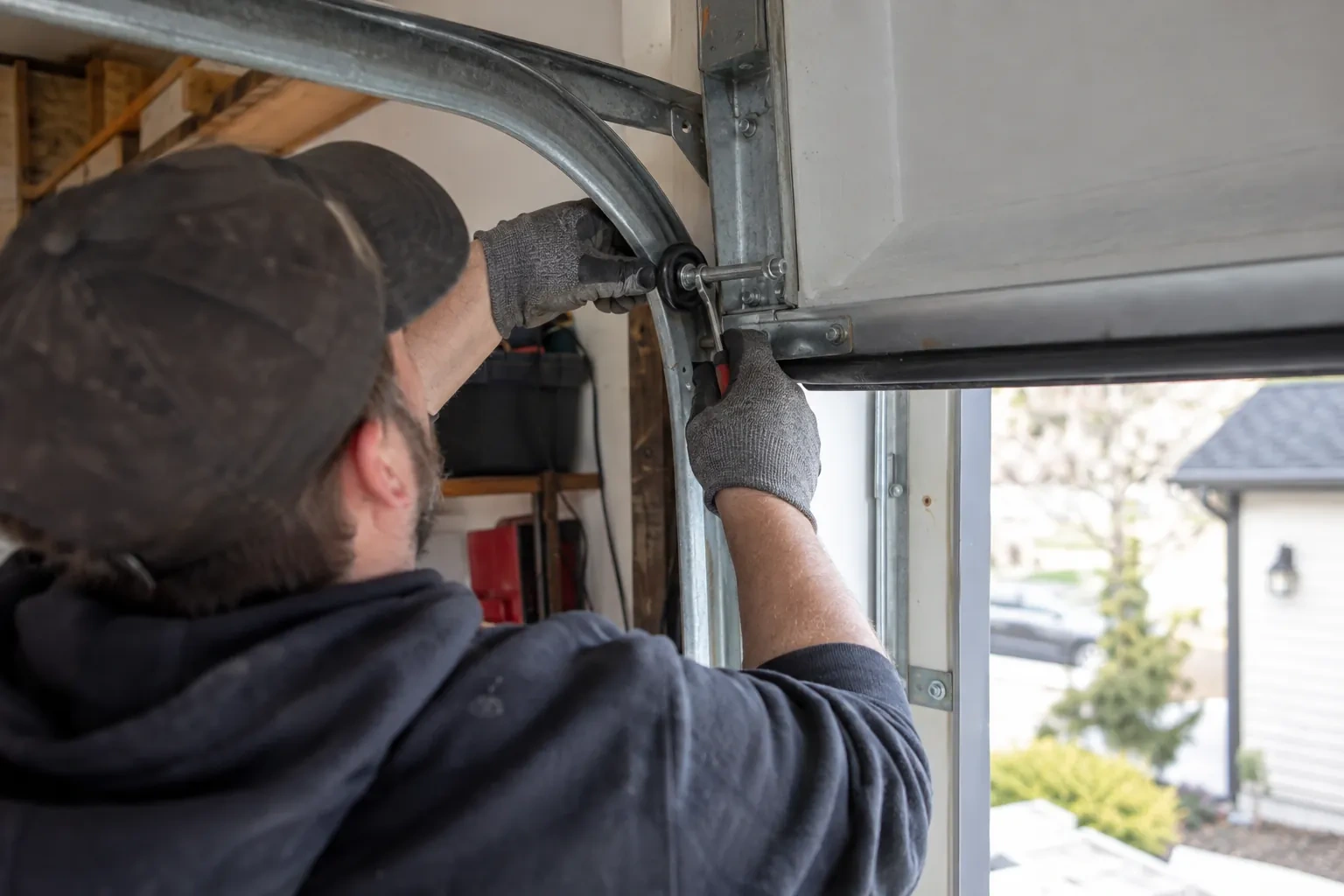
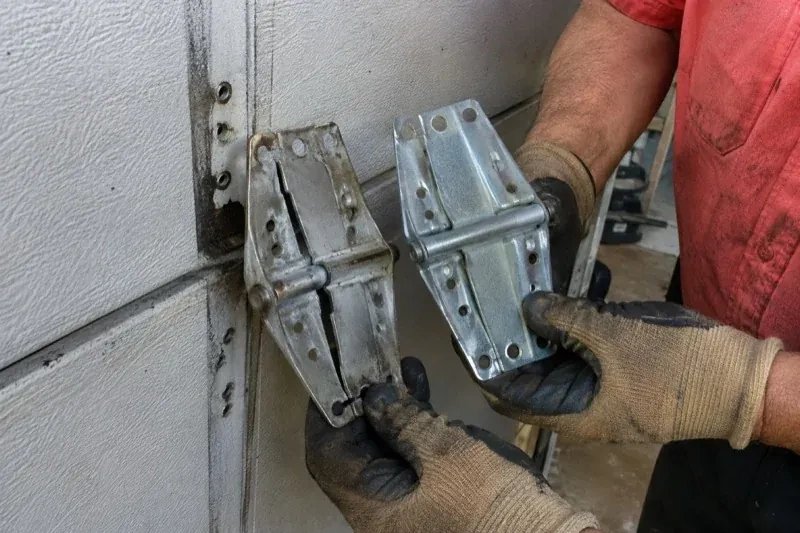
Most of what goes wrong with a garage door in Adelaide-Metcalfe is small: a cracked roller, a hinge with an oval hole, a bearing that dried out. We carry those parts, replace them in sets so wear stays even, and lubricate the rest, which is often all a noisy or sticky door needed. This page also covers Adelaide, Cairngorm, Crathie, Dejong, Kerwood, Keyser, Mullifarry, Napier, Napperton, Wrightmans Corners and Strathroy.
Most of what goes wrong with a garage door in Adelaide-Metcalfe is small: a cracked roller, a hinge with an oval hole, a bearing that dried out. We carry those parts, replace them in sets so wear stays even, and lubricate the rest, which is often all a noisy or sticky door needed. This page also covers Adelaide, Cairngorm, Crathie, Dejong, Kerwood, Keyser, Mullifarry, Napier, Napperton, Wrightmans Corners and Strathroy.
Tuned for the seasons it lives through.
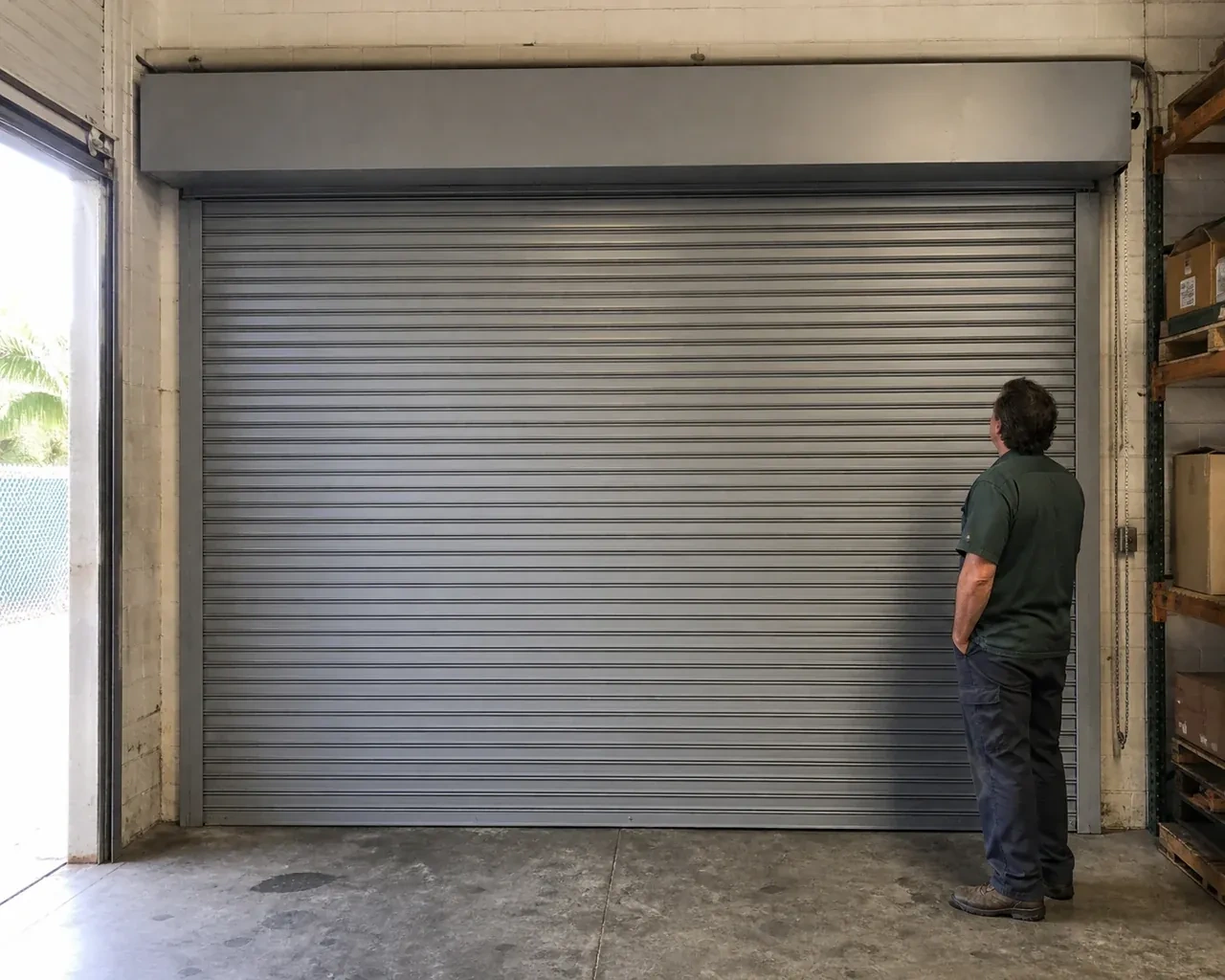
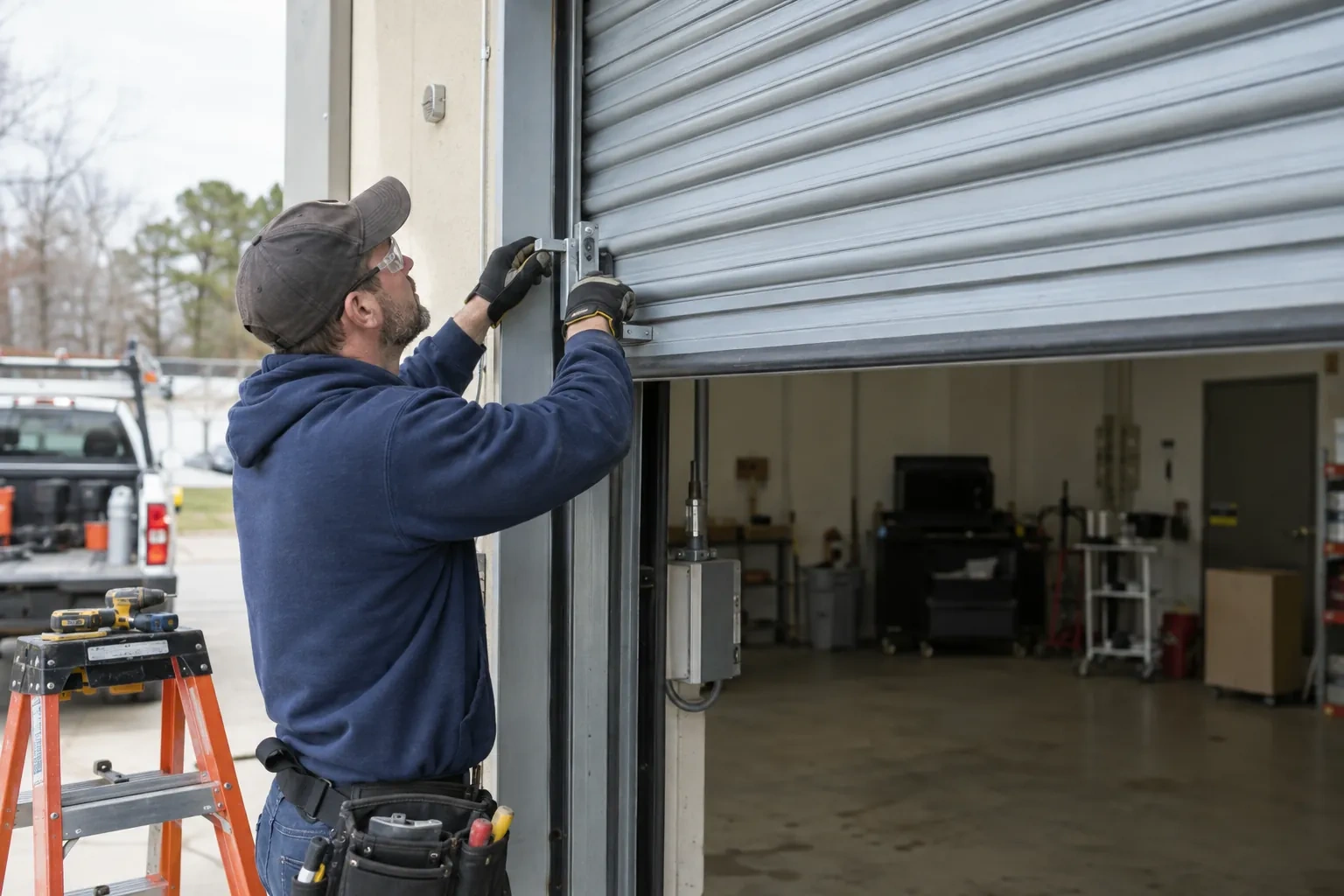
Our commercial customers in Adelaide-Metcalfe run shops, warehouses and service bays that depend on their doors. We set up maintenance visits at intervals that suit the door's cycle count, keep records of the springs and operators on each door, and turn up with the right parts so downtime stays short.
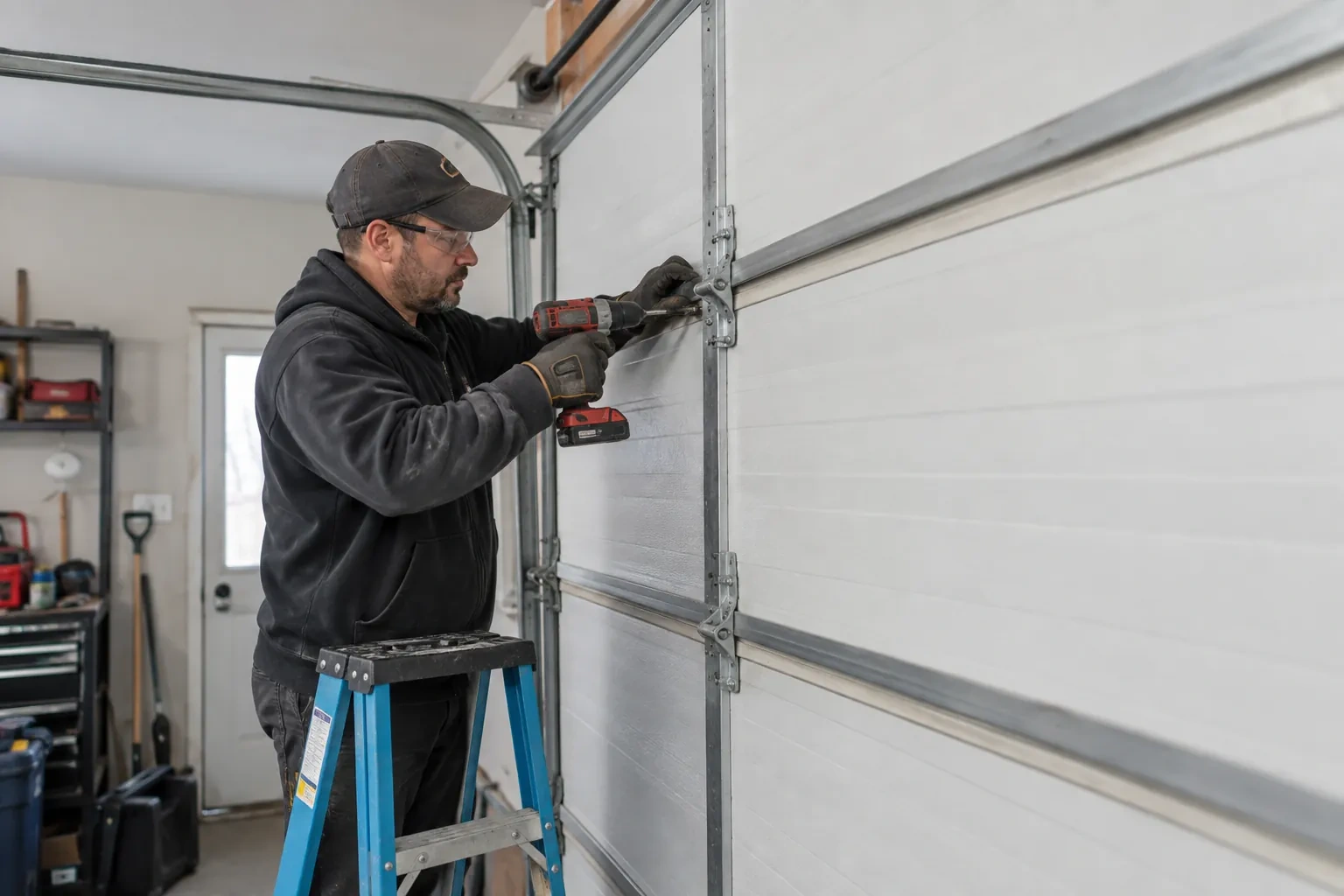
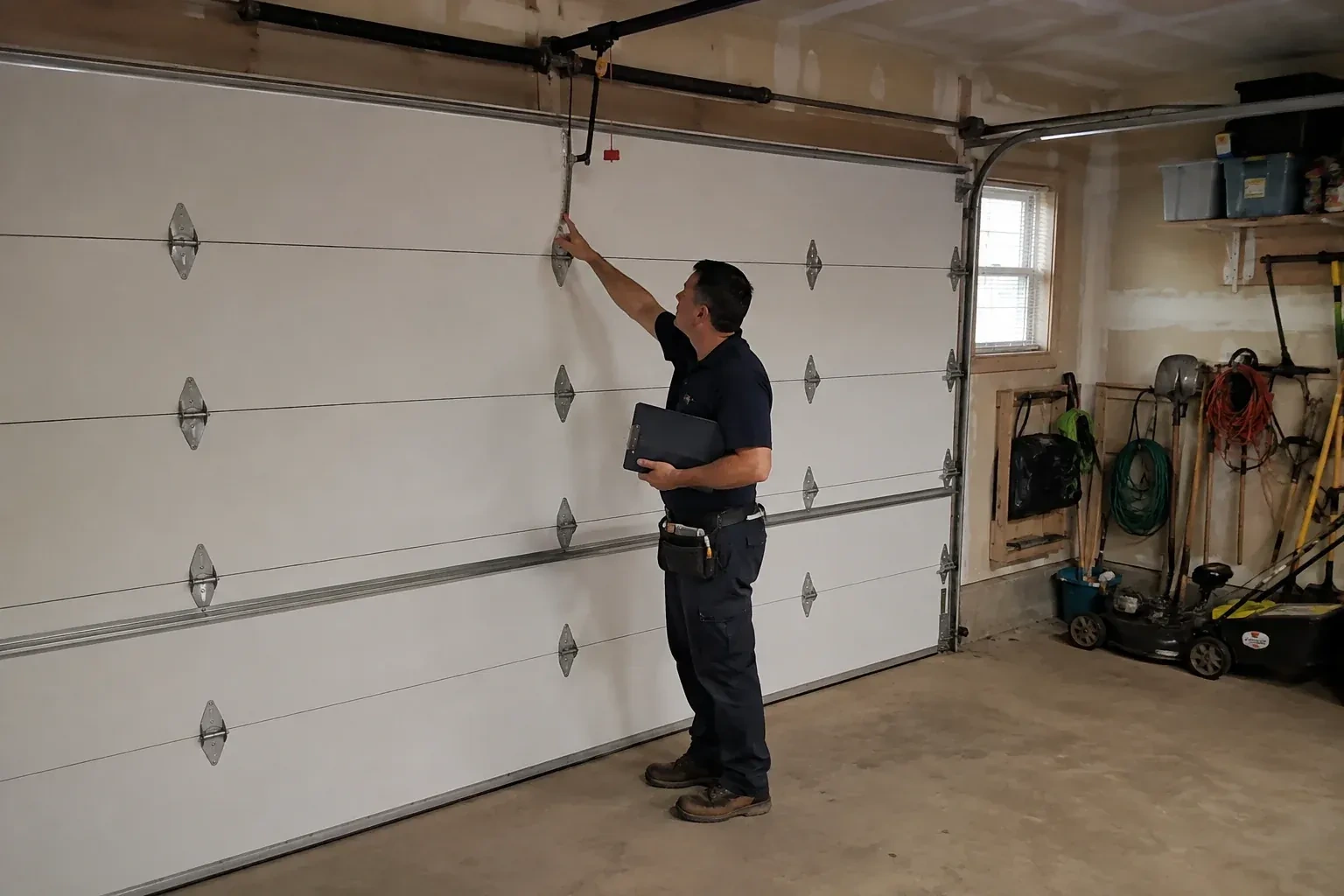
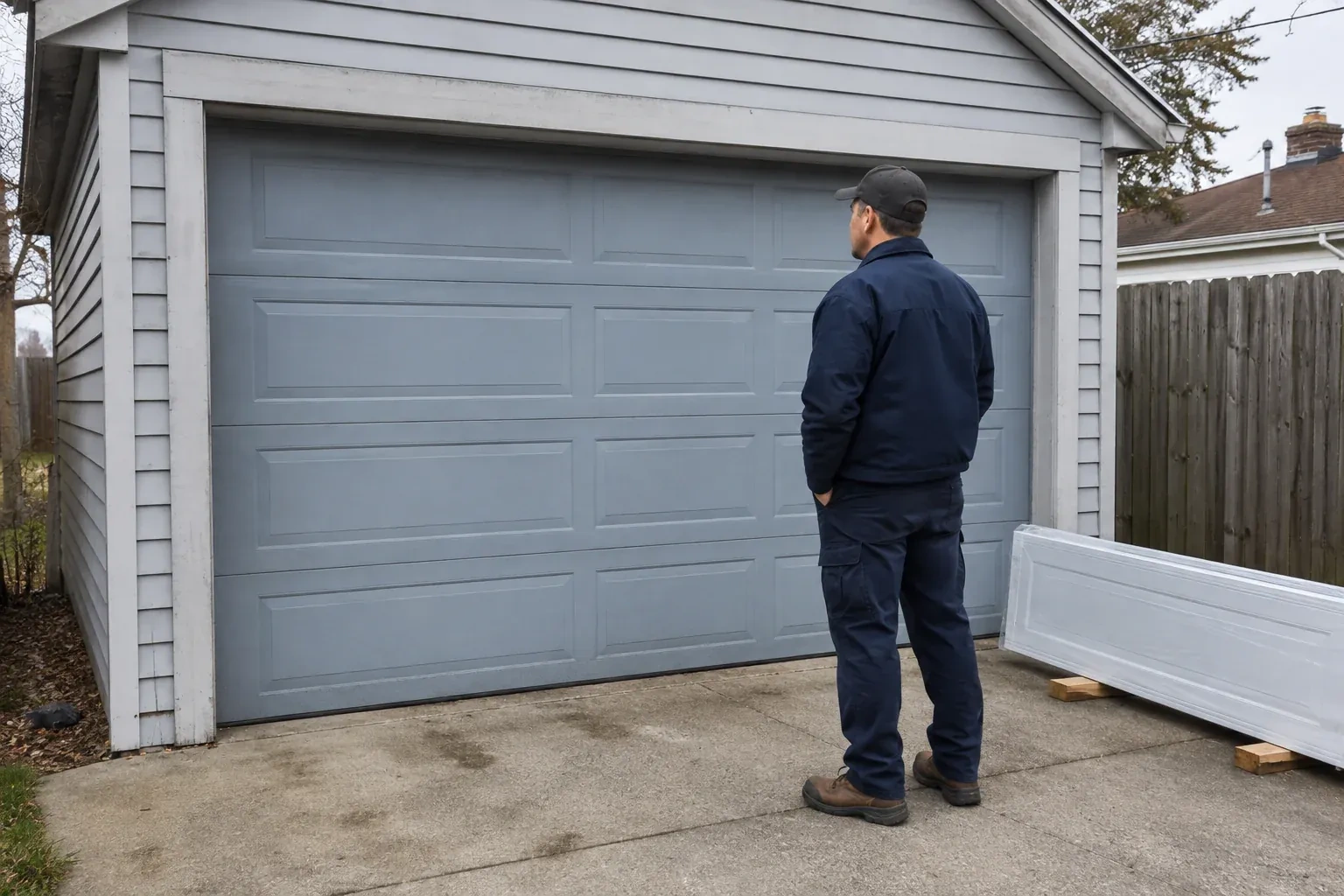
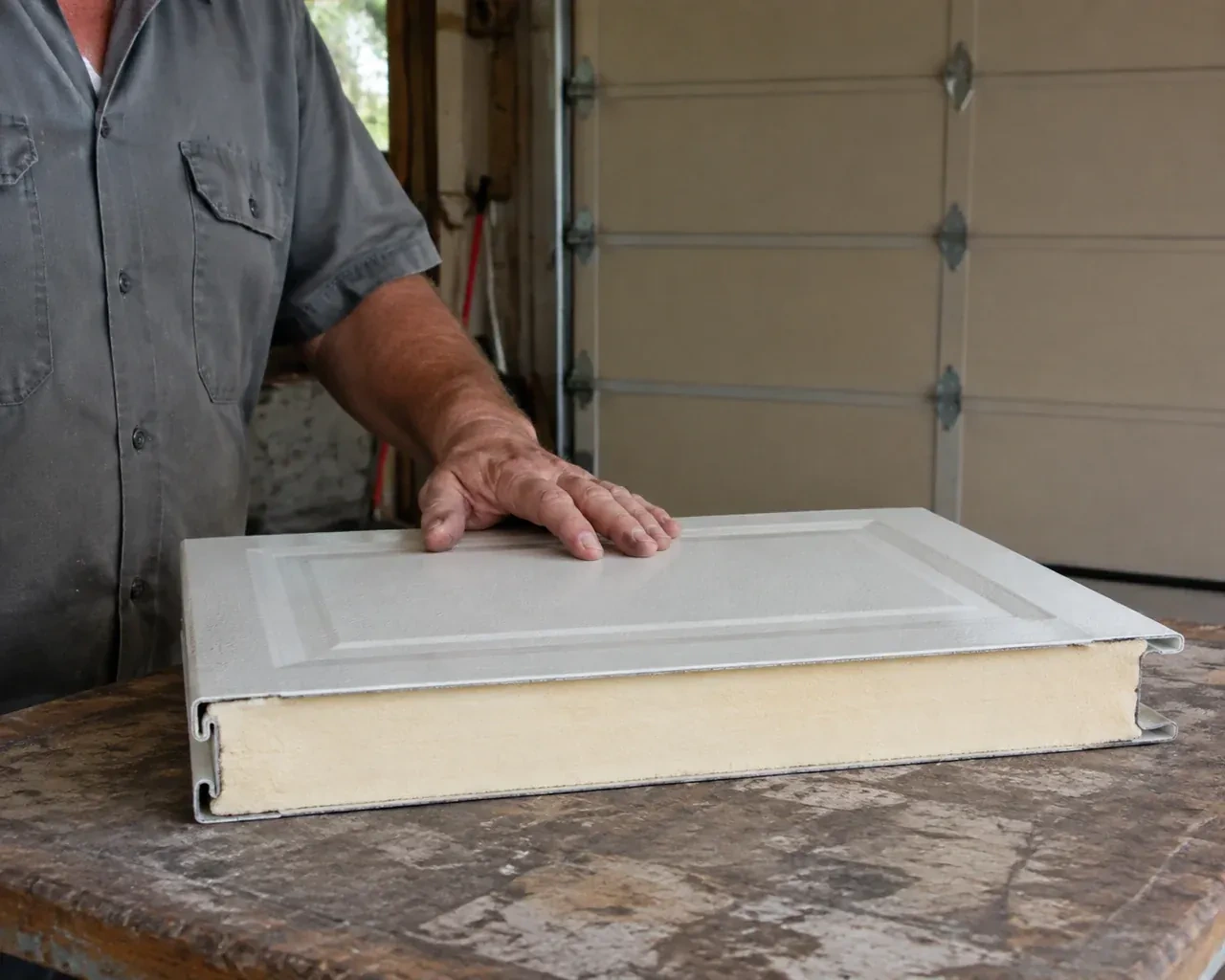
Garage doors in Adelaide-Metcalfe range from original wooden doors on the older streets to insulated steel sectionals on the newer ones, and each style wears in its own way. Our technicians have worked on most of them. We repair springs, cables, rollers, tracks and openers, install new doors and openers, and take the time to explain the choices plainly.
13years in business
24/7open every day
A technician who talks. You hear what we are checking and why, in real time. Ask anything; the explanation is part of the job.
Mess that leaves with us. Debris, packaging and the old spring go with us. Your floor and your car look the same after as before.
Your decision, informed. We put the choices on the table with their pros and cons. Whether to repair, upgrade or replace stays with you.
Call or write about your door in Adelaide-Metcalfe.
Homeowners in Adelaide-Metcalfe can read below about the repairs we make most, the parts we replace, the opener and remote work we do, and how a new door is chosen and installed. Commercial customers will find rolling and sectional door service alongside the residential pages.
About 62% of homes in Adelaide-Metcalfe were built in 1980 or earlier, according to the 2021 Census.
Older homes
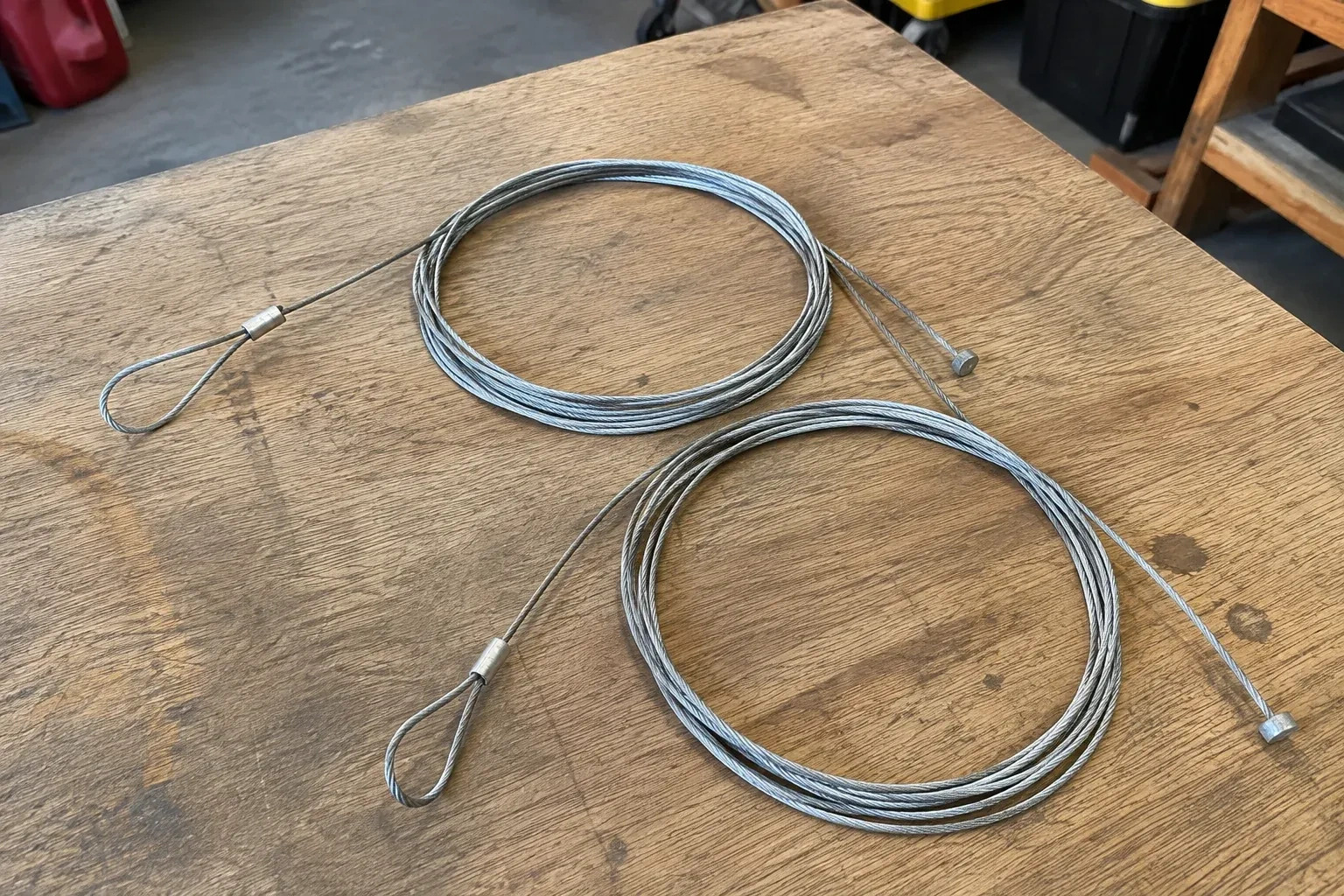
Extension springs are common on older doors, and they should carry a safety cable through the middle so a broken spring is held rather than flung. Adding those cables is a small job the technician checks for and offers on any older door he services.
Single-detached houses make up about 99% of homes in Adelaide-Metcalfe (2021 Census).
Mostly houses
In neighbourhoods of detached homes the garage door usually faces the street and takes up much of the front of the house, so its condition shapes how the whole property looks. A straight, quiet, well-finished door is as much a part of the curb appeal as the front door.
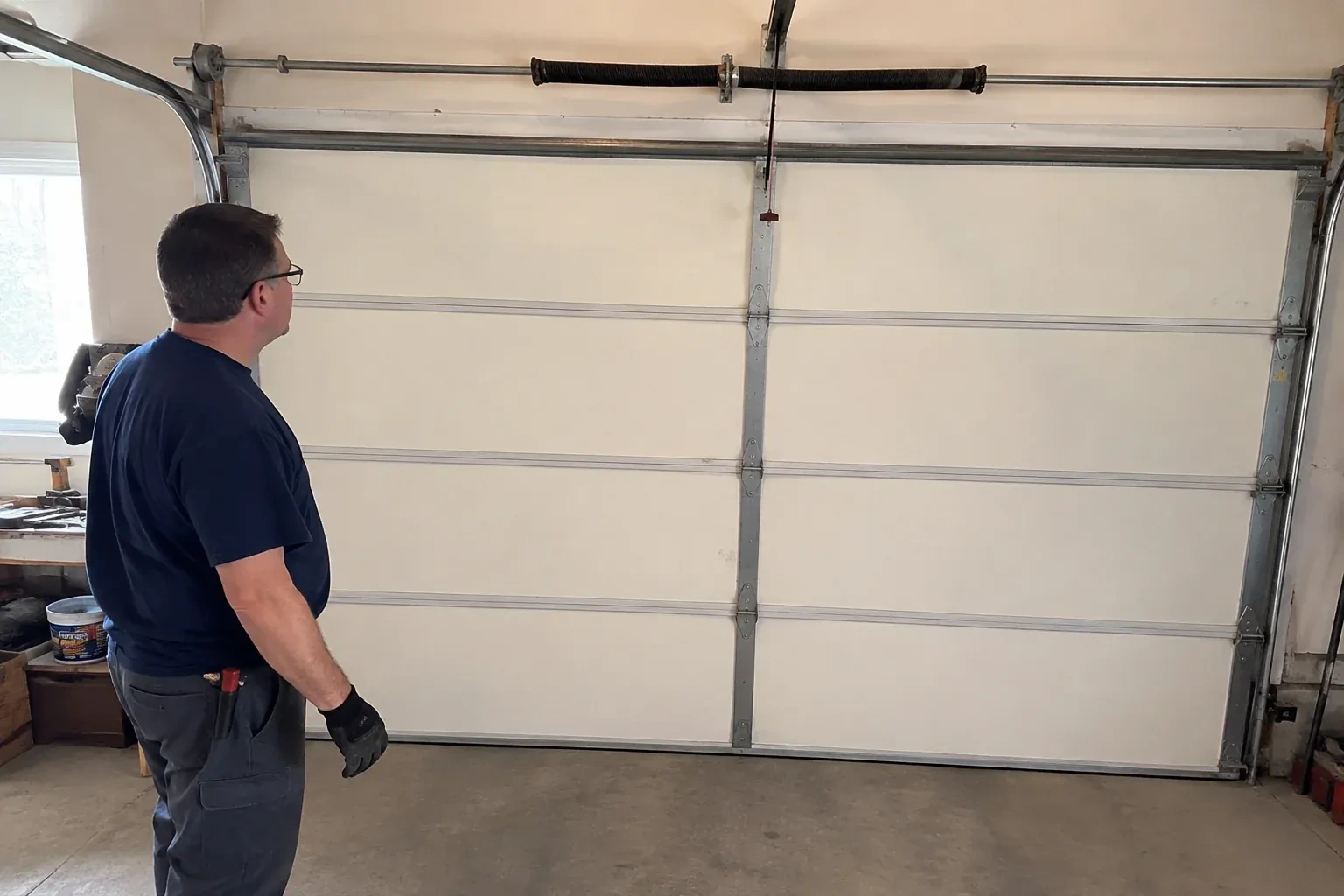
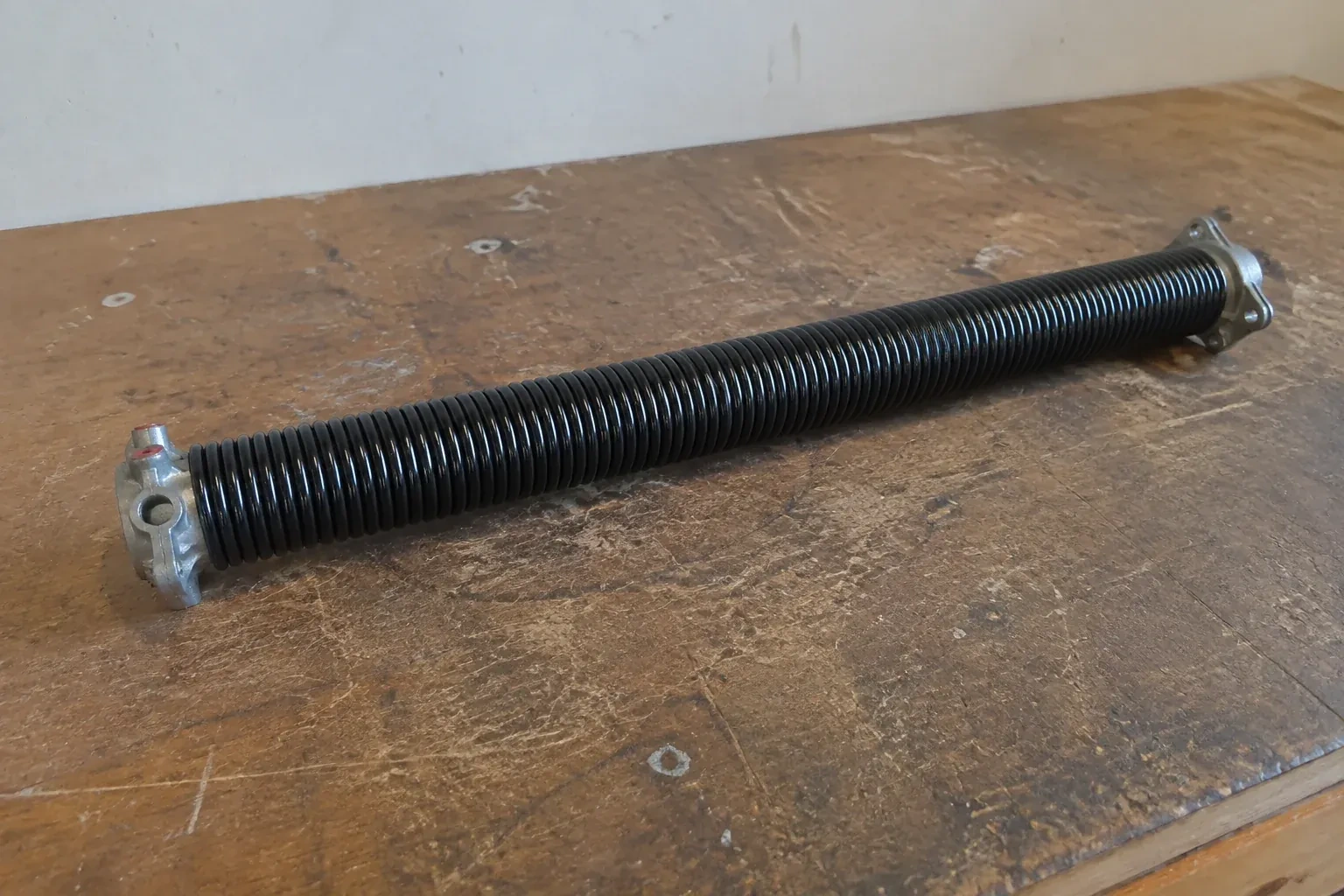
Springs and cables carry the whole weight of the door, and they are under tension every moment it is closed. We replace and adjust them with the proper tools and a careful, measured method.
Every morning the door announces itself: a rattle on the way up, a grinding squeal on the way down, loud enough that the neighbours know when you leave.
Upgrading a single door to a double, or splitting a double into two singles, is a framing project as well as a door project. We coordinate the opening changes and install doors that suit the new layout.
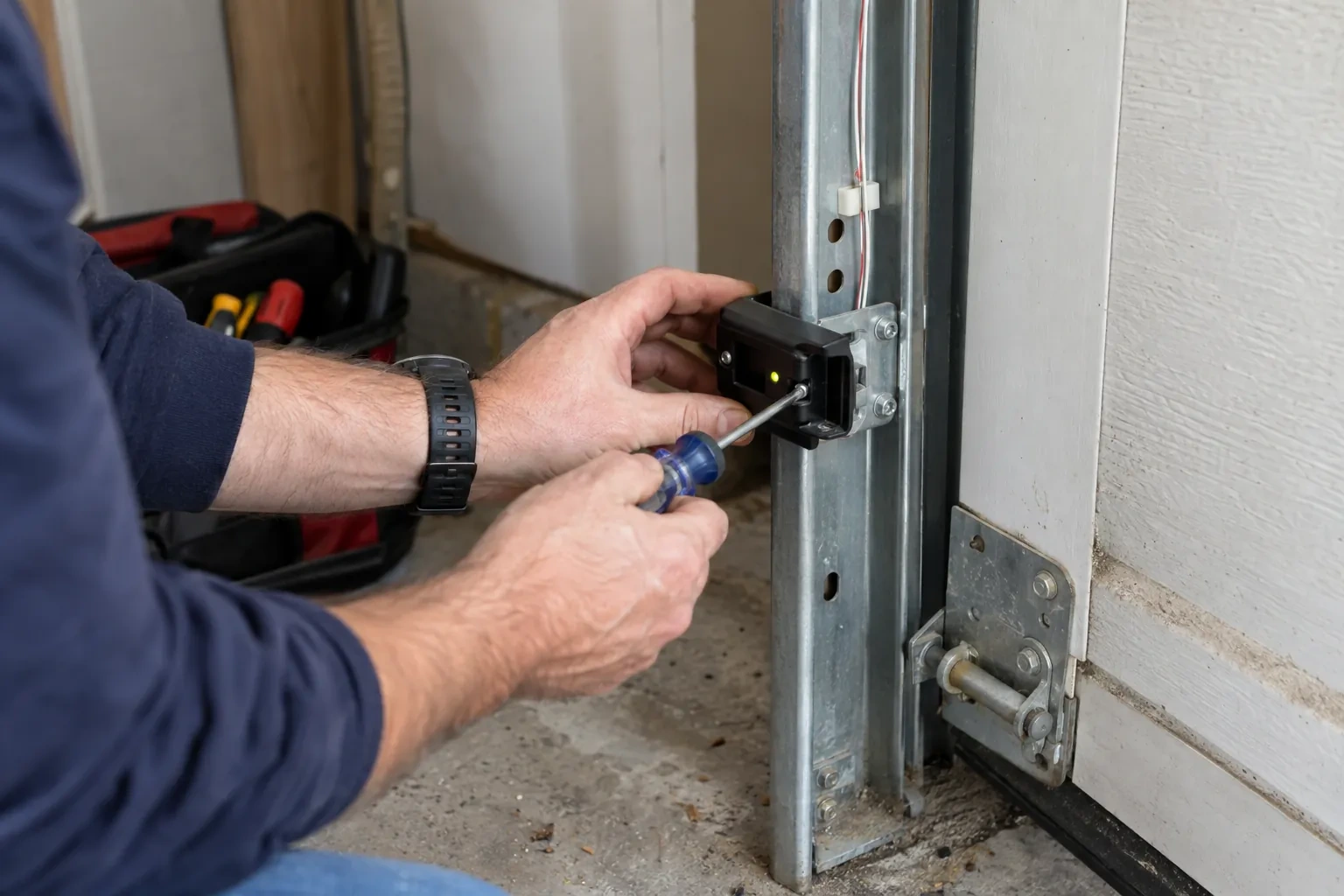
The door closes, touches the floor, then climbs straight back up as if it hit something. Nothing is in the way, the sensor lights are steady, and it has been doing this since the weather turned.
Halfway up, every single time, the door hesitates and there is a ratcheting sound from the motor head, then it carries on. A closer look shows a stretch of the belt where the teeth are worn almost flat.
The remotes only work from the end of the driveway now, and one of them disappeared with a set of keys last month. Inside the remote are tiny switches instead of a learn button, so excluding the missing one means resetting the switch pattern on every remote and the receiver.
After a cold night the door stays open until the garage warms up. There is frost on the sensor lenses and a ridge of salty slush piled against the brackets where the snow blower was parked.
There is a wireless symbol printed on the opener above the car, and the manual mentions an app, but the head unit has never been connected to anything. You downloaded the app once, it asked for a serial number and a network, and the moment passed.
After a week of lifting the door by hand you pressed the button, hoping it would catch. Instead the motor grinds, the trolley thumps against the end of the rail, and the little lever that should snap back stays stubbornly upright.
Which fix fits?
With the door closed and the garage lights off, a thin bright line runs down the whole left side of the opening.
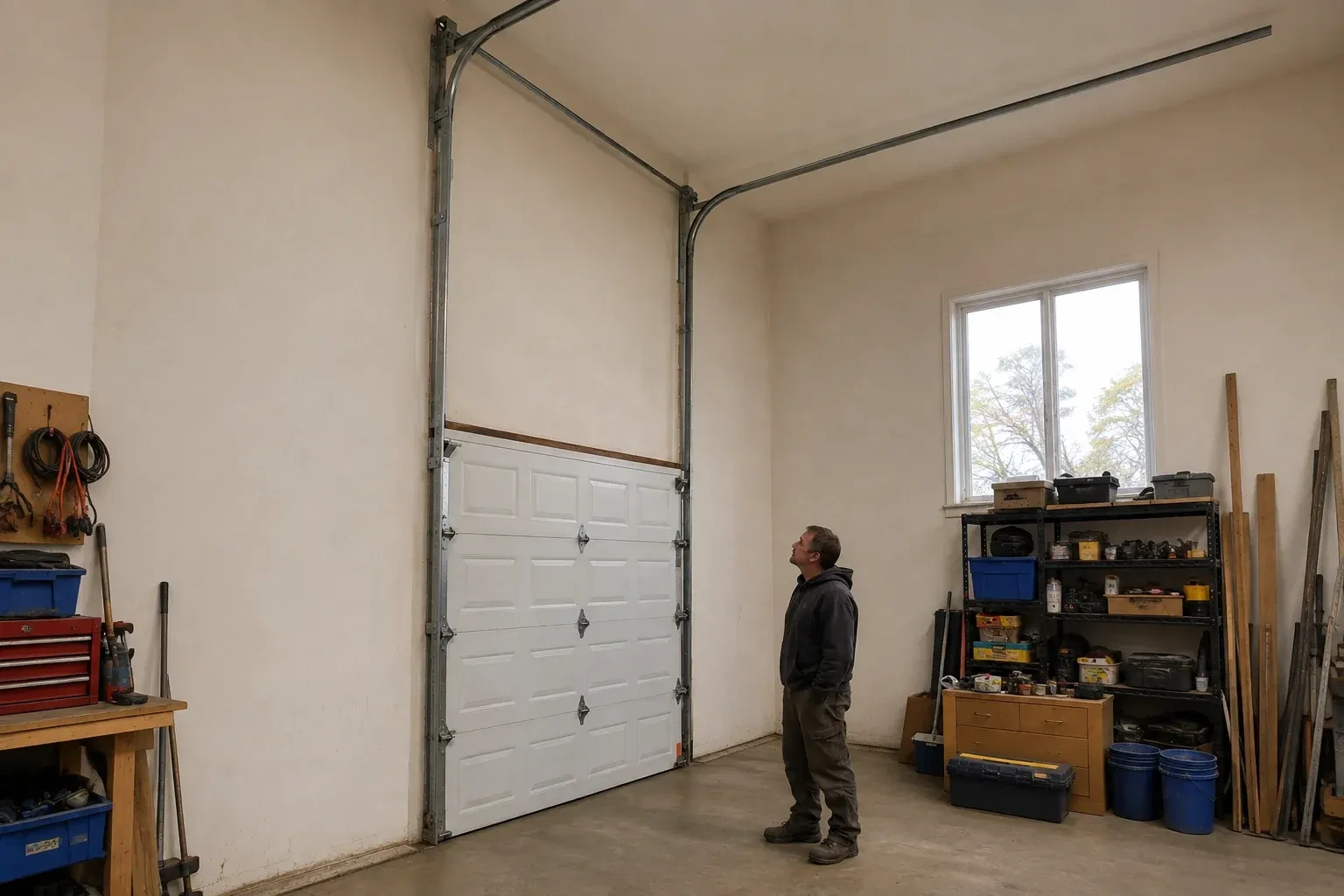
WhyA high-lift conversion changes where a sectional door turns from vertical to horizontal travel.
An entrance. Not an afterthought.
1/10Garage Door Perimeter Weatherstrip
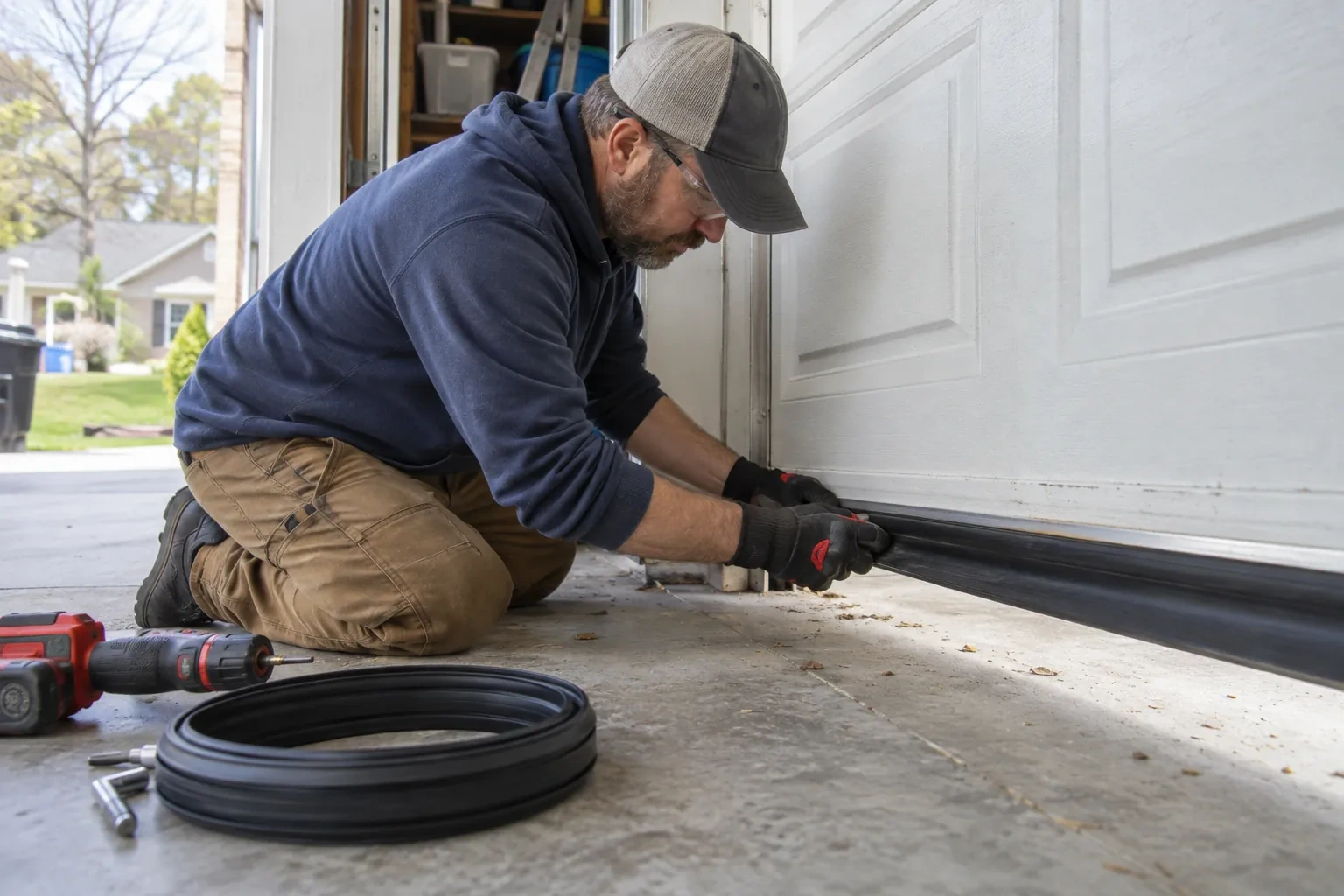
With the door closed and the garage lights off, a thin bright line runs down the whole left side of the opening. You can see the neighbour's fence through it. The strip that should close that gap has shrunk back from the door.
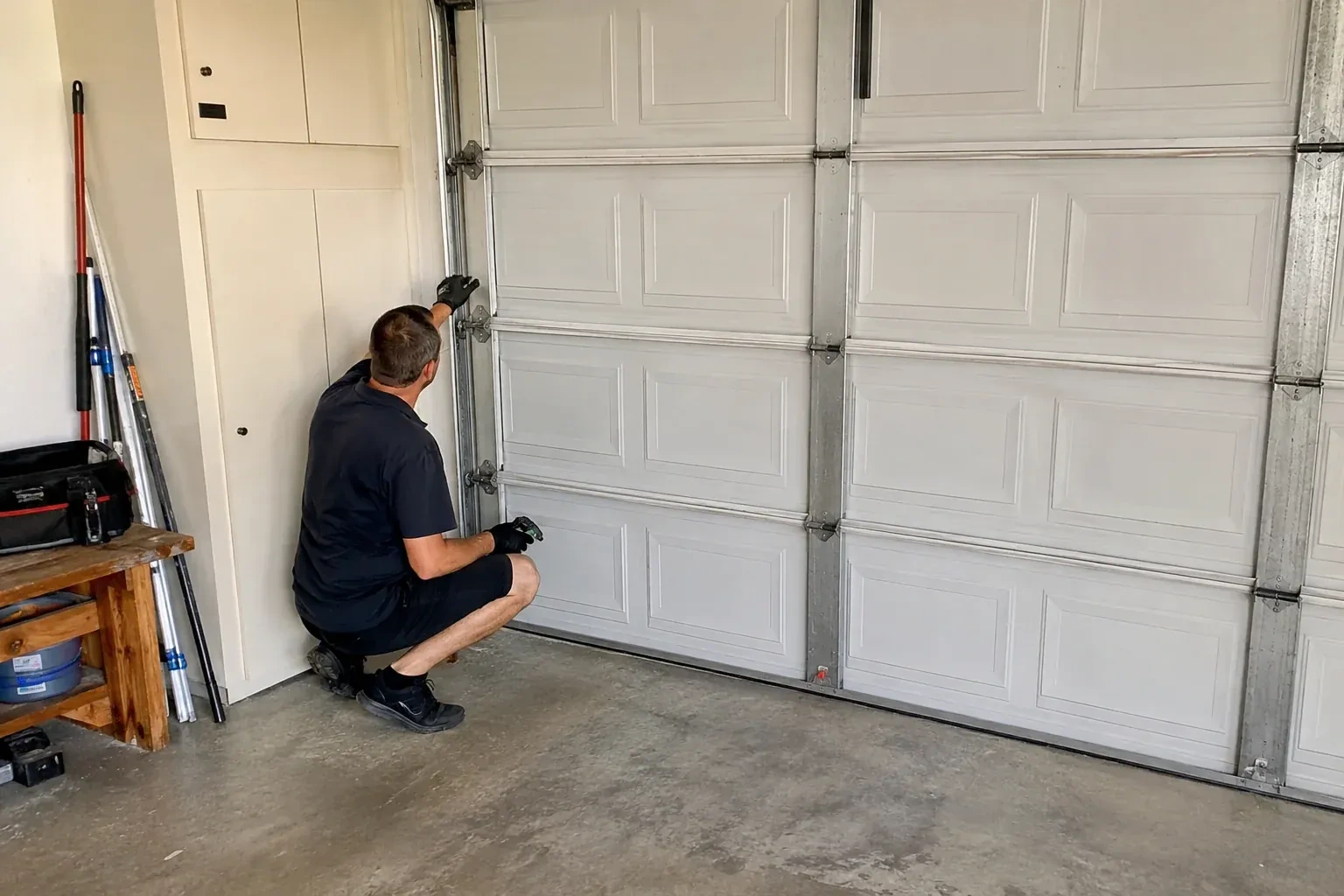
Since the cold snap the door has been stiff and noisy first thing, and after the last thaw the bottom corner began to judder. There is slush in the foot of the track and a bloom of rust on the lowest wheel.
After a decade of slushy winters the bottom foot of the track is flaking rust. A roller squeals as it passes, and the channel edge has gone rough and thin where the salt collects.
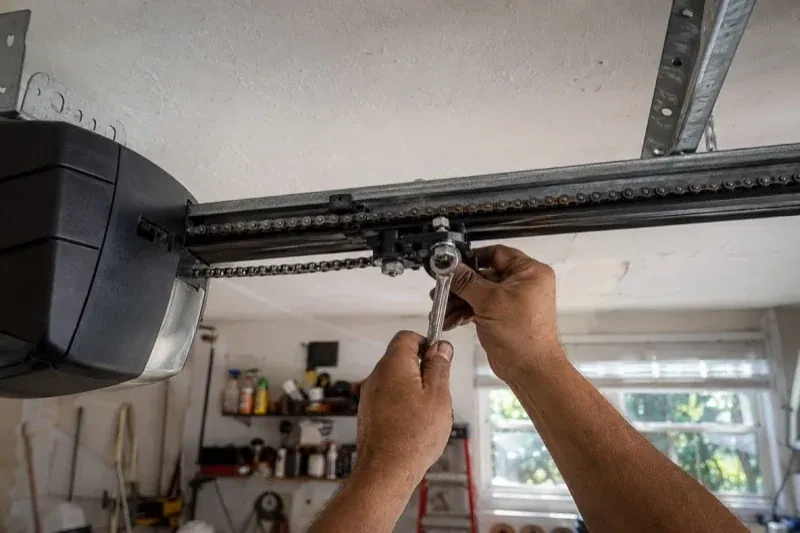
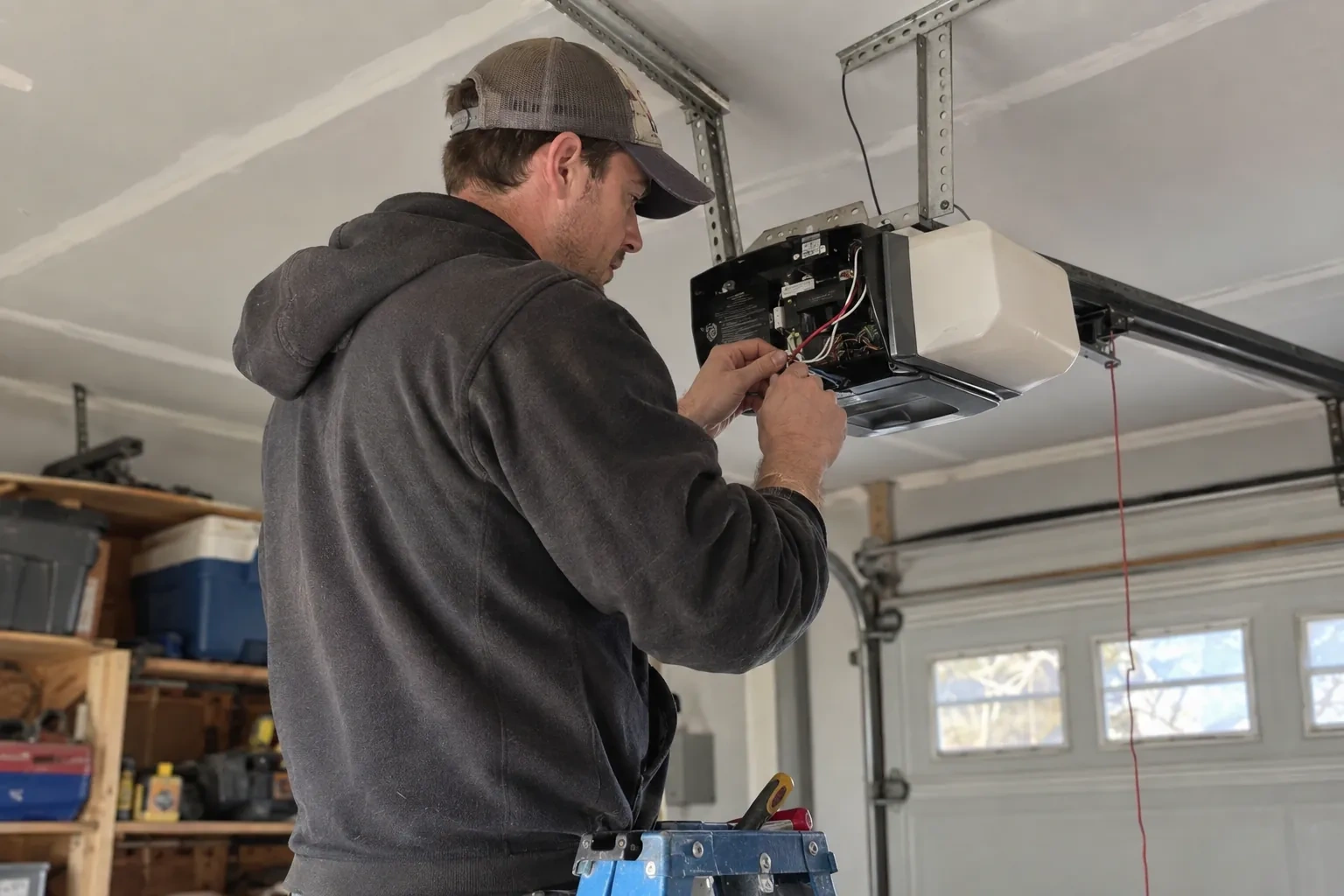
The rail shakes when the door runs. The steel straps holding it to the ceiling have worked loose, the chain rattles the length of the garage, and a bolt has already dropped onto the hood of the car.
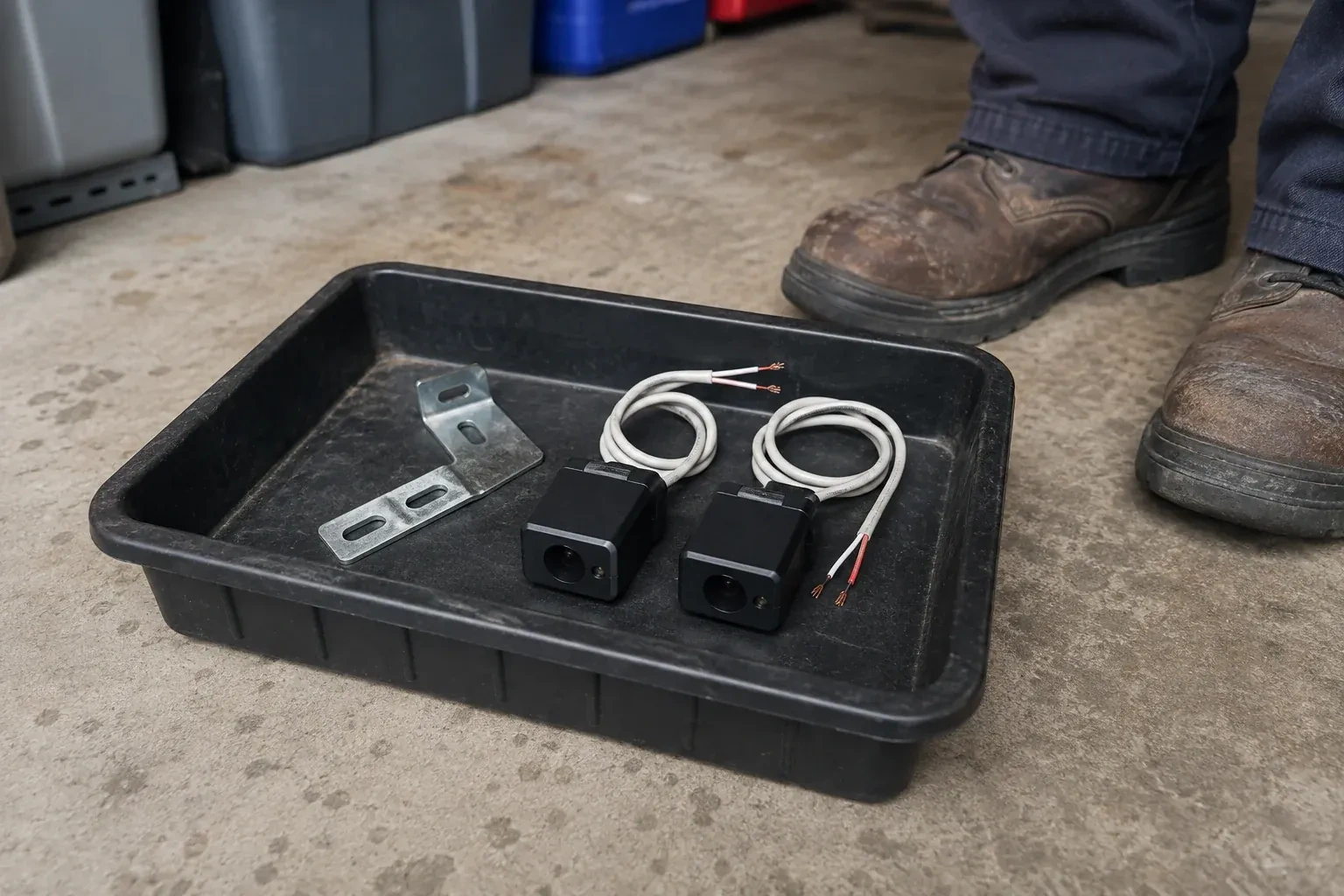
You press the remote, the door drops a few centimetres, then climbs straight back to the top while the opener light blinks. Nothing is under the door. It has done this every evening this week.
Halfway up, the door lets go of the opener with a clunk and sinks back to the floor while the trolley carries on to the top alone. It has happened three times this month, and each time the release lever is found half-cocked.
This garage will be heated and used beyond parking, so the opening needs more than a basic closure. Insulated sections, perimeter seals and careful contact at the finished floor matter from the first installation.
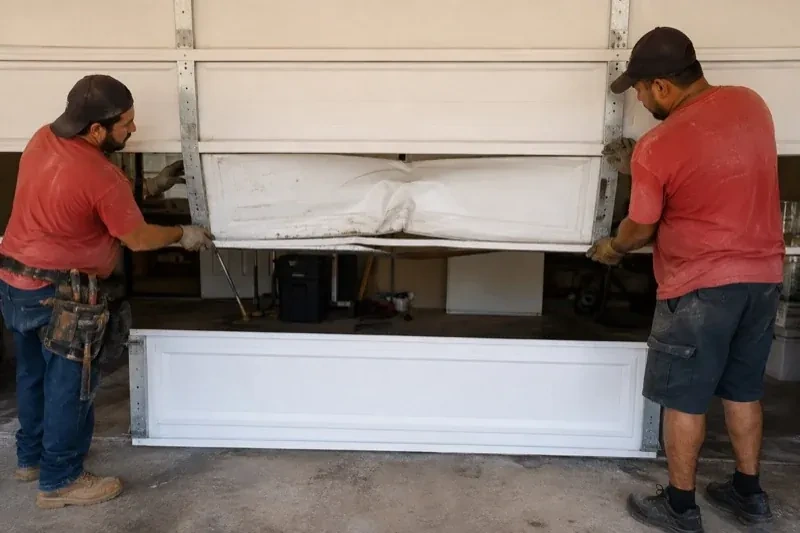
The loading-bay door rises with one side several centimetres lower than the other. A lift cable looks slack, the bottom section sits crooked, and staff have stopped using the opening until the door can travel level again.
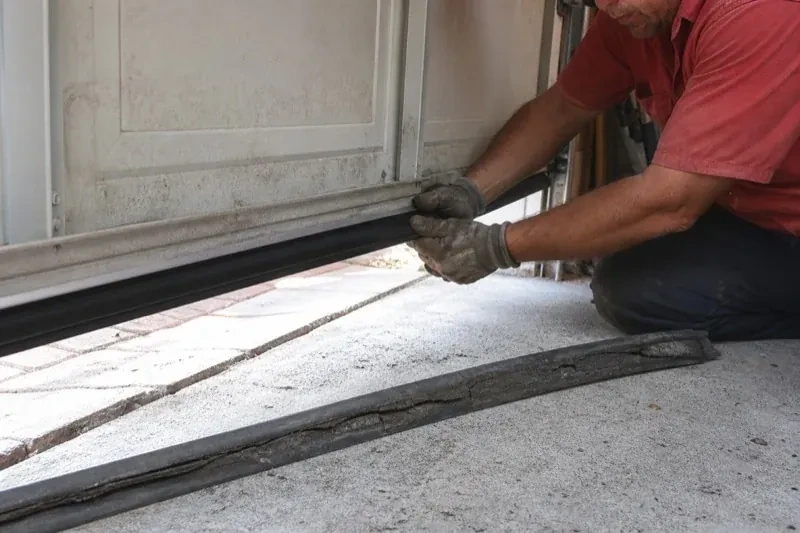
Cold-weather moisture has frozen the bottom seal to the sill, and salty grit has collected along the guide entrances. The door chatters during its first cycle and leaves a visible gap after it reaches the closed limit.
The garage has a tall ceiling, yet the horizontal tracks sit much lower than the lights and joists. That unused wall height makes the open door feel like a low shelf across an otherwise generous room.
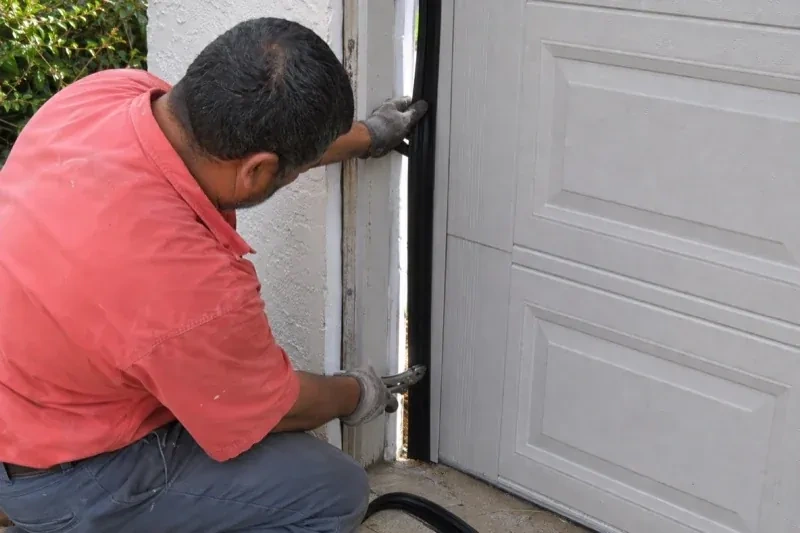
Should I choose a fin on the wood stop or a one-piece vinyl stop?
If the wood stop is sound, straight and not buried in paint, a new fin nailed to its face is the simpler choice and keeps the look of the trim. If the stop is cracked, soft or has been painted many times, a one-piece vinyl stop replaces it entirely, needs no paint and cannot rot. The technician checks the stop and recommends one or the other on site.
What happens during the visit, and do I need to move the car?
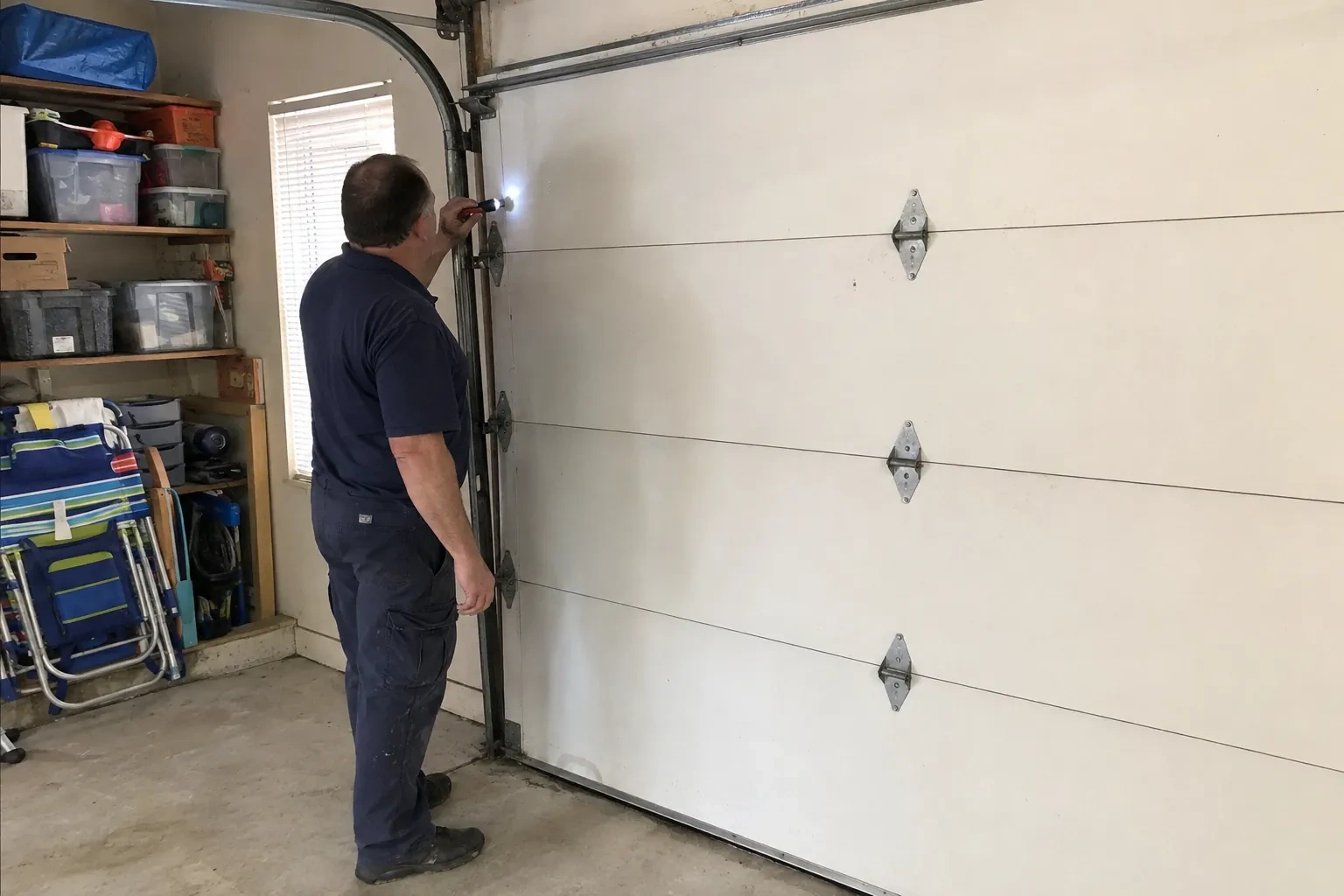
The technician needs clear access to both tracks from floor to ceiling, so moving vehicles out and shifting anything stored against the walls near the tracks helps. The visit itself runs in order: the door is watched in motion, every roller and its hardware is inspected, the door's balance is tested, the door is secured and the rollers are changed one position at a time, the track is cleaned and squared, moving parts are lubricated, and the door and opener are tested.
What if the car hit the door as well as the track?
Then the assessment covers both. A bumper that creases the track usually dents or bows the bottom section, and can bend the bottom bracket, the roller stem and a hinge. The technician follows the impact through those parts, straightens or replaces the track, and explains separately what the section and its hardware need, whether that is a strut, a bracket, or a replacement panel. The door is only put back to work once the whole path is sound.
What should I check before calling?
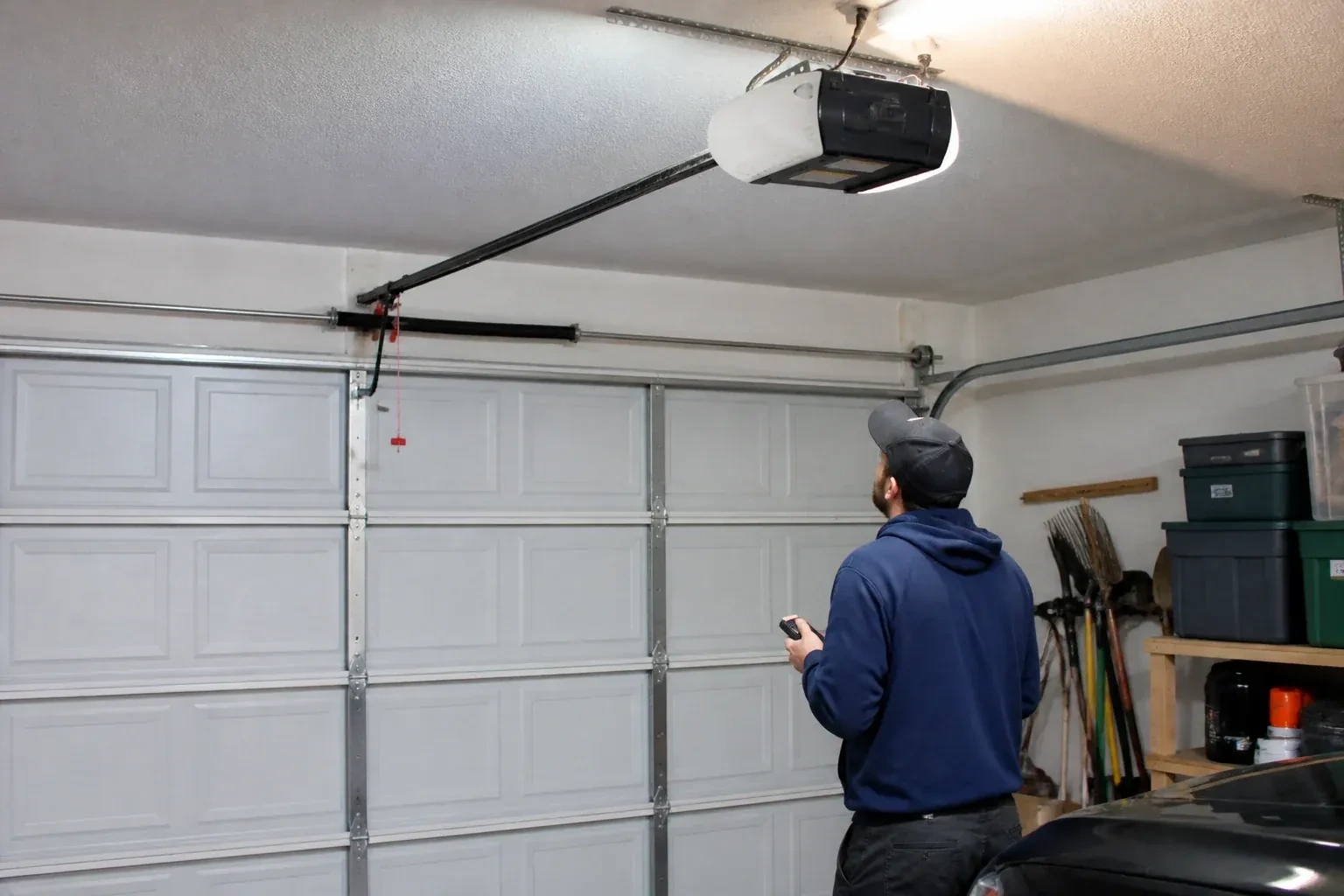
With the door closed, pull the red handle and try lifting the door by hand; note whether it is heavy or stays up on its own. Look at the chain for slack, rust or a broken link, and at the head for pale shavings. Note whether the motor runs at all, whether the door stops short or reverses, and where the trolley sits on the rail. The model on the head's label and a photo of the rail help too.
Do I need to be home for the work?
It helps. The technician needs access to the garage and the head unit, and the visit ends with a demonstration of the sensor lights and the two tests so you know what normal looks like. If you cannot be there, an adult who can open the garage is enough, and the written note left afterwards records what was found and changed. Having the strip of floor beside the door clear before arrival saves time either way.
Would battery backup mean I never need the release?
It covers most outages: the battery opens and closes the door on stored power, so the release stays on its hook. It is a wearing part that needs replacing every few years, and a status light or beep tells you when. The release is still the fallback for a flat battery or an opener that has itself failed, which is why the two are checked together. Many households on outage-prone streets keep both in working order.
Which documents should stay with the completed door system?
Keep the door and operator manuals, model or component identification, approved selections and any relevant drawings with the building records. The closeout note can include door size, track arrangement, counterbalance type, controls and completed commissioning checks. Private access codes remain with the owner rather than in a general service file. These records make future maintenance and compatible part identification much more straightforward.
Does a torn bottom seal always mean a seal-only repair?
Not always. The rubber may simply be worn, but a bent retainer, uneven floor, crooked door or impact-damaged bottom section can produce the same gap. The technician checks how the door lands before replacing material. Correcting level or retainer shape first allows the new seal to contact evenly without being stretched to compensate for another fault.
What does it mean when the door feels unusually heavy?
A marked increase in manual effort often calls for a counterbalance and mechanical-path assessment. Spring setting, barrel bearings, guide friction, curtain damage and drive parts can all contribute. Because the counterbalance contains substantial stored energy, the curtain is secured and the assembly is adjusted with the identified procedure and proper winding tools.
When is high-lift conversion a practical choice?
It is practical when an existing sectional opening has meaningful wall height above it, enough ceiling depth for the horizontal run, suitable support conditions and a clear reason for gaining overhead room. The door, counterbalance and operator must be designed together. A measured feasibility plan confirms the usable clearance before installation becomes the next step.
Request a visit
Our commercial customers in Adelaide-Metcalfe run shops, warehouses and service bays that depend on their doors. We set up maintenance visits at intervals that suit the door's cycle count, keep records of the springs and operators on each door, and turn up with the right parts so downtime stays short.