Springs · Adelaide-Metcalfe
Garage Door Track Repair or Replacement in Adelaide-Metcalfe
The horizontal rail toward the back of the garage sags noticeably.
In plain words
Vertical track is fixed to the jamb in one of two ways, and the assessment begins by reading which one your door has. Bracket-mounted track hangs on a few L-shaped jamb brackets, each lag-screwed into the wood, and can be shifted a little at each bracket to set spacing and plumb. Angle-mounted track uses a full-height continuous angle and is common where sideroom is tight. Either way the vertical run ends at a flag bracket that also carries the horizontal track and, on a torsion door, the spring shaft bearing. Track repair works with those fixings, tightening, replacing or repositioning them so the run sits true.
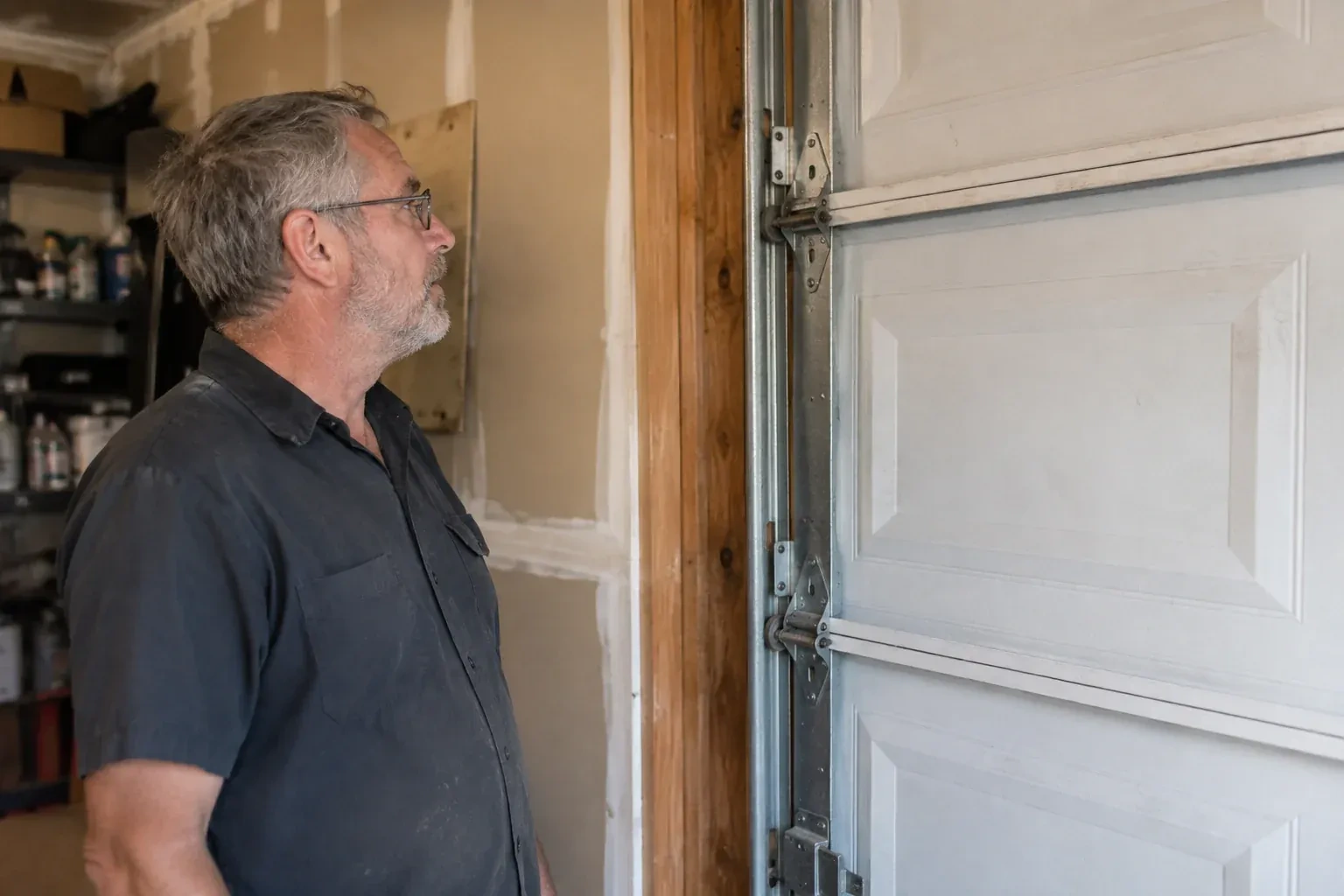
How the visit goesAfter a decade of slushy winters the bottom foot of the track is flaking rust. A roller squeals as it passes, and the channel edge has gone rough and thin where the salt collects.
Garage Door Track Repair or Replacement
How the visit goes
Plumb, spacing and taper of each vertical run
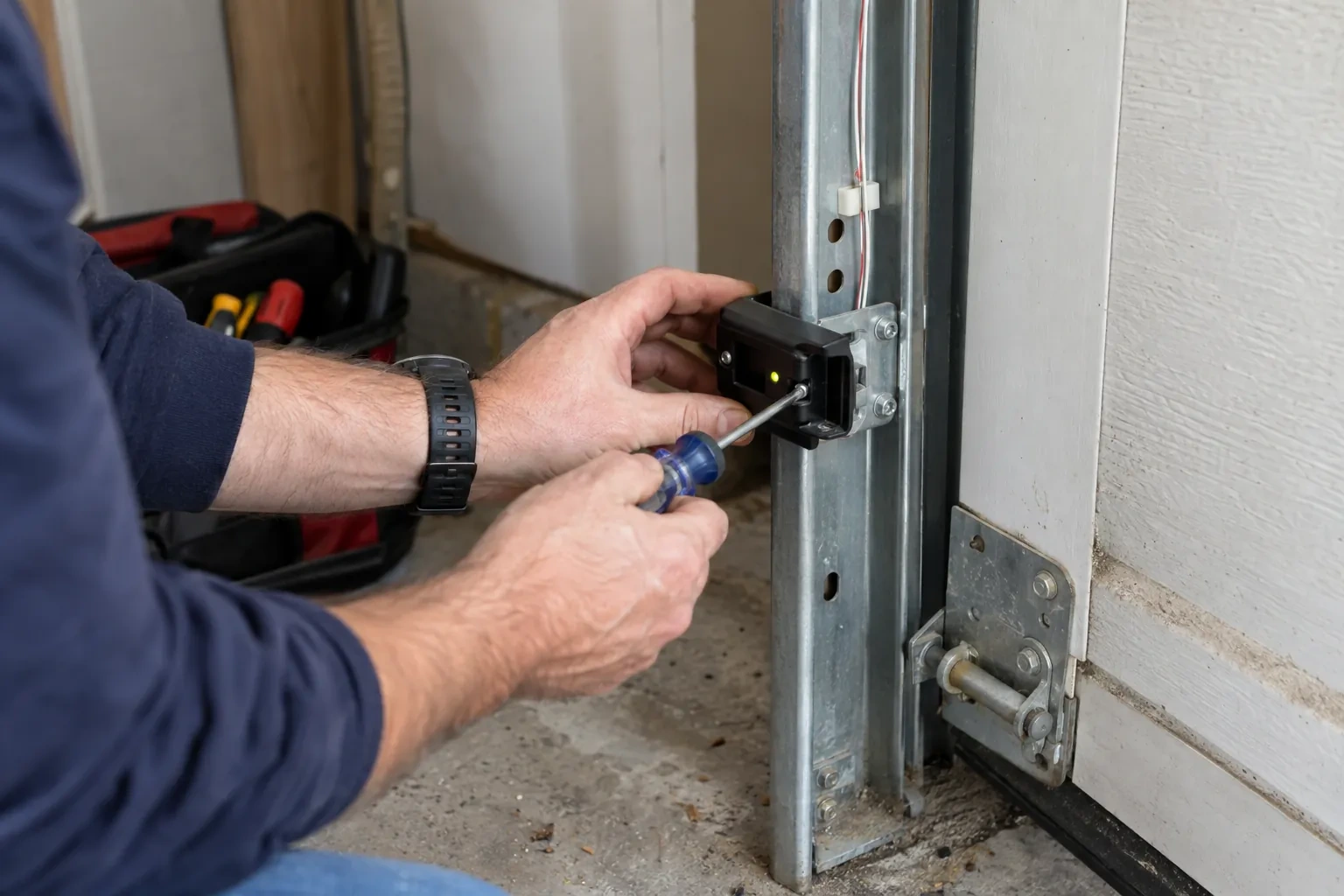
A level goes on each vertical track, and a tape measures the gap between the track and the edge of the door at the top and the bottom. The run should be plumb, and the two sides should sit the same distance from the door so both columns of rollers carry evenly. There is also a deliberate detail: the top of the vertical track stands a little further from the jamb than the bottom, so the closed door presses into its stop moulding for a seal and swings clear the moment it starts to rise. A track pushed flat to the jamb makes the door drag; one standing too far out lets it rattle.
Rollers, hinges and fixtures damaged when the door bound
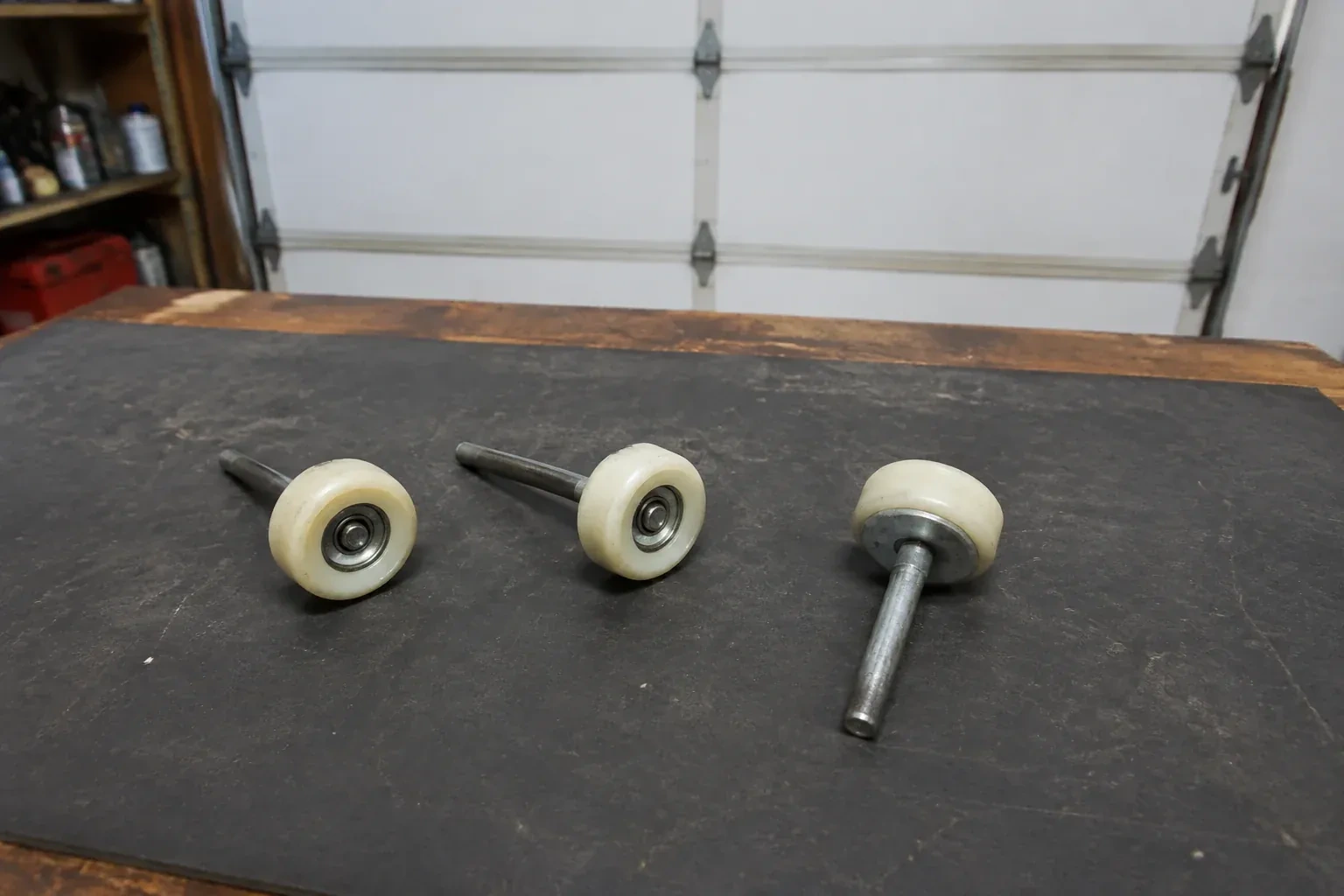
A door that has been catching on bad track usually has a few parts that suffered with it. Rollers with flat spots or bent stems are replaced, hinges that split when the door twisted are renewed, and top fixtures knocked out of line are reset so the top roller sits at the right depth. Each roller is confirmed to turn and slide freely. The channel is wiped clean of grit and old grease, and the moving parts are lubricated to the door's own manual, since track advice varies by maker. Attending to these pieces while the door is held and the track is fresh saves a second visit and stops the new alignment being chewed up by the old damage.
The record of the track profile and layout
Before leaving, the technician tells you what the door runs on: two-inch or three-inch track, the radius of the curve, whether the layout is standard, low-headroom or high lift, and which pieces were straightened or replaced. Write it inside the cover of the door manual or on a card by the opener. Any future part, a roller, a hinge, a section of track, is then ordered to match rather than measured from scratch, and a technician years from now can read at a glance how the door was set up. If the jamb was repaired or a hanger moved to a joist, that goes on the same note.
Garage Door Track Repair or Replacement
In the van
Replacement rollers and hinges
Jamb brackets or continuous angle
Flag brackets
Lag screws and track bolts
Horizontal track with curve
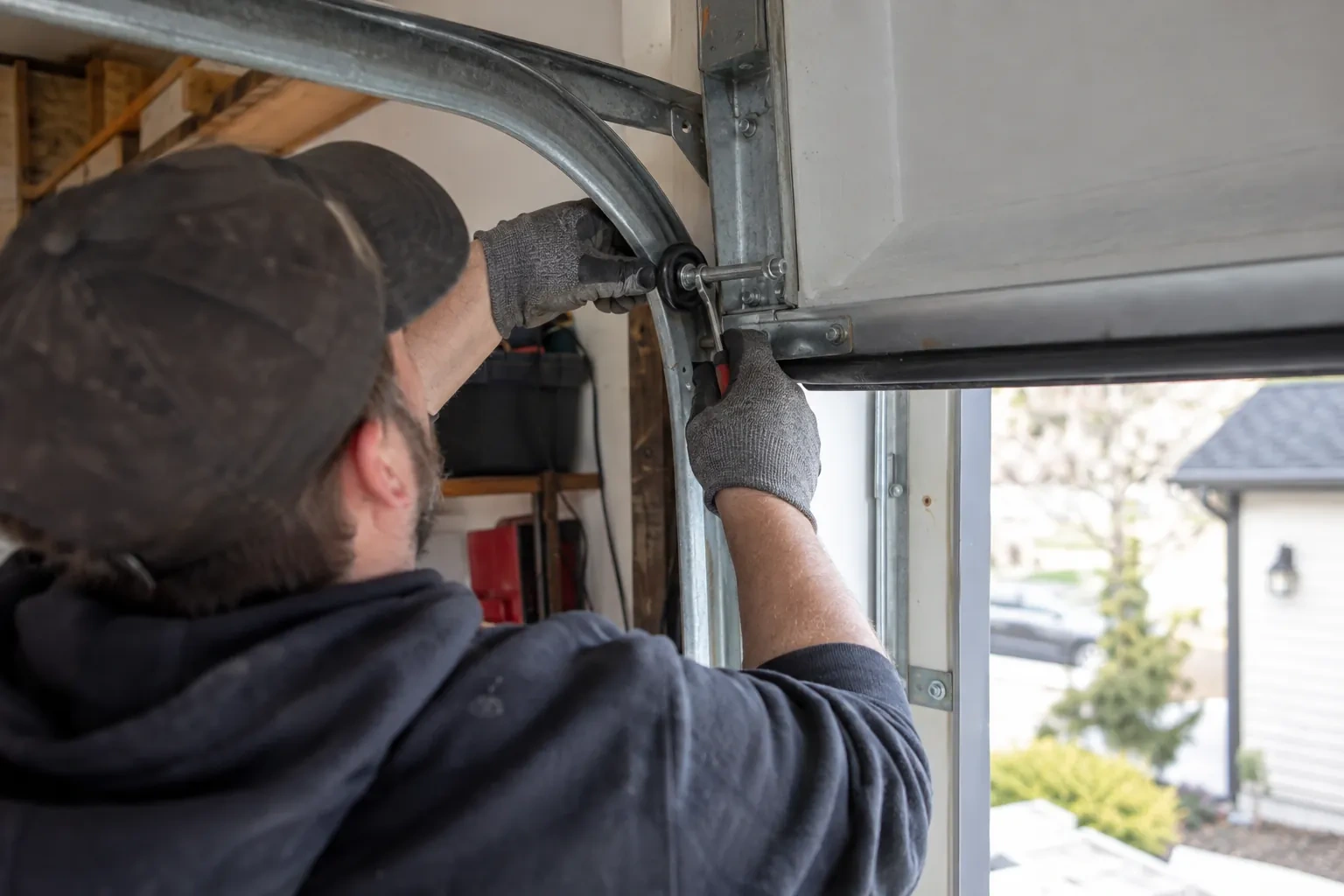
Garage Door Track Repair or Replacement
What affects the quote
Access and storage around the track
Shelving, a workbench or a ceiling full of stored goods around the horizontal run slows the work. Clearing the area beforehand changes the time quoted.
Straighten or replace, piece by piece
A dent dressed in place is labour only, while a kinked, cracked or rusted length means a new piece of track. The quote lists which pieces get which treatment.
How the door is sitting
A door resting closed is straightforward. One jammed partway on a bent section, or with rollers out of the channel, has to be supported and freed before the track can be measured.
What to have ready
- Does the door rub the frame or catch at the same spot every time?
- Is there one spring above the opening, or springs along the tracks?
- Has any roller come out of the channel?
Garage Door Track Repair or Replacement: questions
QuestionsWhy is the horizontal track sagging?
The horizontal run hangs from the ceiling on back hangs of perforated angle, and it sags when a hanger bends, its screws pull out of a joist, or it was only ever fixed into drywall. A sagging hanger droops that run out of level or its intended pitch. The fix is a straight or new hanger screwed into solid framing, with the run set to the manufacturer's specified pitch and matched to its partner; a door that drifts back toward the opening once raised is a separate, balance-related symptom.
What if the car hit the door as well as the track?
Then the assessment covers both. A bumper that creases the track usually dents or bows the bottom section, and can bend the bottom bracket, the roller stem and a hinge. The technician follows the impact through those parts, straightens or replaces the track, and explains separately what the section and its hardware need, whether that is a strut, a bracket, or a replacement panel. The door is only put back to work once the whole path is sound.
What does track radius mean, and does it matter for a replacement piece?
The radius is the size of the curve where the track turns from vertical to horizontal, typically 12 or 15 inches on two-inch residential track. It fixes how high the door climbs before it turns and how much headroom is needed, and the cable drums and spring setup are chosen around it. A replacement curve has to match the other side, otherwise the door meets the horizontal run at different heights and twists as it opens.
Related services
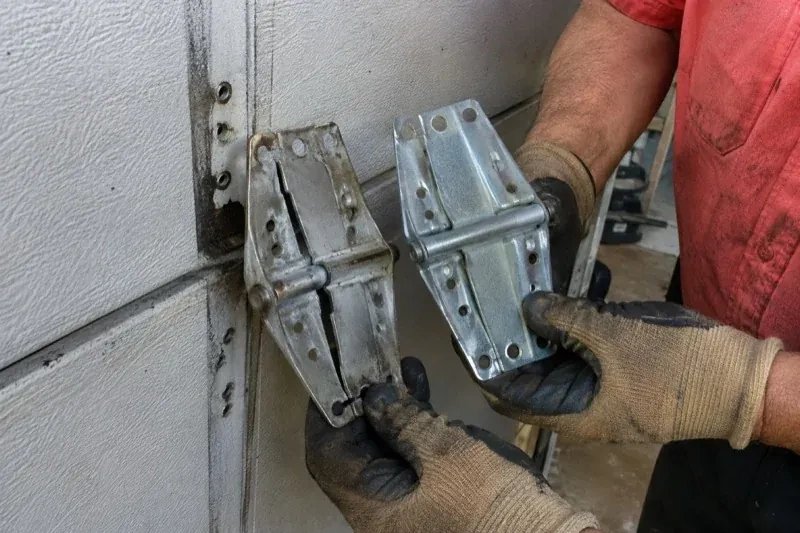
- Garage Door Hinge ReplacementWatching from inside as the door opens, you can see the gap between the second and third panels open up on one side as they turn the corner into the ceiling, then close again.
- Garage Door Cable ReplacementSomeone left the snow shovel leaning in the opening and the door came down on it.
- Torsion Spring ReplacementAfter pulling the red release cord, you tried lifting the door yourself and it would barely leave the floor.