Openers · Strathroy-Caradoc
Garage Door Opener Replacement
The remotes only work from the end of the driveway now, and one of them disappeared with a set of keys last month.
In plain words
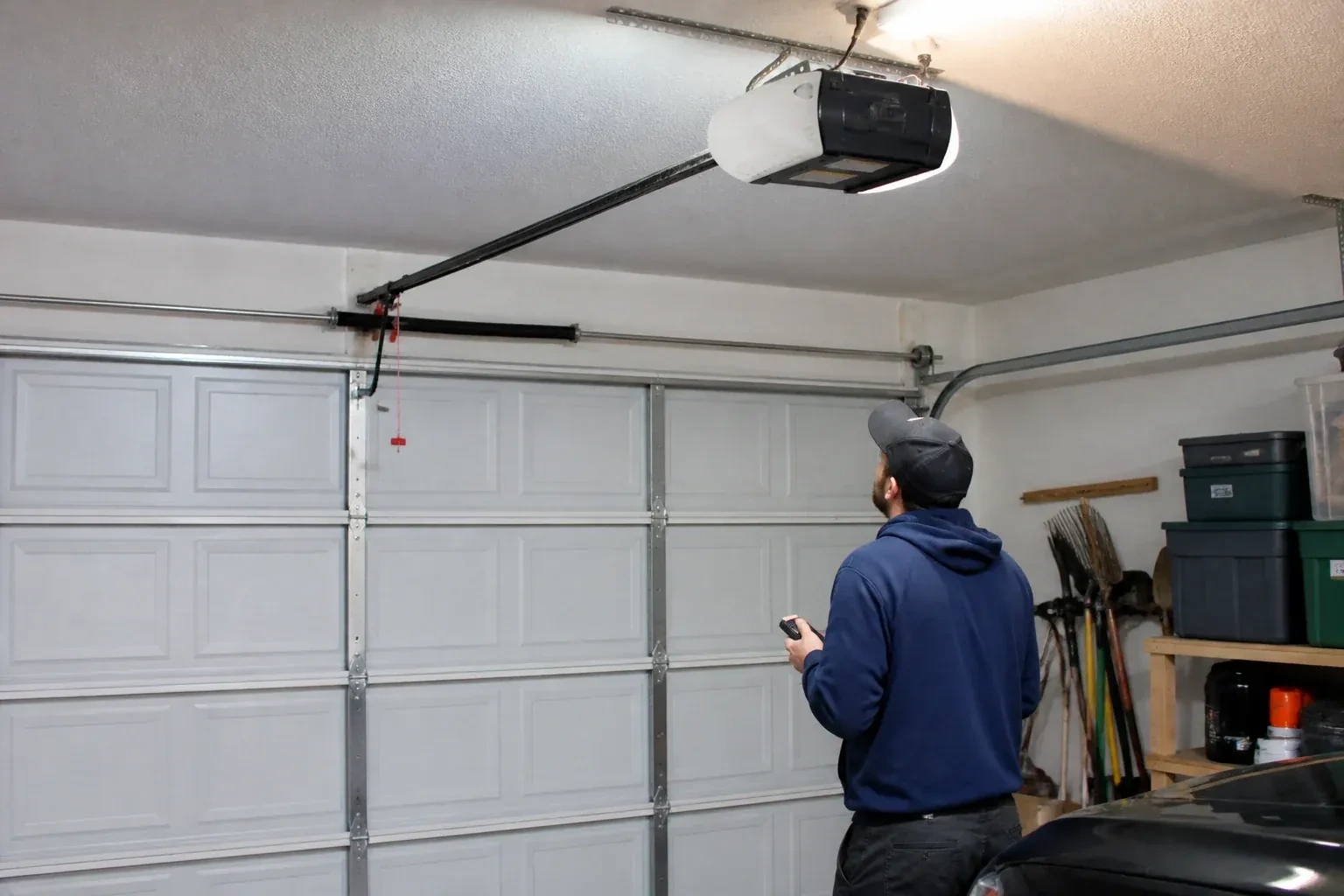
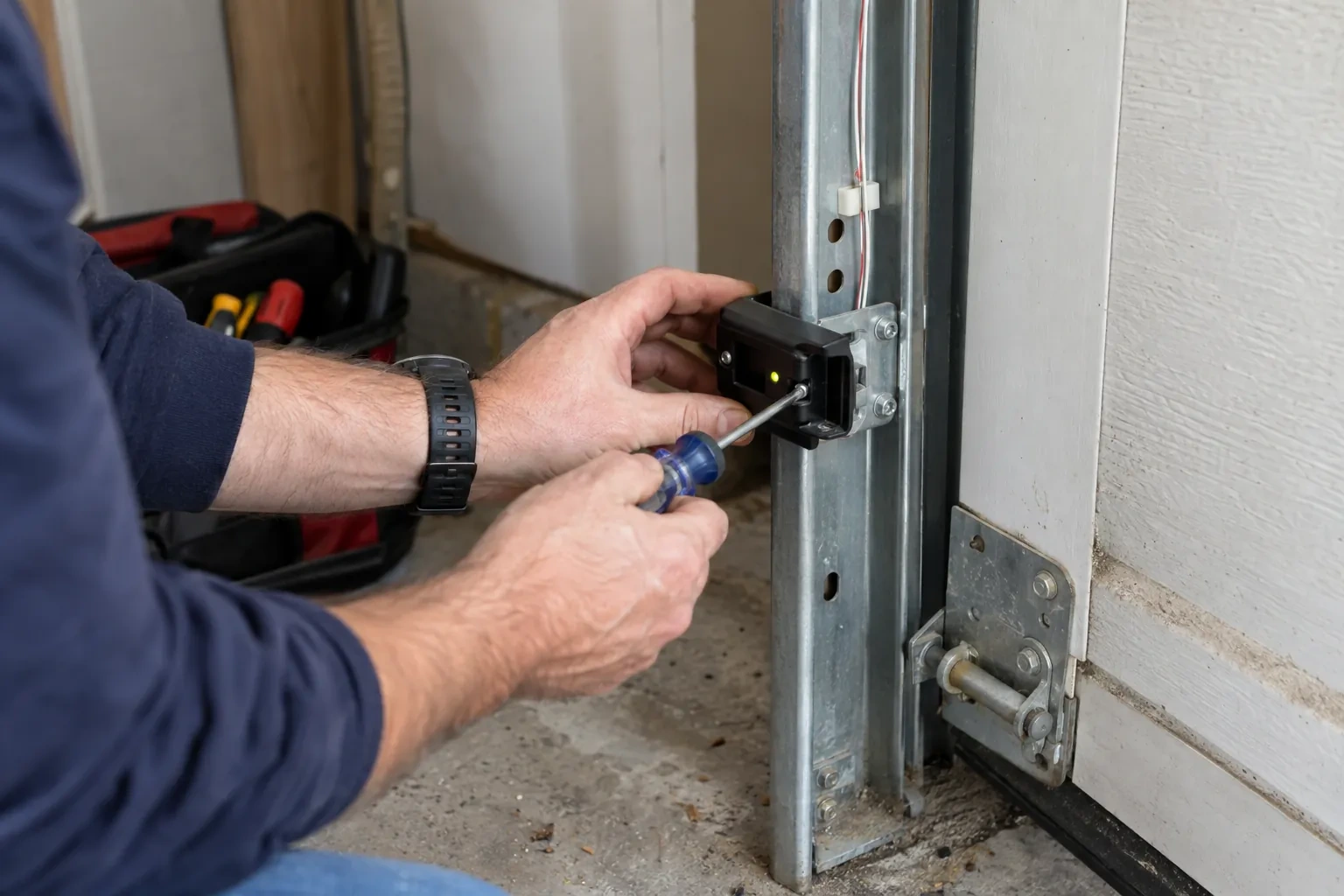
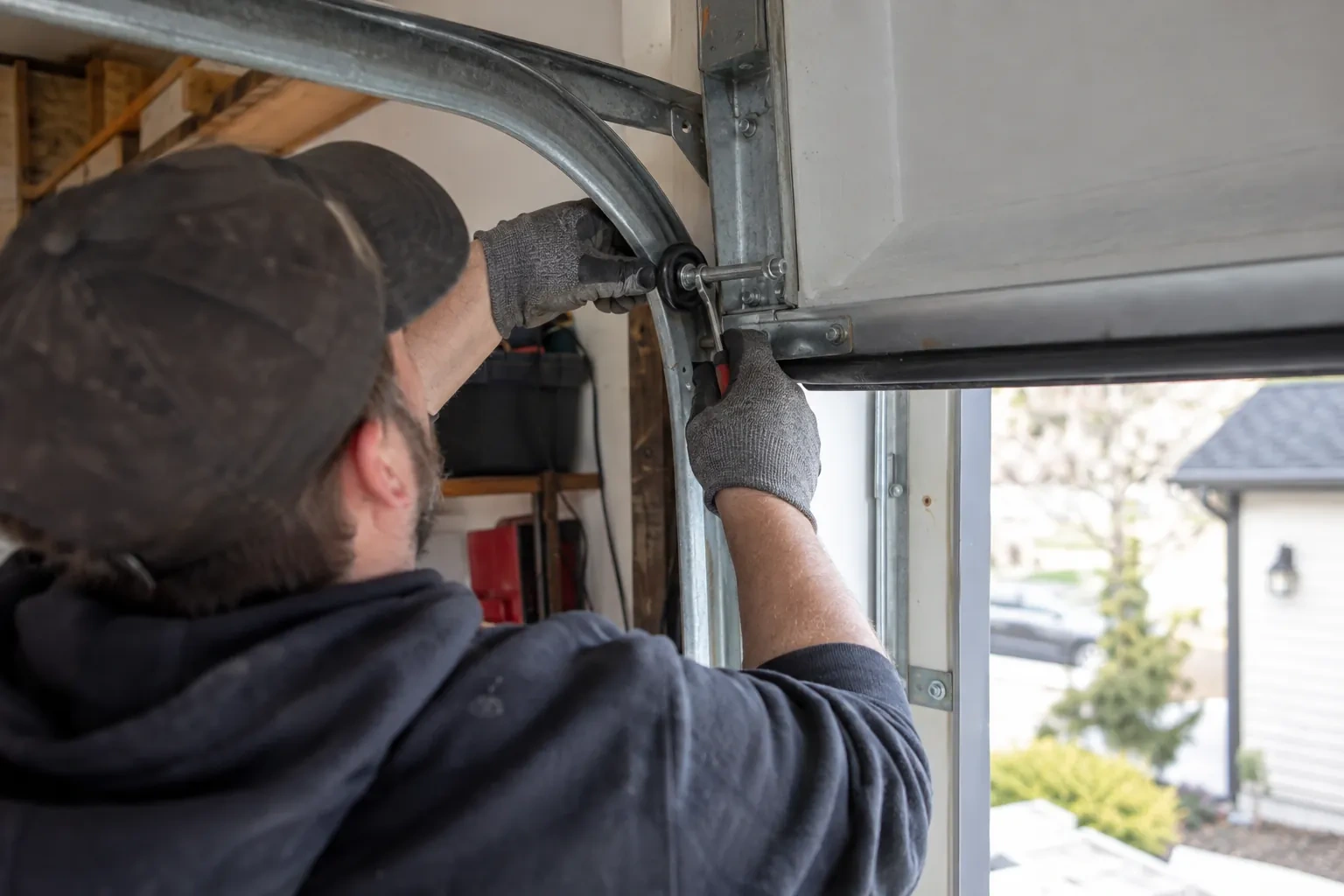
Here is what the day looks like. The technician arrives, watches how the door behaves, then unplugs the old unit and tests the door by hand. Once balance is confirmed, the old head, rail, sensors and control come down and the new rail is assembled on the floor. The header bracket goes into solid framing above the door, the head is hung level from the joists, the door arm and reinforcement are fitted, and the sensors and wall console are wired. Travel, force and safety tests follow, then programming of remotes and keypad. Allow a morning or an afternoon, and a little longer if door work is added.
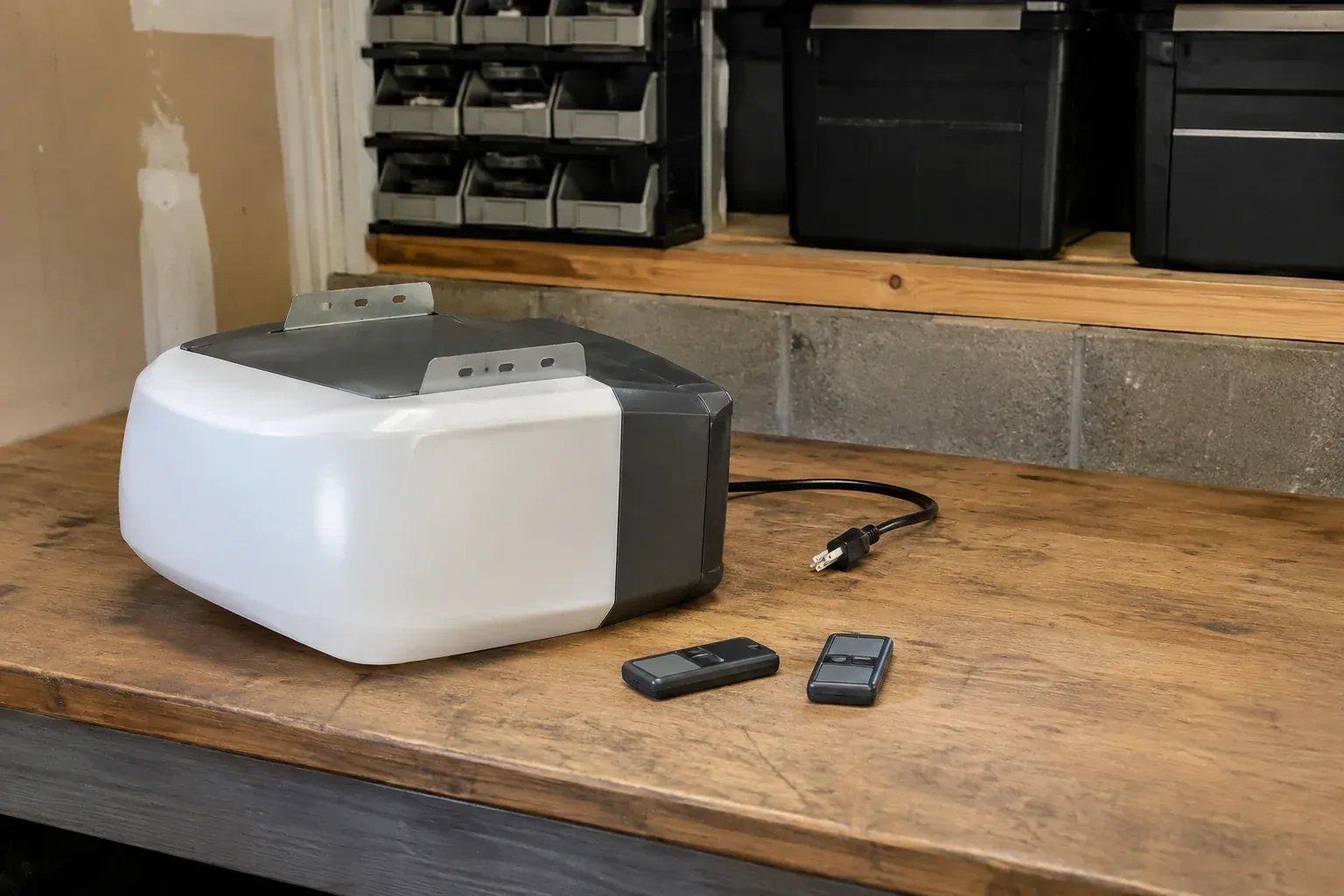
How the visit goesThe remotes only work from the end of the driveway now, and one of them disappeared with a set of keys last month. Inside the remote are tiny switches instead of a learn button, so excluding the missing one means resetting the switch pattern on every remote and the receiver.
Garage Door Opener Replacement
How the visit goes
Reading the old opener
The existing unit has a story to tell. Its label gives the make, model and year, which says whether it predates photo-eye sensors and rolling-code remotes. The technician checks for oil leaking from the gearbox, plastic shavings from a stripped gear, scorching on the board, a bent rail or a worn trolley, and whether the travel limits have been fighting the door. This confirms the replacement is the right path and shows what, if anything, can be kept: the low-voltage wiring to the wall console is often reusable, while sensors and controls are matched to the new brand and generally come with the unit.
Setting travel and force
With power on, the technician teaches the operator where the door starts and stops. Newer units run a learn cycle that measures the travel and the effort the door needs; others have open and close limit screws and force dials that are set by hand. The close limit is set so the bottom seal compresses gently against the floor without the door straining, and the open limit so the top section stops short of the header bracket. Force is set to the lightest level that moves the door reliably in the garage's normal temperature, which is what lets the operator notice an obstruction and reverse rather than push through it.
Keeping the door balanced under the new operator
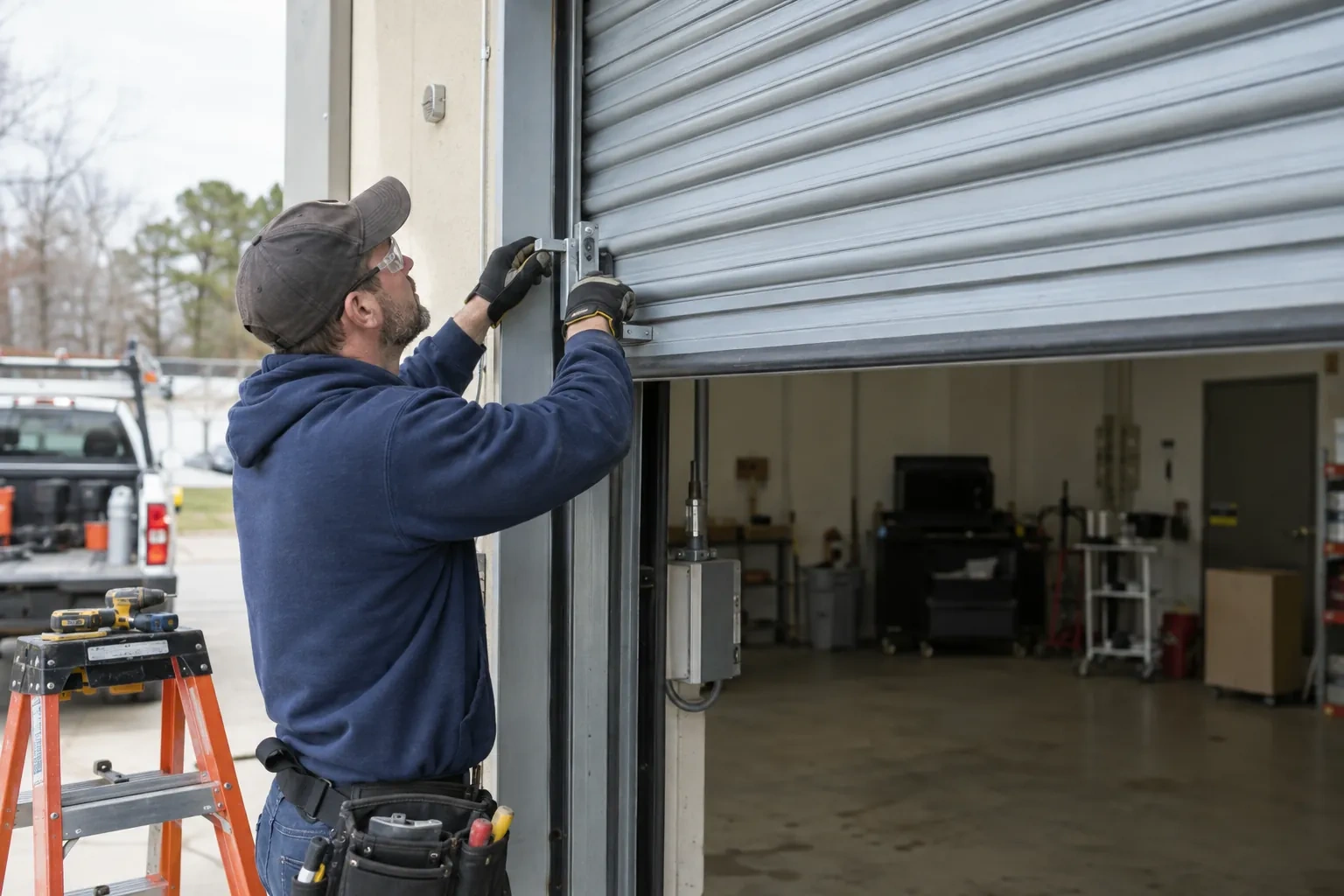
The new operator will run for many years if the door it moves stays balanced. Once a season, pull the release with the door closed, lift it by hand to about a metre and let go: it should stay there. If it drops or creeps upward, the springs have drifted and want a tune before the operator starts working harder to compensate. Watch too for a door that pauses or jerks at one point in its travel, which is usually a roller or a track bracket rather than the motor. A yearly service visit that checks balance, cables, rollers and the safety tests keeps both the door and the operator in step with each other.
Garage Door Opener Replacement
In the van
Low-voltage bell wire and staples
Header bracket and lag screws
Perforated angle iron hangers
Opener head unit
Top-section reinforcement strut
Garage Door Opener Replacement
What affects the quote
Motor rating for the door
An uninsulated single steel door and a heavy double door in insulated steel or solid wood call for different motor ratings, and the heavier door's operator is a larger piece of equipment.
Top-section reinforcement
Lightweight steel, glazed and wide doors need a strut or operator bracket across the top section before the arm is attached, so the pull is spread across the door rather than concentrated at one point.
Battery backup
A backup battery, whether built into the head or added as a module, is an option that carries its own line, along with the renewal battery it will want every few years.
What to have ready
- Has a power outage ever left you unable to open the door?
- Would you like a keypad outside, phone control, a camera or battery backup?
- What make and model is printed on the old opener's label, and roughly how old is it?
Garage Door Opener Replacement: questions
QuestionsWill a new opener make the door quieter?
A belt or direct drive with a soft-start DC motor removes most of the operator's own noise, and a level, well-tensioned rail removes the rattle. The door contributes its own sound through rollers, hinges and springs, so the technician looks those over during the balance check and can fit nylon rollers or fresh hinges at the same time. Together the two changes turn a morning rumble into a hum.
What information helps when I ask for a quote?
The width and height of the door, whether it is single or double, what it is made of and whether it is insulated, the make and model on the old opener's label, the ceiling height and what the ceiling is made of, where the nearest receptacle is, and which features you want: belt or chain, battery backup, keypad, phone control. Photographs of the opener, the door's top section and the ceiling settle most questions.
What is a wall-mount opener and who is it for?
It is the operator that lives on the wall rather than the ceiling. Fixed where the torsion shaft ends, it rotates the shaft to raise and lower the door, and nothing hangs overhead. It suits cathedral and low ceilings, garages with lofts or lifts, and anyone who wants a very quiet door. Because there is no trolley holding the door shut, it comes with a powered deadbolt on the track and a monitor that stops the door if a lift cable slackens.
Related services
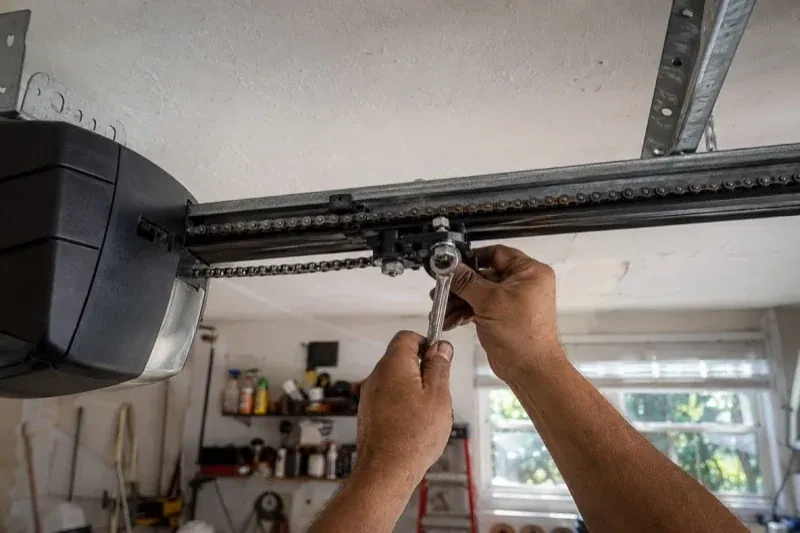
- Chain-Drive Opener RepairThe door closes, touches the floor, then climbs straight back up as if it hit something.
- Belt-Drive Opener RepairHalfway up, every single time, the door hesitates and there is a ratcheting sound from the motor head, then it carries on.
- Photo-Eye Sensor Alignment or ReplacementAfter a cold night the door stays open until the garage warms up.