Repairs · Strathroy-Caradoc
Garage Door Bottom Seal Replacement
The strip under the door has gone as hard as a hose left out for ten summers.
In plain words
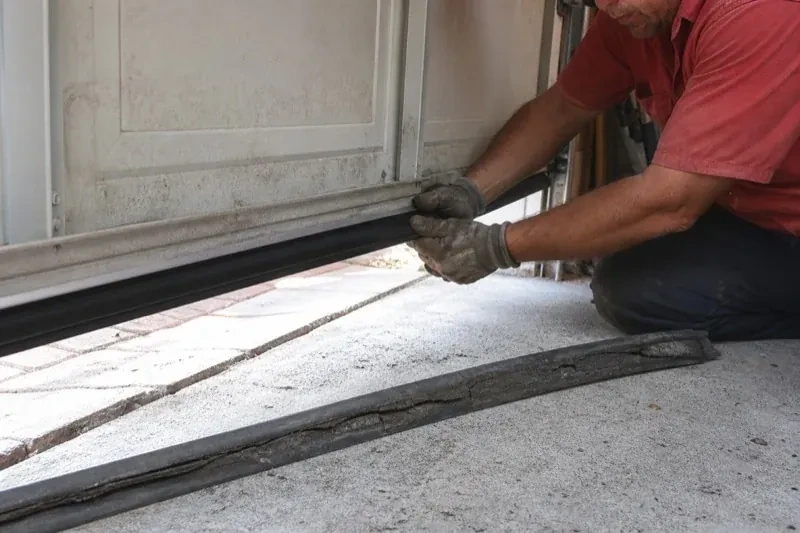
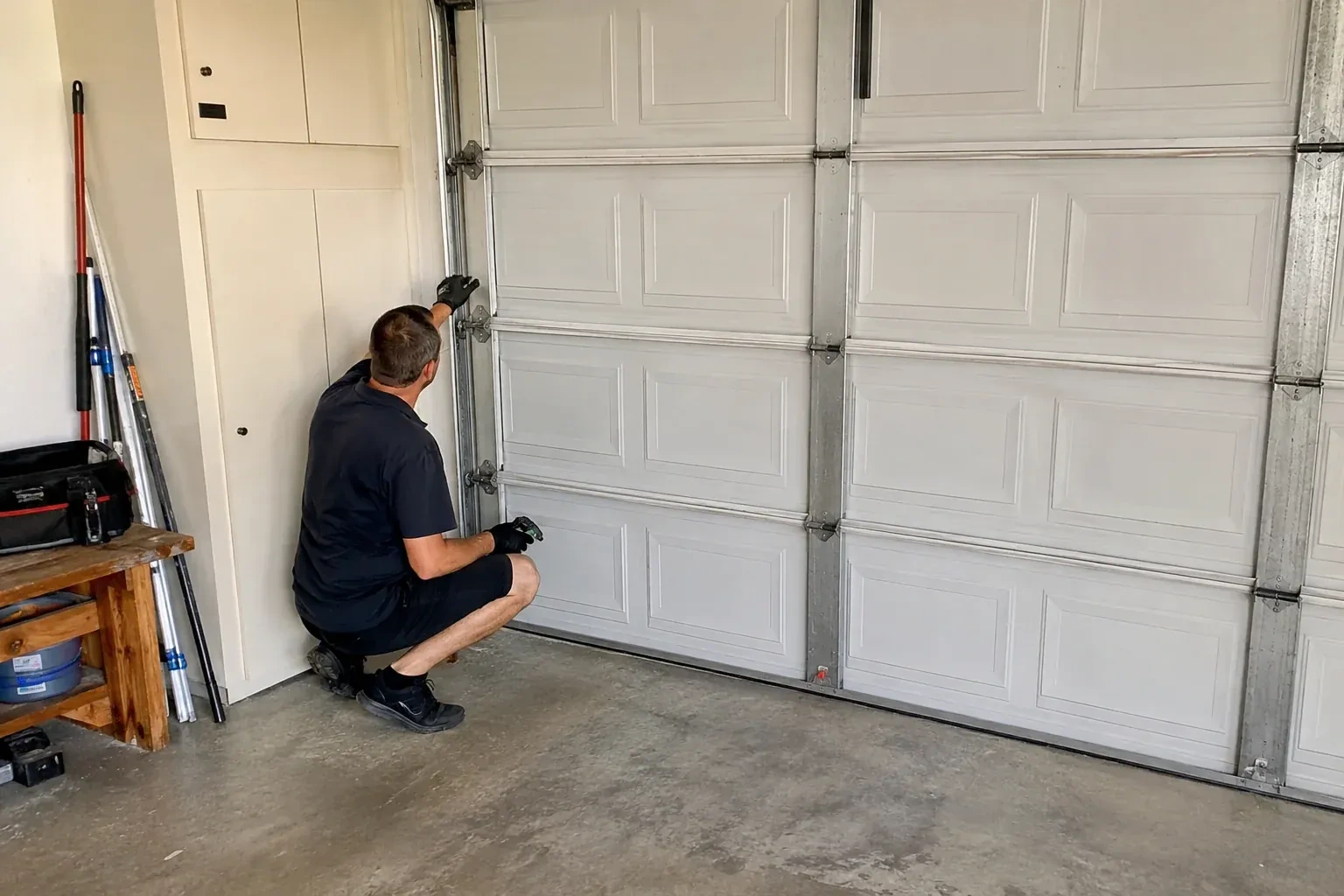
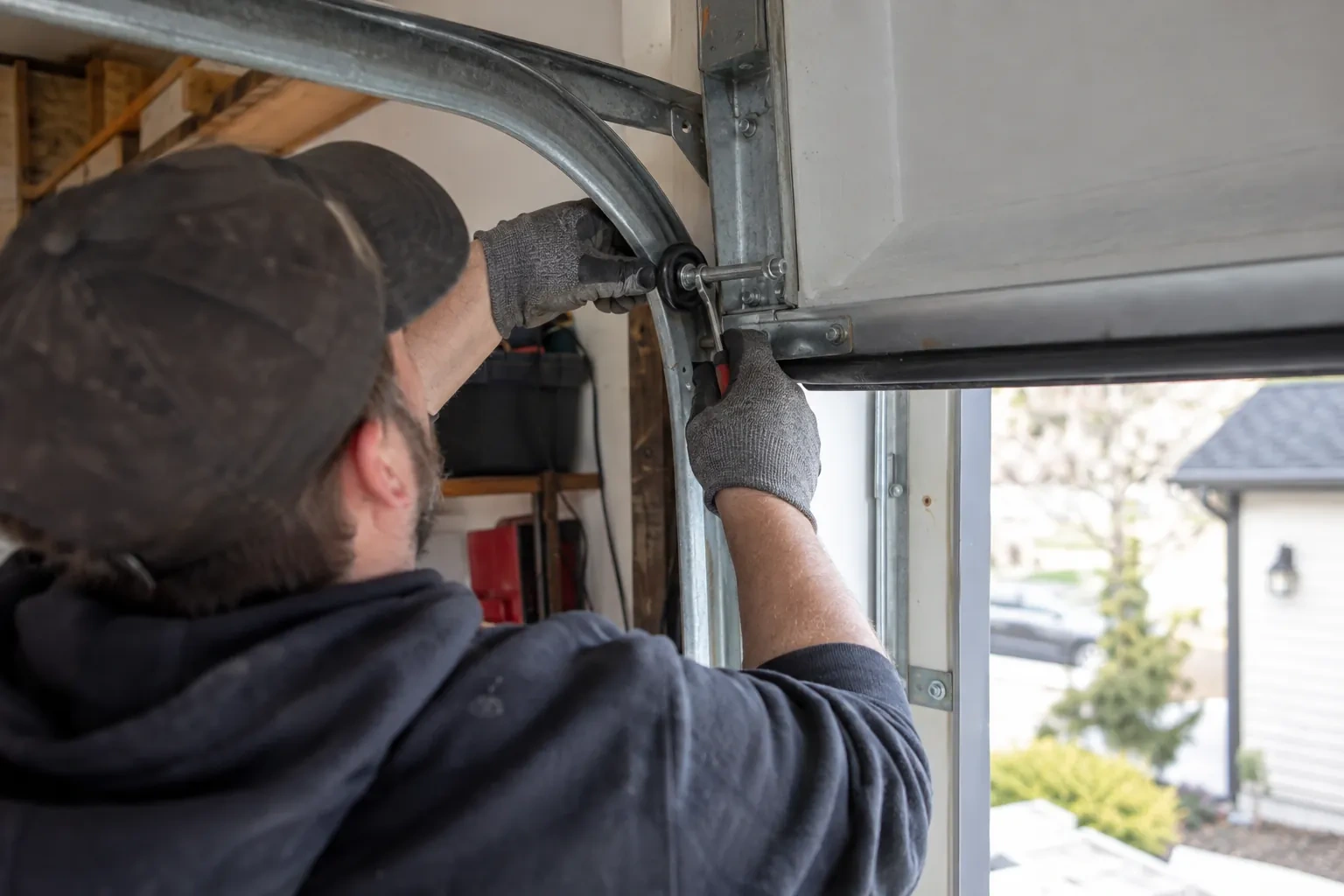
A seal visit runs in a set order. With the door closed, the technician looks for daylight along the floor line and notes whether the gap is even or concentrated at one point. The door is checked for level and the bottom section for straightness, then the retainer is identified and measured. The opener is disconnected and the door secured before the old strip comes out and the channels are cleaned. A new seal, cut a little long, is fed into the channels and trimmed. Finally the door is closed onto the new seal, the opener's limits are reset, and the reversing test is run before the tools go away.
How the visit goesEvery mild afternoon the snow melts off the car, runs to the door, and by morning the rubber strip along the bottom is frozen to the concrete. Last week the opener lifted the door and left half the seal on the floor.
Garage Door Bottom Seal Replacement
How the visit goes
Retainer condition and fasteners
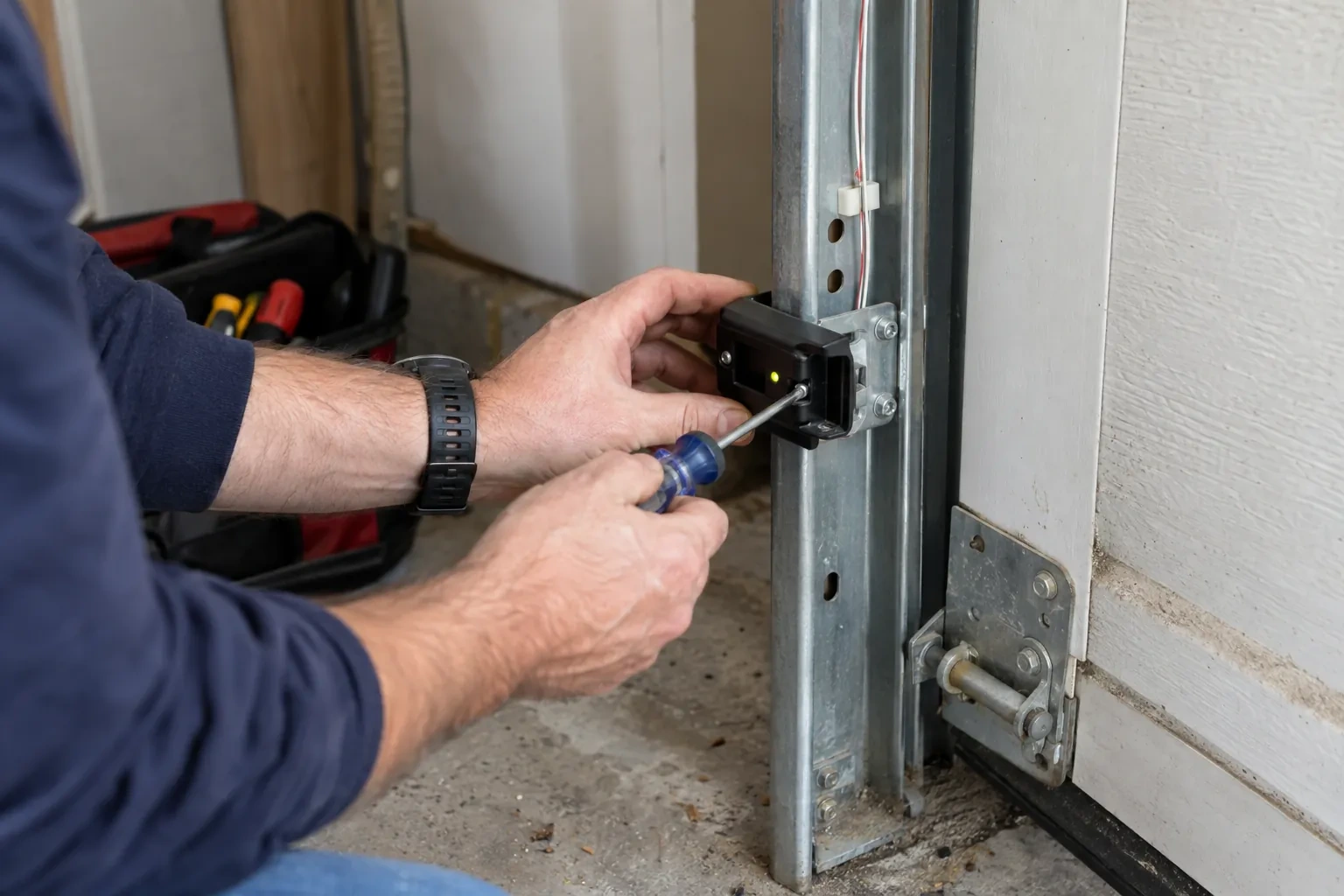
The aluminum or plastic retainer that grips the seal is inspected along its full length. The technician looks for kinks where something struck it, channels that have been spread open, corrosion where salt has sat, and screws that have rusted or pulled loose from the rail. A retainer that is straight and tight is reused; one that is damaged is measured for a matching replacement so both channels line up with the new seal. On doors where the retainer is part of a plastic bottom cap, a cracked cap is noted and a screw-on aluminum retainer is offered as the practical repair.
Fitting a new retainer where needed
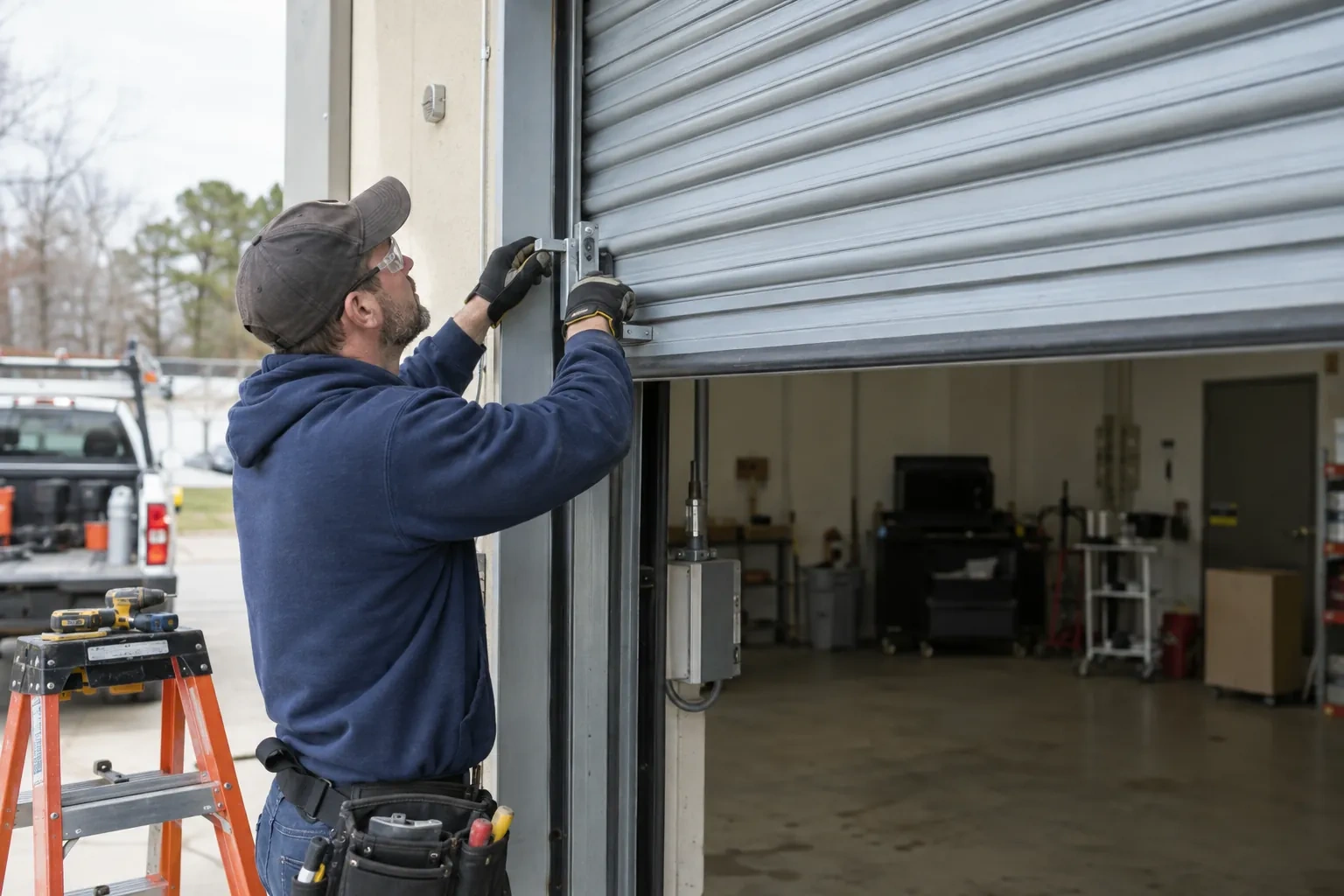
If the inspection found a retainer that is bent, corroded or spread open, it is replaced before the seal goes in. The old extrusion is unscrewed or its rivets drilled out, the bottom rail is cleaned and any rust treated, and a new aluminum retainer is fixed straight along the rail with fresh self-drilling screws, checked with a straightedge so the channels run true. Fastener heads are sealed against meltwater. On a door whose channel was moulded into a plastic bottom cap, a screw-on retainer is fitted over the rail so a standard seal can be used from now on.
Keeping the new seal from freezing down
The habit that does the most for a bottom seal in a cold climate is a wipe of silicone spray along the seal face each autumn and again mid-winter. It leaves a film that meltwater struggles to bond to, so the strip lifts off the slab cleanly on a frosty morning. Avoid petroleum-based sprays, which soften vinyl. If the door does freeze to the floor, leave the remote alone: free the seal by hand with gentle warmth from a hair dryer or by working a plastic scraper along the line, then run the door. A minute of patience keeps the new seal whole.
Garage Door Bottom Seal Replacement
In the van
Bead-style bottom seal
Self-drilling retainer screws
Nail-on vinyl strip for wood doors
Wire brush and scraper
Bulb or U-style bottom seal
Garage Door Bottom Seal Replacement
What affects the quote
Floor and threshold shape
A dished, sloped or heaved slab may call for a taller bulb profile or a threshold seal on the floor, each of which is quoted as a separate choice you can accept or leave.
Perimeter seals done together
Jamb and header weatherstripping renewed in the same visit is quoted per length of stop moulding, and doing it alongside the bottom seal saves a second call-out.
Door width
A single door takes a shorter length of seal than a double, and the widest doors need more time to feed the strip evenly across. The quote starts from the width measured on the day.
What to have ready
- Is the old seal hard and cracked, torn, hanging loose, or missing?
- Is there a car or storage inside that needs moving before the visit?
- Does the driveway slope toward the garage, or does water pool at the door?
Garage Door Bottom Seal Replacement: questions
QuestionsHow do I look after the new seal?
Wipe it clean of salt and grit a few times a year, and give it a light coat of silicone spray each autumn so meltwater has nothing to bond to. Keep petroleum products and solvents away from it, since they soften vinyl. Clear ice and packed snow from the threshold before running the door in winter. Once a season, look under the closed door for daylight. That is the whole routine.
Why does the seal freeze to the floor, and what should I do when it does?
Snow melts off the car, runs to the low point at the door and refreezes overnight around the seal. When that happens, leave the remote alone, since the opener will tear the strip or pull the door out of level. Free the seal by hand with gentle warmth along the line or by working a plastic scraper under it, then run the door. A film of silicone on the seal each autumn largely prevents it.
Should the side and top weatherstripping be replaced at the same time?
It is worth having them looked at while the technician is there. The vinyl fin on the stop moulding around the jambs and header shrinks, tears and hardens on the same schedule as the bottom seal, and a draft that survives a new bottom seal usually comes from the sides. Doing the perimeter in the same visit saves a return trip and leaves the door sealed on all four edges.
Related services
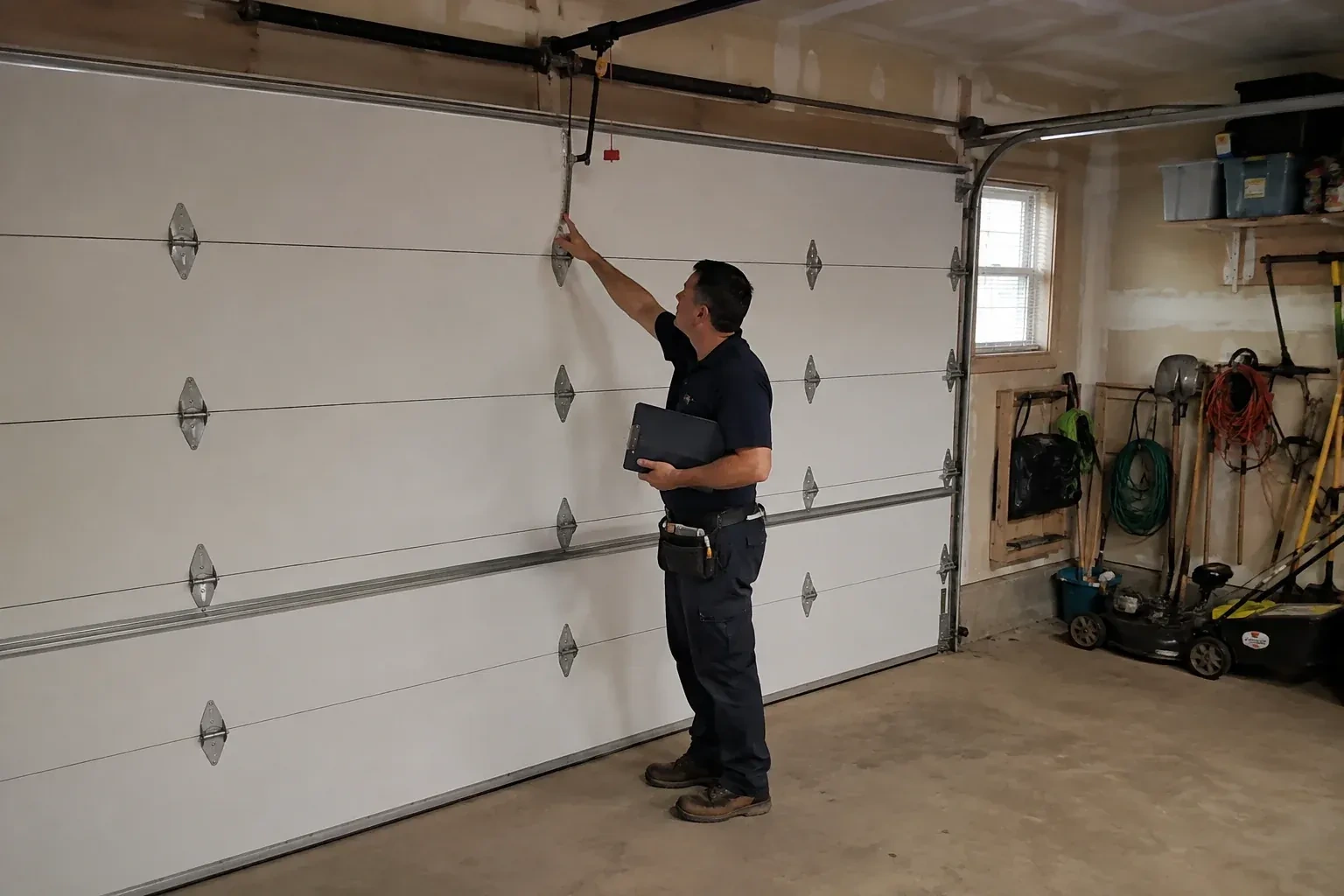
- Garage Door Tune-UpThe door lands with a thud you can feel through the kitchen floor, and sometimes it bounces back up a few centimetres before settling.
- Off-Track Garage Door ResetYour car is inside and the door is stuck crooked across the opening.
- Garage Door Panel ReplacementYou misjudged the last metre of the driveway and felt the bumper meet the door.