Repairs · Strathroy-Caradoc
Garage Door Perimeter Weatherstrip
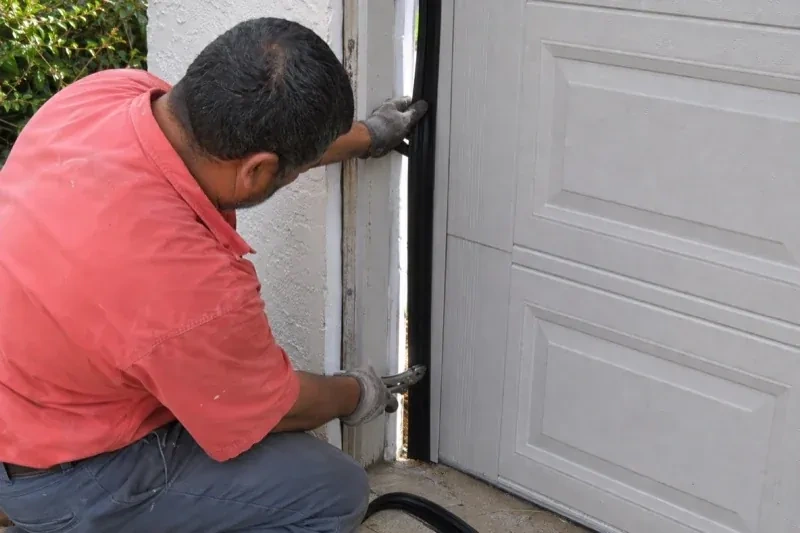
Every time the door closes there is a rubbing squeal along one side, and the flexible fin has folded under itself and torn.
In plain words
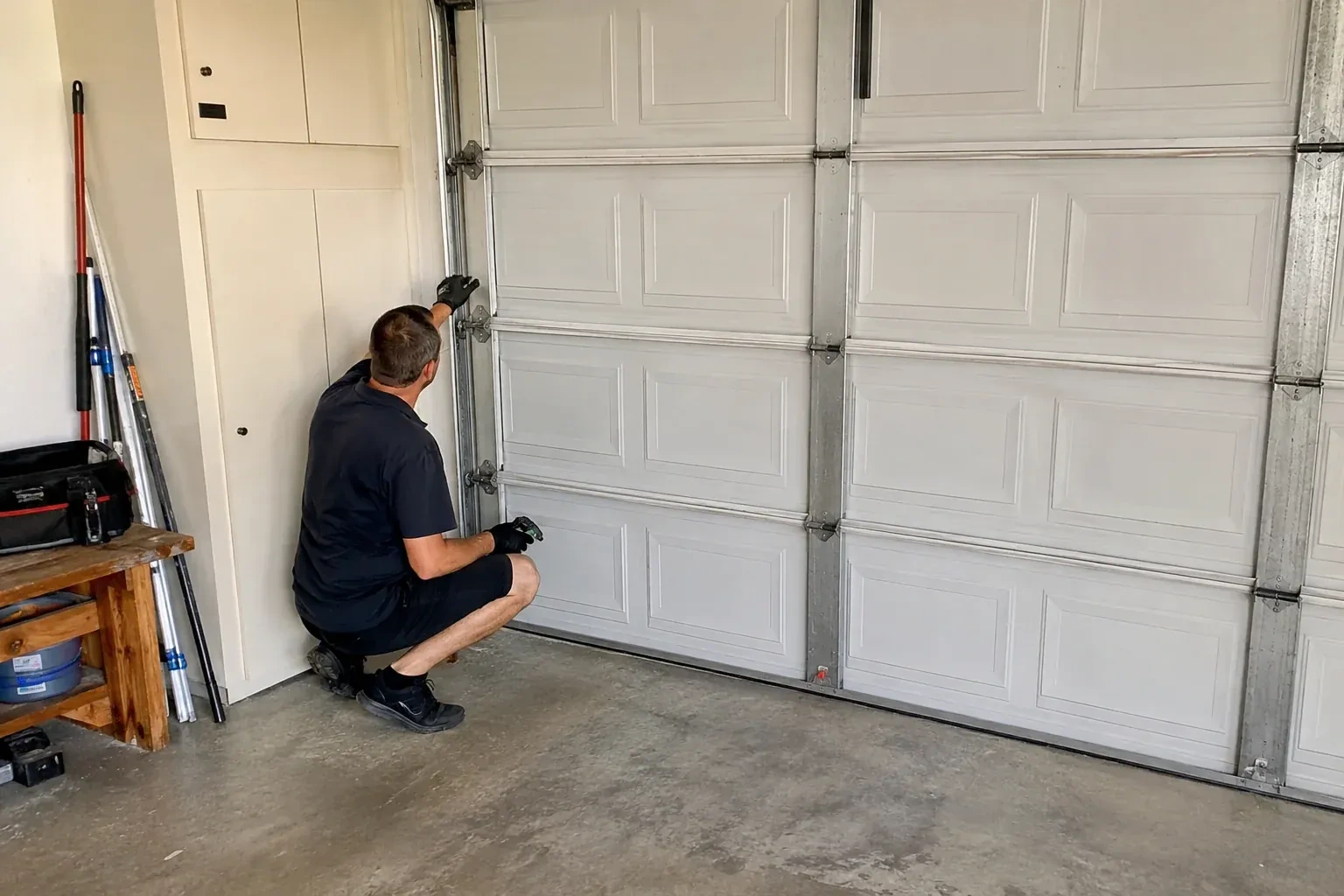
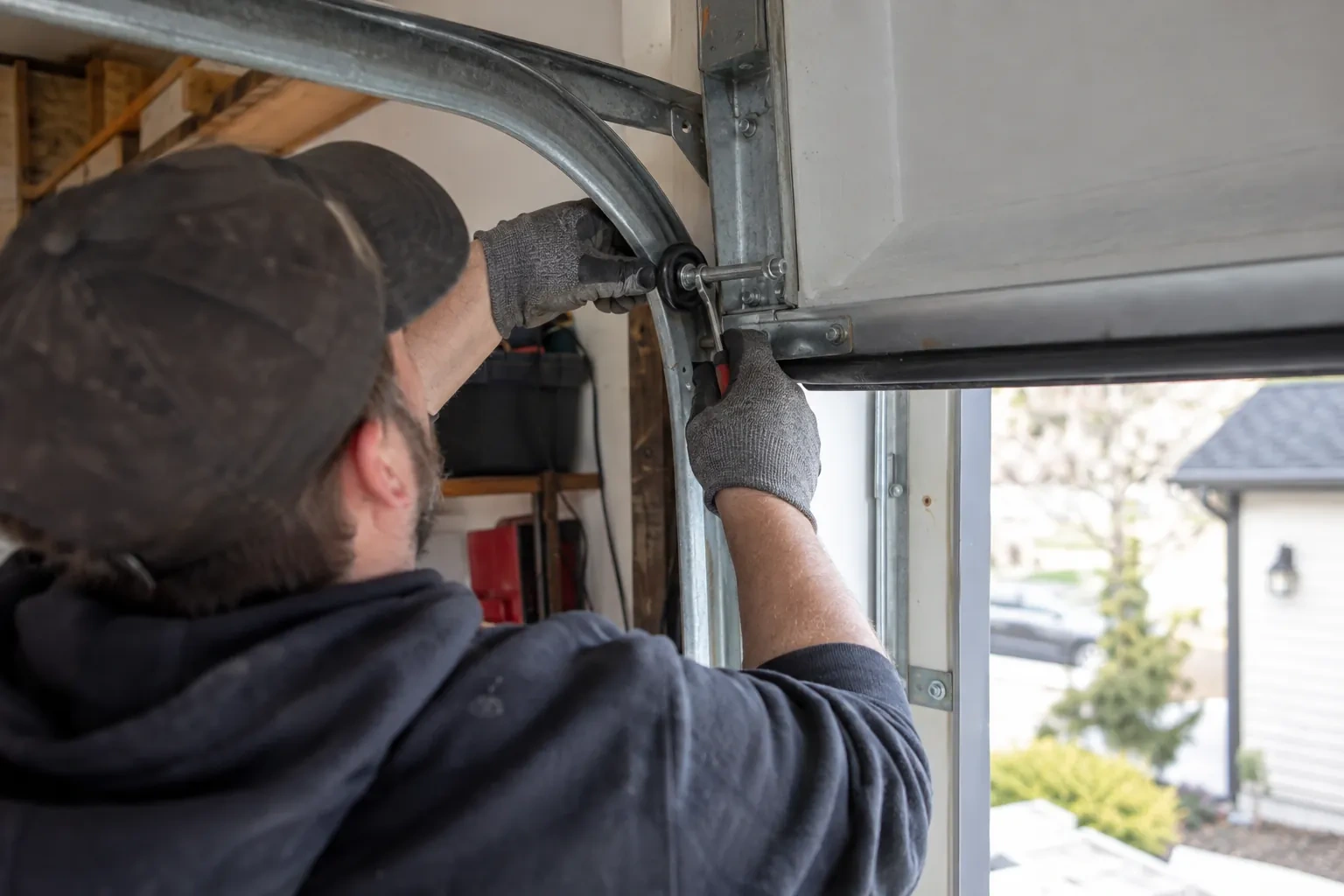
A perimeter seal is only as good as the door it meets, so a technician looks at the door before the seal. If one side shows daylight and the other is tight, the strip may be fine and the door may have drifted: worn rollers, a track bracket that has moved, a top section that bows away from the header. Setting that right first means the new fin can be positioned with the same light contact on every side. Where the door is already square, the seal is fitted straight to it. Either way the result is a door that closes against a continuous line of contact.
How the visit goesThe new door went in last year and looks perfect, but the old wooden stop and its tired seal were left in place. Along the top there is a gap you could slide a finger into, and the cold pours through it.
Garage Door Perimeter Weatherstrip
How the visit goes
Probing the jambs and header
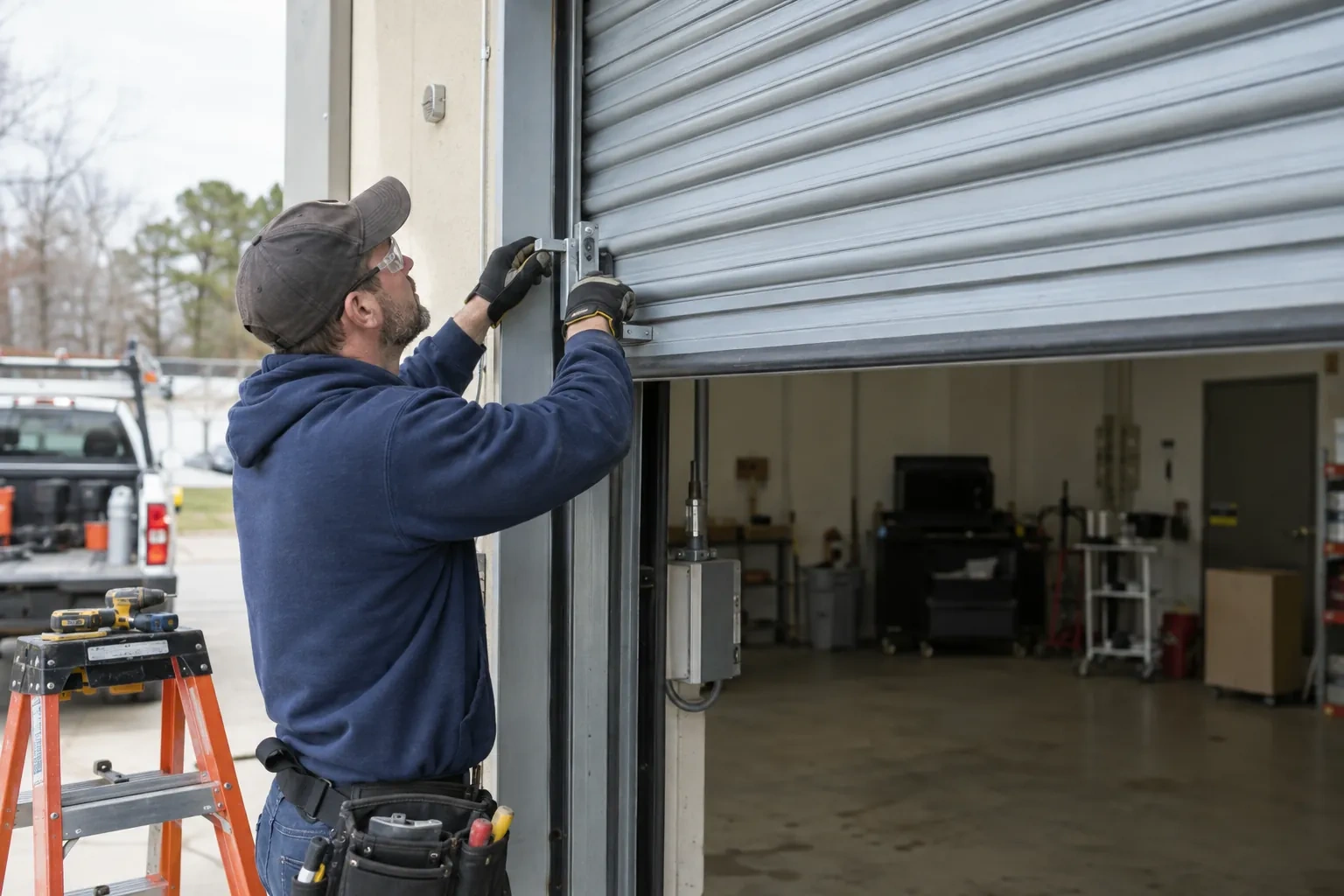
The strip is only as secure as the wood behind it, so the jambs are probed with an awl along their length and especially the lowest part, where slush and salt sit all winter. Soft, dark or crumbling wood is marked for repair. The header is checked for sag and for gaps opening between it and the top section. Where the jambs are clad in aluminum or vinyl, the technician looks for what the cladding hides and for where the seal can be fastened through to solid material. This step often adds a splice of new lumber or PVC trim to the job, and it is what makes the new seal stay put.
The header piece goes on first
With the door closed, the header length is cut to the full width of the opening and lifted into place, a two-person job on a double door. It is positioned so its fin lies against the top section with a slight, even deflection along the whole width, then fastened from the centre outward with galvanized or stainless nails or exterior screws at regular spacing, which keeps the length straight rather than letting it wander. The ends are left to receive the side pieces beneath them. Fitting the header first means both sides are cut to meet it exactly, and the corners close properly.
Keep paint off the fin
When the trim is next painted, the flexible fin stays bare. Paint fills the flexible material and stiffens it, and a stiff fin cracks well before its time once the cold takes hold. If the rigid part of the stop is wood, it can be painted, but with the brush kept off the fin or the fin masked. One-piece vinyl stop needs no paint at all and simply washes clean. This single habit is the difference between a seal that stays soft for many years and one that fails early, and it is the most common cause of early failure the technician sees.
Garage Door Perimeter Weatherstrip
In the van
Silicone spray lubricant
Epoxy consolidant and exterior primer
Aluminum retainer and rubber insert
Flat bar, hammer and nail set
Galvanized or stainless trim nails
Garage Door Perimeter Weatherstrip
What affects the quote
Colour and profile
Standard colours and fin widths are carried on the truck. A less common colour, an extra-wide fin or a commercial retainer with insert may be a special order, with the difference noted.
Corner detailing
Mitred corners on a one-piece stop, or fitting round an unusual trim profile, take more cutting and fitting than butted corners on a plain jamb.
Trim, brickmould and caulking
Re-caulking the joint between stop and trim, or dressing capping that channels water down the jamb, is small work done while the surface is bare and is listed on its own line.
What to have ready
- Is the bottom seal on the door also worn?
- What colour is the trim around the door?
- Is it a single or double door, and roughly how wide and tall?
Garage Door Perimeter Weatherstrip: questions
QuestionsCan the seal be replaced in winter?
Yes. The technician keeps the lengths warm in the van until the moment they are fitted, because cold vinyl is stiff and can split at a fastener, and works with the door closed so the garage is not open to the weather for long. Jamb repairs can be done in the cold as well. Many households have it done in autumn or winter because that is when the gaps make themselves felt.
Should I choose a fin on the wood stop or a one-piece vinyl stop?
If the wood stop is sound, straight and not buried in paint, a new fin nailed to its face is the simpler choice and keeps the look of the trim. If the stop is cracked, soft or has been painted many times, a one-piece vinyl stop replaces it entirely, needs no paint and cannot rot. The technician checks the stop and recommends one or the other on site.
How can I tell the side and top seal needs replacing?
Close the door, turn off the garage lights and look along the edges for daylight. Then press the fin with a thumb: it should be soft and spring back. Hardness, cracks, pieces missing, a strip hanging loose, snow or leaves inside along the edge, or a fin that has folded under and torn are all signs. A rubbing squeal as the door moves is another.
Related services
- Garage Door Tune-UpThe door lands with a thud you can feel through the kitchen floor, and sometimes it bounces back up a few centimetres before settling.
- Off-Track Garage Door ResetYour car is inside and the door is stuck crooked across the opening.
- Garage Door Panel ReplacementYou misjudged the last metre of the driveway and felt the bumper meet the door.