Repairs · Southwest Middlesex
Garage Door Perimeter Weatherstrip in Southwest Middlesex
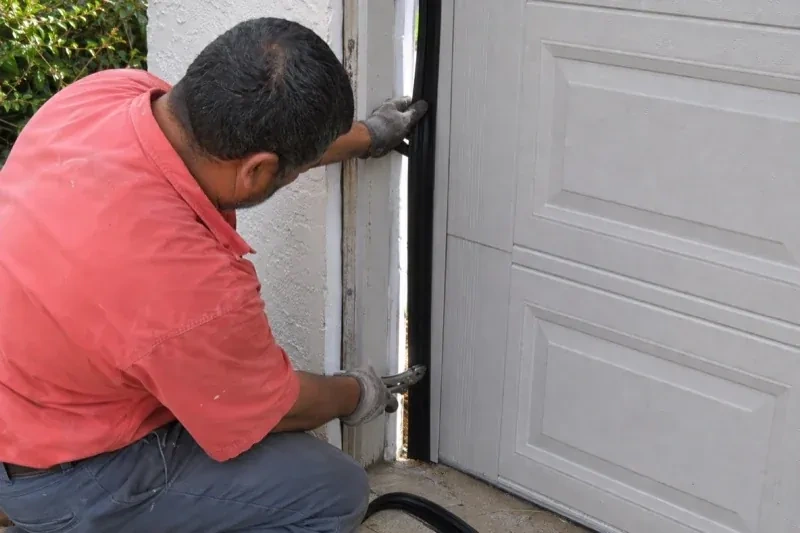
Every time the door closes there is a rubbing squeal along one side, and the flexible fin has folded under itself and torn.
In plain words
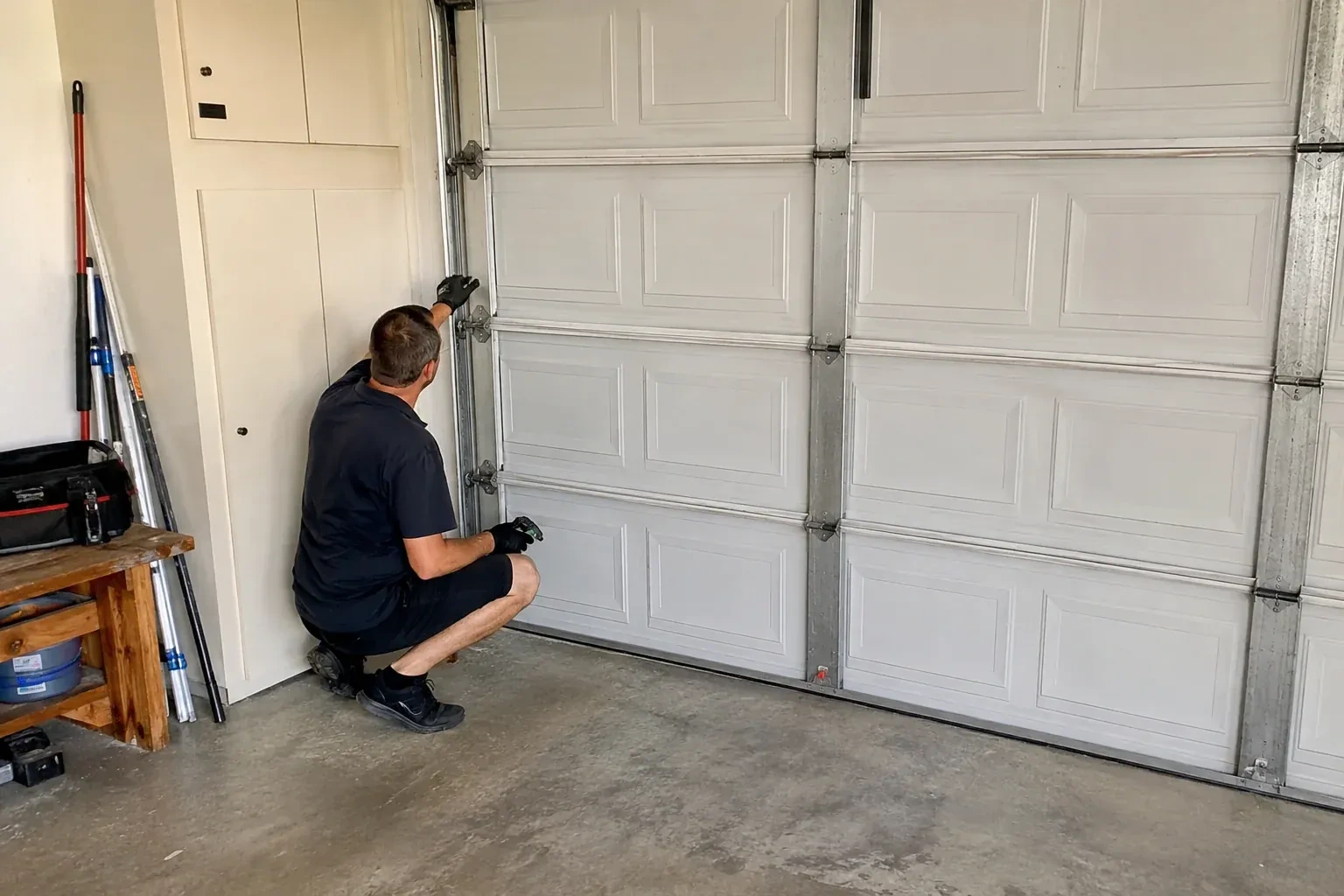
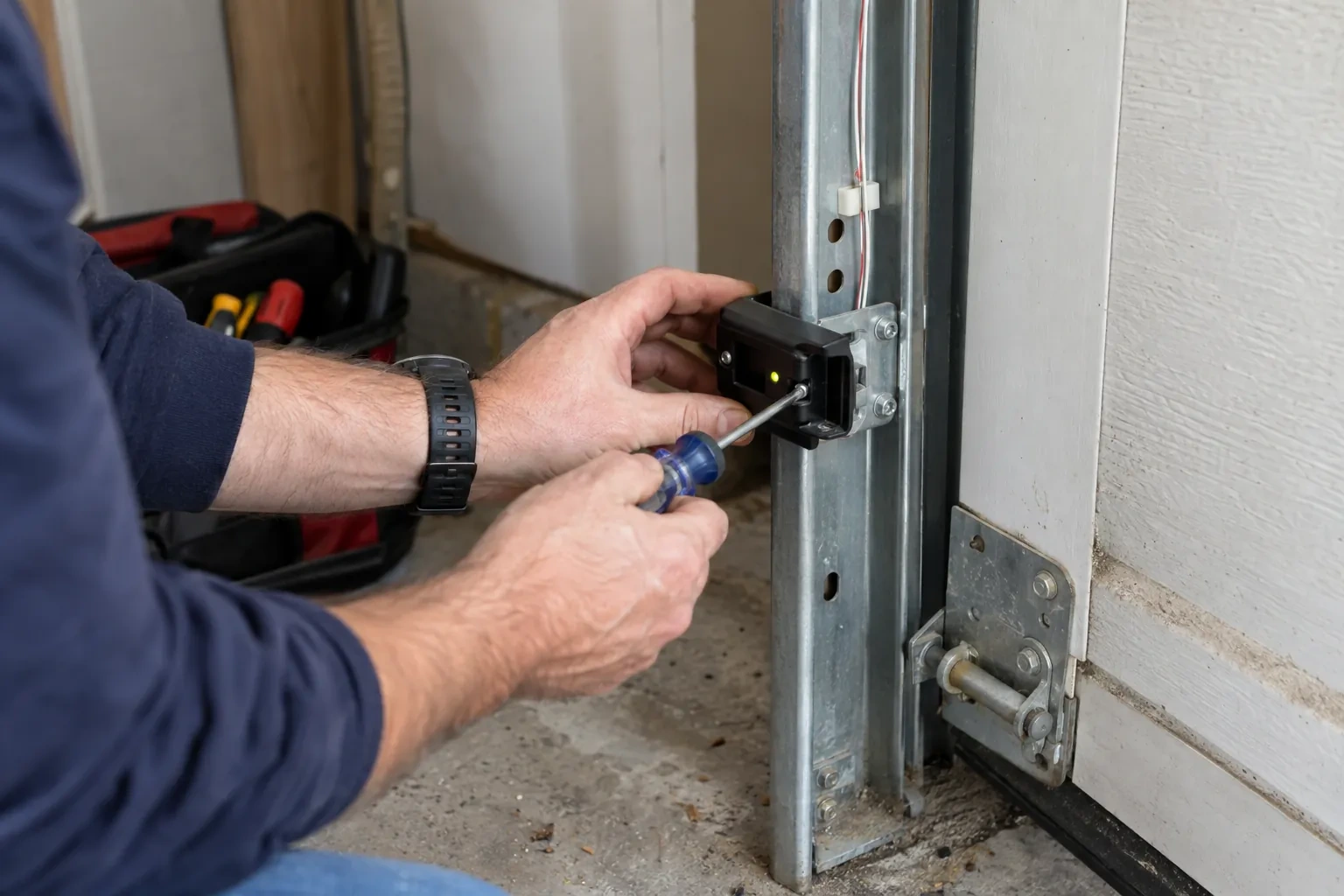
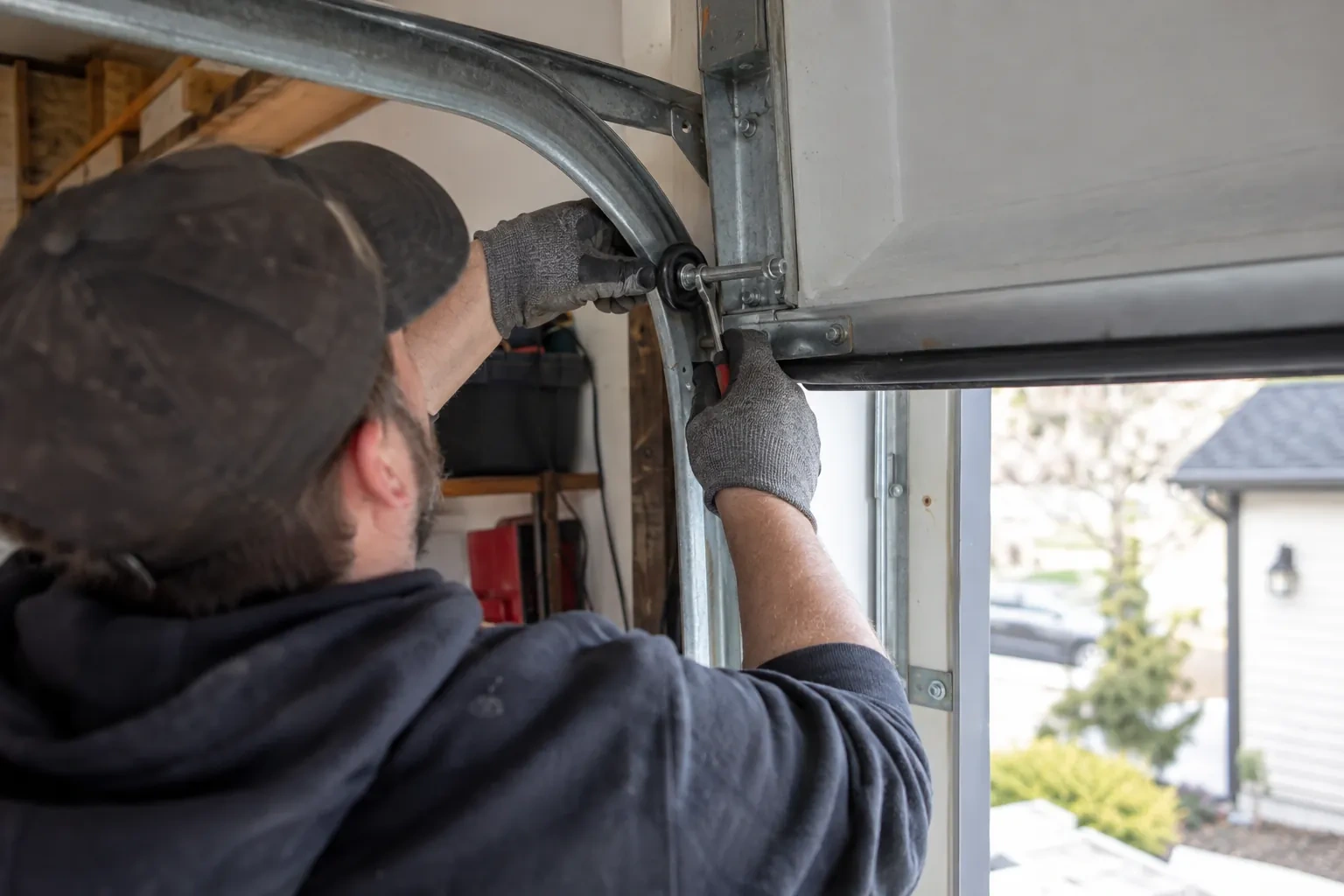
A perimeter seal is only as good as the door it meets, so a technician looks at the door before the seal. If one side shows daylight and the other is tight, the strip may be fine and the door may have drifted: worn rollers, a track bracket that has moved, a top section that bows away from the header. Setting that right first means the new fin can be positioned with the same light contact on every side. Where the door is already square, the seal is fitted straight to it. Either way the result is a door that closes against a continuous line of contact.
How the visit goesWith the door closed and the garage lights off, a thin bright line runs down the whole left side of the opening. You can see the neighbour's fence through it. The strip that should close that gap has shrunk back from the door.
Garage Door Perimeter Weatherstrip
How the visit goes
What kind of seal is there now
Openings carry different seals depending on their age and who last worked on them. Many older garages have a painted wood stop with a flexible vinyl fin nailed to its face. Newer installations often have a one-piece vinyl stop with the fin moulded in. Some commercial and premium doors use an aluminum retainer with a slide-in rubber insert, or a brush seal. The technician identifies which is present, whether the rigid part is sound enough to keep, and what the fastening was, because that decides whether a new fin goes onto the existing stop or the whole stop is replaced.
Fastening that lasts through the seasons
Fasteners are chosen for the weather they will live in: galvanized or stainless trim nails, exterior screws where the stop is heavy or the wood is hard, and weatherproof staples only for a light fin on sound wood. They are spaced evenly so the strip stays straight between them, and a nail set is used so the heads sit flush without crushing the vinyl. In cold weather the lengths are kept warm in the van until the moment they are fitted, because cold vinyl is brittle and splits at the ends. Fasteners near the end of each piece go in a little further back for the same reason.
Slush, salt and the bottom of the jambs
The lowest part of each jamb is where the weather does its work, so a little attention there protects the whole seal. Push slush away from the jambs when clearing the driveway rather than piling it against them, and rinse the salt off the bottom of the stop on a mild day. Keep the joint between the jamb and the sill caulked so meltwater runs off the face instead of behind it. If a section of jamb was replaced, keep its paint or PVC surface intact. A dry jamb base holds its fasteners, and fasteners that hold keep the seal tight.
Garage Door Perimeter Weatherstrip
In the van
Silicone spray lubricant
Epoxy consolidant and exterior primer
Aluminum retainer and rubber insert
Flat bar, hammer and nail set
Galvanized or stainless trim nails
Garage Door Perimeter Weatherstrip
What affects the quote
Size of the door
A double door has a longer header and the same two sides as a single, so more material and a two-person lift for the top piece; taller openings take longer side lengths.
Commercial or oversized openings
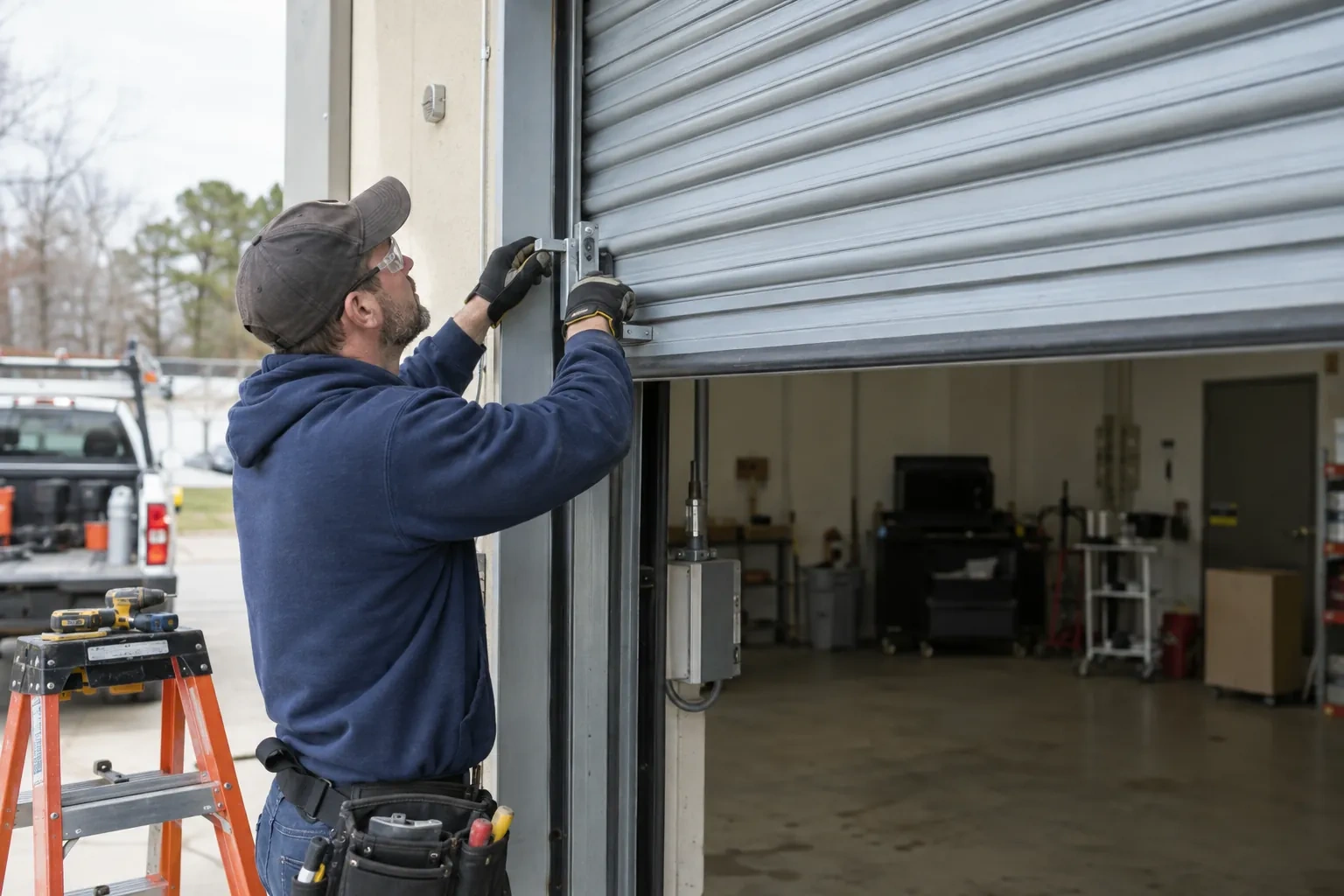
Wider and taller commercial doors often carry an aluminum retainer with a rubber insert or a brush seal, and the material and fitting time differ from a residential vinyl seal.
Working height and access
A tall header, a sloped driveway that makes a ladder awkward, shrubs against the jambs or cars and storage close to the door all affect how long the work takes.
What to have ready
- Is anything stored against the jambs, or a car parked close to the opening?
- Is it a single or double door, and roughly how wide and tall?
- Is the bottom seal on the door also worn?
Garage Door Perimeter Weatherstrip: questions
QuestionsCan the seal be replaced in winter?
Yes. The technician keeps the lengths warm in the van until the moment they are fitted, because cold vinyl is stiff and can split at a fastener, and works with the door closed so the garage is not open to the weather for long. Jamb repairs can be done in the cold as well. Many households have it done in autumn or winter because that is when the gaps make themselves felt.
Should I choose a fin on the wood stop or a one-piece vinyl stop?
If the wood stop is sound, straight and not buried in paint, a new fin nailed to its face is the simpler choice and keeps the look of the trim. If the stop is cracked, soft or has been painted many times, a one-piece vinyl stop replaces it entirely, needs no paint and cannot rot. The technician checks the stop and recommends one or the other on site.
How can I tell the side and top seal needs replacing?
Close the door, turn off the garage lights and look along the edges for daylight. Then press the fin with a thumb: it should be soft and spring back. Hardness, cracks, pieces missing, a strip hanging loose, snow or leaves inside along the edge, or a fin that has folded under and torn are all signs. A rubbing squeal as the door moves is another.
Related services
- Garage Door Tune-UpThe door lands with a thud you can feel through the kitchen floor, and sometimes it bounces back up a few centimetres before settling.
- Off-Track Garage Door ResetYour car is inside and the door is stuck crooked across the opening.
- Garage Door Panel ReplacementYou misjudged the last metre of the driveway and felt the bumper meet the door.