Repairs · North Middlesex
Garage Door Manual Lock Repair in North Middlesex
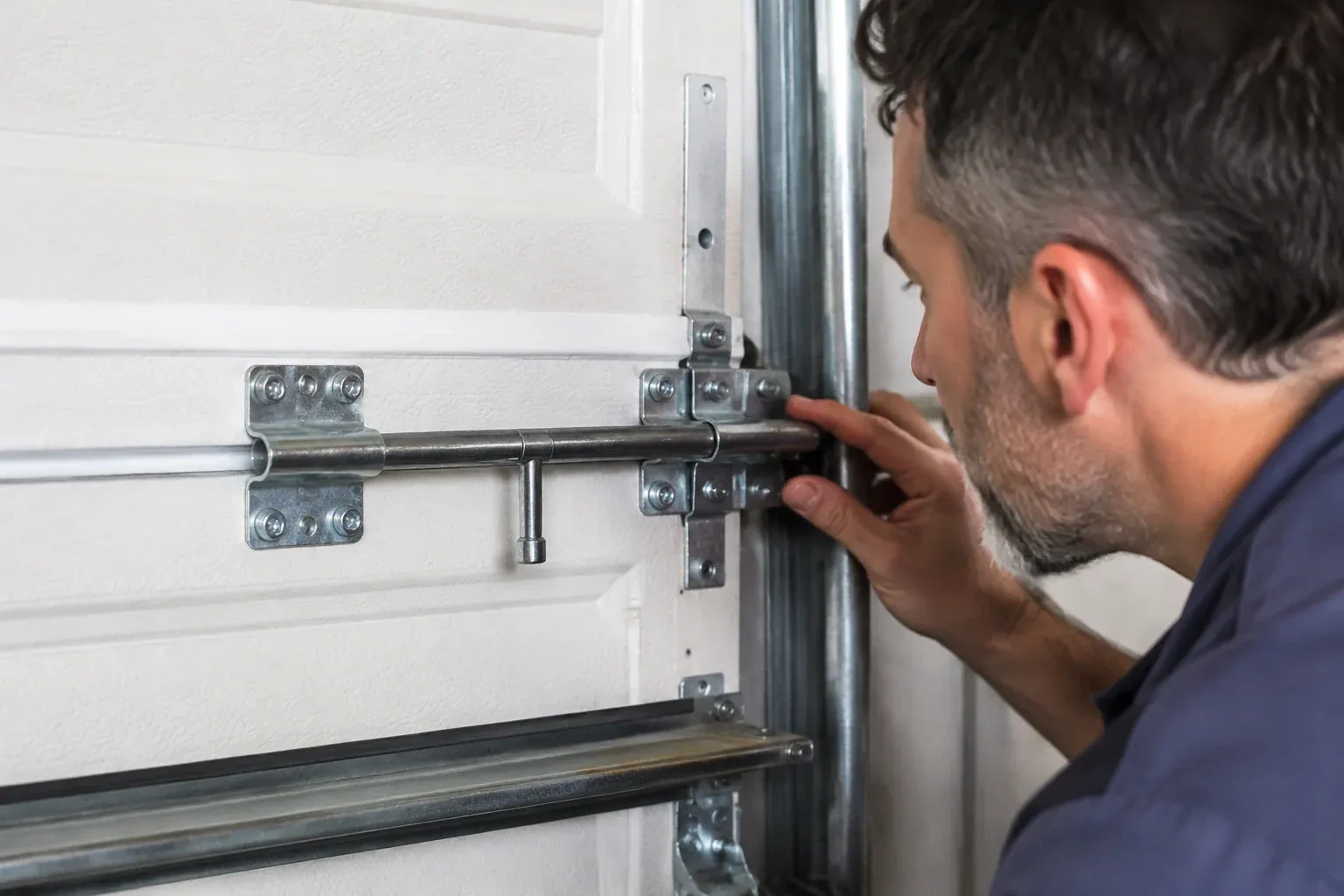
You pushed the slide bolt across like always, but tonight it stops short of the slot in the track and springs back.
In plain words
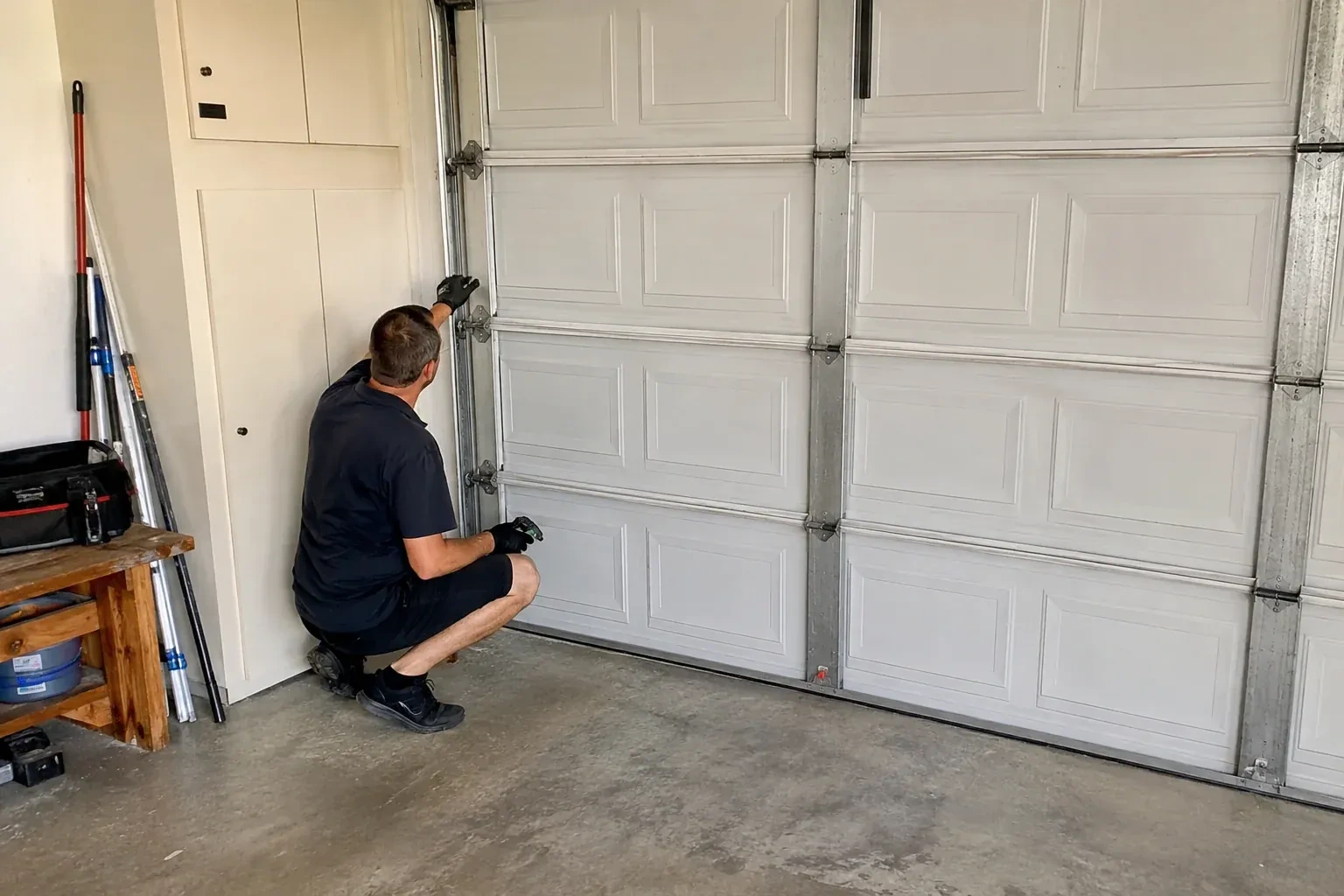
The visit runs in a settled order. On the phone you describe the lock, the door, whether an opener is fitted and whether the lock is currently jammed. On site the opener is disconnected, the door is closed by hand and checked for level. The lock is then examined piece by piece: handle, spindle, centre mechanism, bars, guides, cylinder, fasteners and the track slots. Adjustments are made first, worn parts replaced second, and the lock is cycled from both sides with the door shut. Finally the opener is reconnected, the door runs full cycles, and you are shown how the lock and the opener are meant to be used together.
How the visit goesSomeone slid the inside lock across before bed, and in the morning someone else pressed the remote. The opener groaned, the door jumped and shuddered, and now the lock bar is bent, the section is creased and the door hangs crooked at the top.
Garage Door Manual Lock Repair
How the visit goes
How the lock is fixed to the door
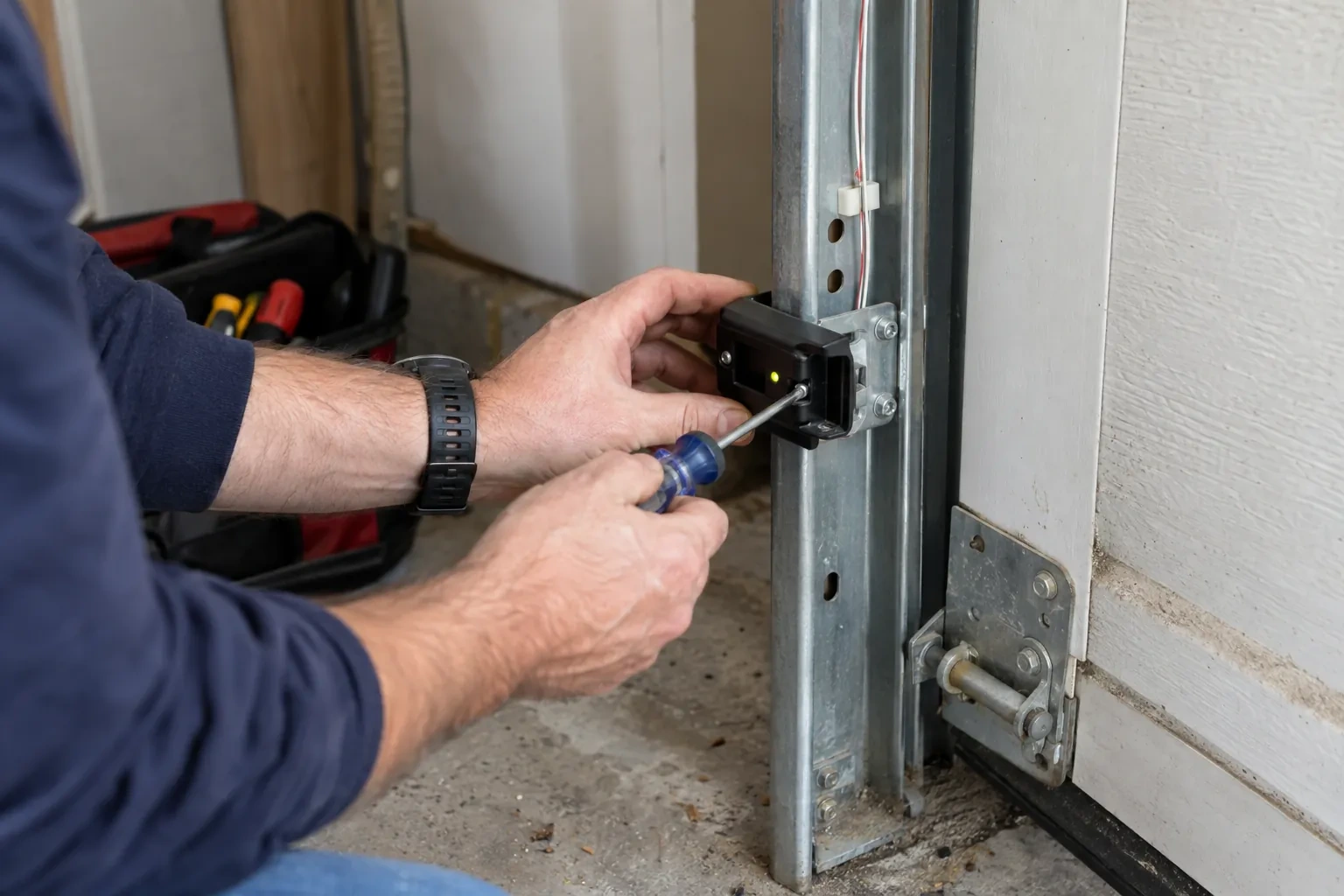
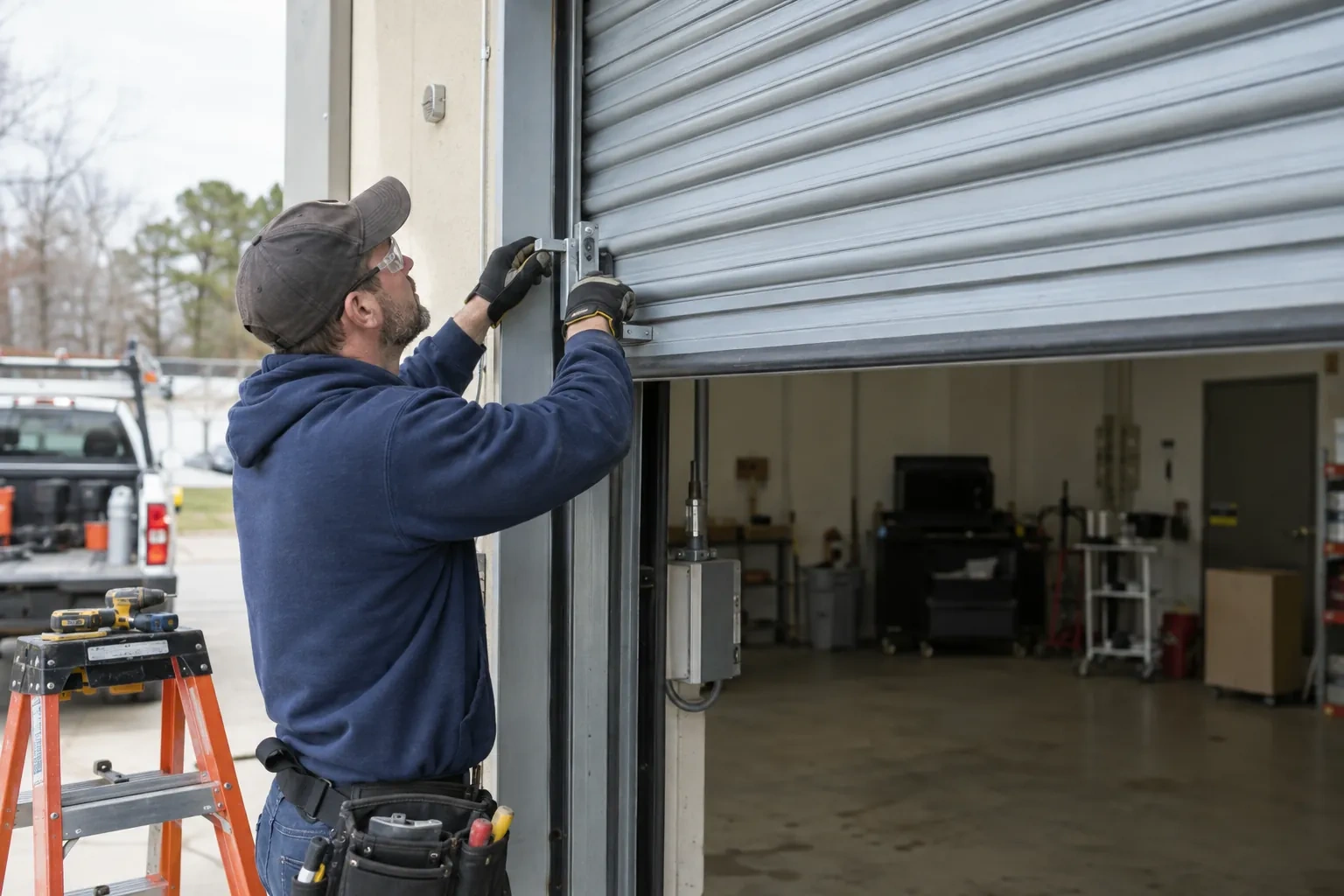
The lock lives on the door section, and the section has to hold it. On a steel door the technician checks whether the screws through the thin skin have pulled and left oval holes, whether the handle base is cracked, and whether the section around the cutout has creased. On a wooden door the check is for softness and rot around the handle and along the stile where the bar guides are screwed, and for a handle that spins in an oversized hole. Insulated doors are measured for thickness so the replacement spindle and through-bolts reach. This tells the technician whether ordinary screws will hold again or whether carriage bolts and backing plates are needed for a lasting fix.
Anchoring the lock in tired material
A lock is only as sound as what it is screwed to. Where screws have pulled through a thin steel skin and left oval holes, the technician fits carriage bolts through the section with a backing plate on the inside, spreading the load across a wide patch of metal. On a wooden door with softness around the handle or along the stile, the decayed wood is cut back and a hardwood filler block or backing plate is let in, and the lock and guides are fixed to that. Holes that have grown are plugged and redrilled. The result is a handle that turns without rocking and guides that hold the bar where it was set.
A lock with a clean throw and a clear release
The finished lock feels definite. The slide bolt or handle moves with light effort, stops with a click as the bar seats in the track, and comes back just as readily. With the door shut and locked, a push from outside meets solid resistance at both sides rather than a wobble on one. Released, both bars sit back behind the track edge so the door rises with nothing to catch. The outside handle turns without rocking and the key goes in and out without a wiggle. Before leaving, the technician has you operate the lock yourself from inside and out, so the action is familiar and any stiffness is dealt with while the tools are still on the floor.
Garage Door Manual Lock Repair
In the van
Spring-steel lock bars
Keyed T-handle lock set
Dry graphite or PTFE lubricant
Lock cylinder with tailpiece
Centre lock body and return spring
Garage Door Manual Lock Repair
What affects the quote
Door alignment behind the fault
When the bar misses its slot because the door sits high or crooked, the fix reaches into track brackets, opener limits or the door's closed position, and that adjustment is quoted alongside the lock work.
Corrosion and seized hardware
Screws rusted solid, a cylinder seized in its handle or bars welded into their guides take time to free or cut out, and corroded parts are replaced rather than reused.
Condition of the bars and guides
Bars that are merely stiff are cleaned and lubricated; bars that are bent are replaced and cut to length, and rusted guides are renewed. The quote follows what the bars turn out to need.
What to have ready
- Is the door steel, wood or aluminum, and roughly how old is it?
- Is there an automatic opener on this door?
- Has the opener ever been run while the lock was engaged?
Garage Door Manual Lock Repair: questions
QuestionsWhat lubricant belongs on a garage door lock?
Dry graphite or a PTFE lock lubricant for the key cylinder, because oil traps grit and moisture in the pins. A light silicone film for the bars and their guides, wiped rather than dripping, so salt spray and slush have less to cling to. Grease is avoided everywhere on the lock, as it thickens in the cold and collects dirt that gums the action.
Should the manual lock be removed when an opener is installed?
Opener makers ask for it to be disabled or removed, and the door industry's guidance agrees. Disabled can mean the bars are fixed back or taken out while the handle stays for appearance, or a snap latch is held open on its catch. Keeping a lock live for outages calls for a manufacturer-approved interlock, not a label alone, since a reminder and routine are not treated as a substitute for removing or disabling the bars.
Will new holes have to be cut in the track?
Rarely. The slots are already there on most tracks, and a bar that misses one is usually a sign the door or a guide has moved. Restoring the door's closed position and resetting the guide brings the bar back to the existing slot. A new slot is punched only when a lock is added to a door that never had one, or an old slot is badly damaged.
Related services
- Garage Door Tune-UpThe door lands with a thud you can feel through the kitchen floor, and sometimes it bounces back up a few centimetres before settling.
- Off-Track Garage Door ResetYour car is inside and the door is stuck crooked across the opening.
- Garage Door Panel ReplacementYou misjudged the last metre of the driveway and felt the bumper meet the door.