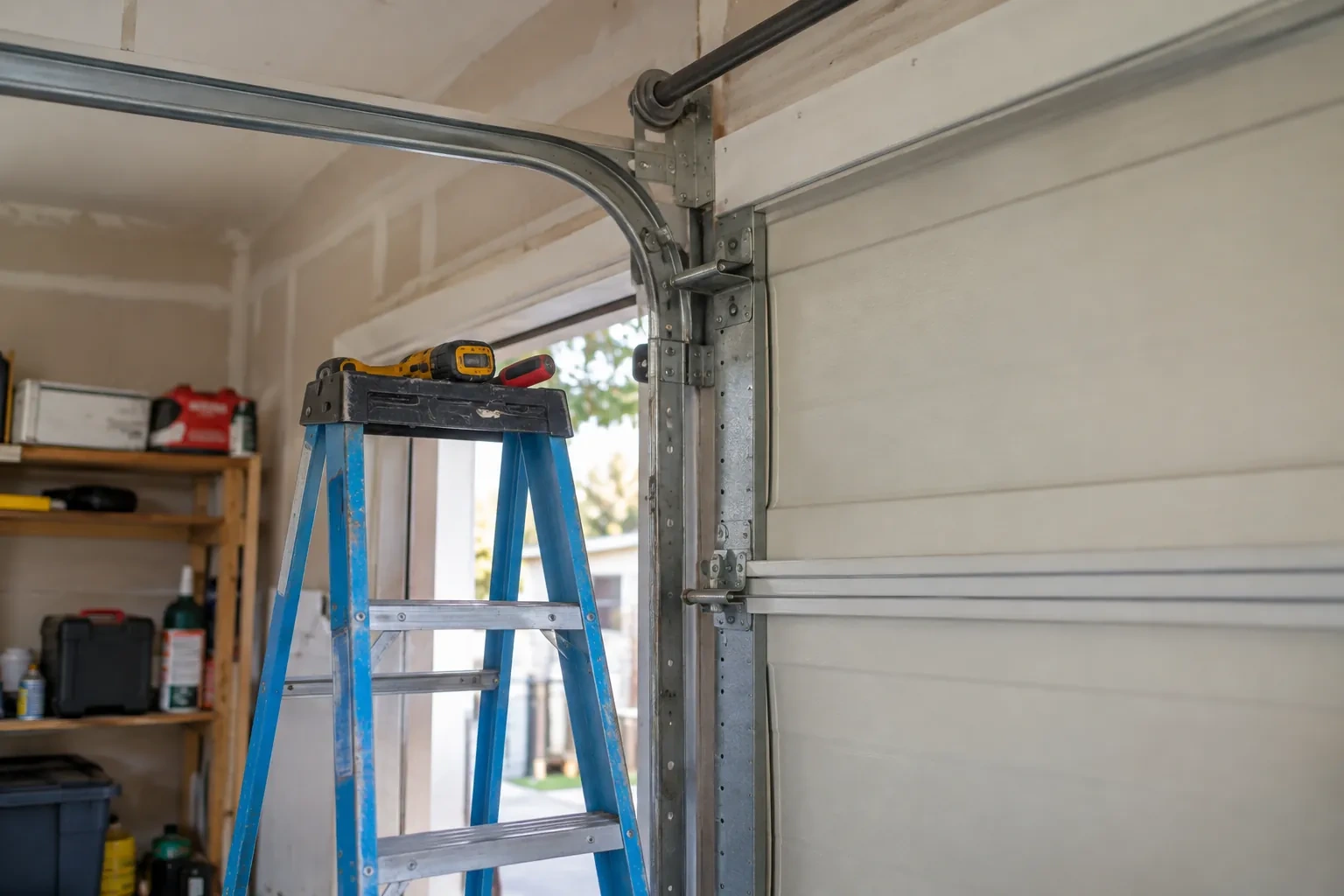
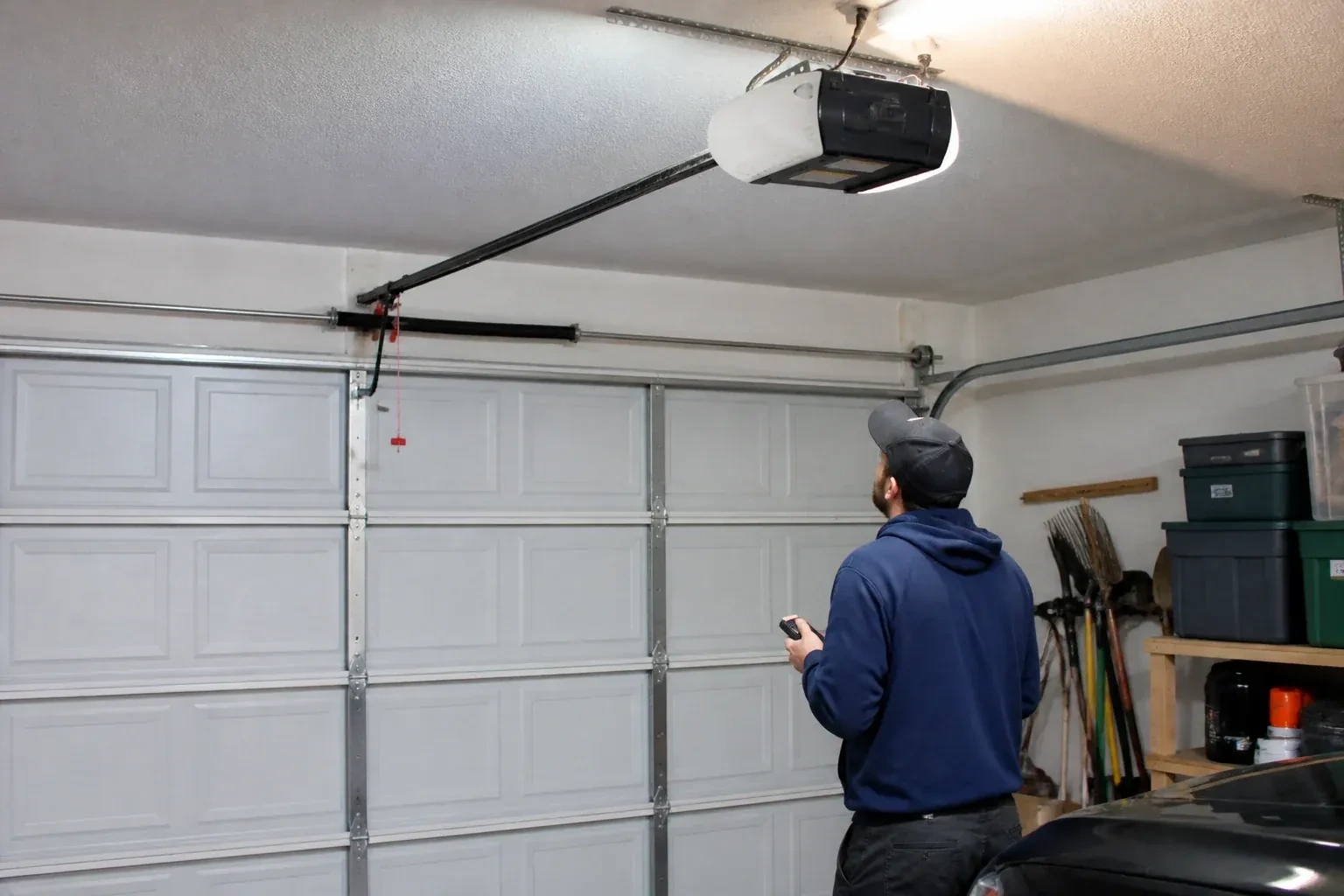
Openers · Newbury
Emergency Release Repair in Newbury
After a week of lifting the door by hand you pressed the button, hoping it would catch.
In plain words
Most households meet the release for the first time in a power outage, usually in winter. The door is shut, the car is inside, and the red handle is the only way to move the door. This service makes that moment go smoothly: a handle that hangs where a person can reach it, a cord strong enough to throw the lever, a trolley that lets go cleanly, and a door that lifts without a fight once it is free. The technician also shows everyone in the house the sequence, including how to hold the trolley out for a few days of manual use and how to reconnect afterwards.
How the visit goesSince the new door went in, the red handle has hung just below the ceiling, a stepladder's height above anyone in the household. During last week's blackout your daughter stood under it with a broom, unable to hook it down.
Emergency Release Repair
How the visit goes
Why the trolley will not latch
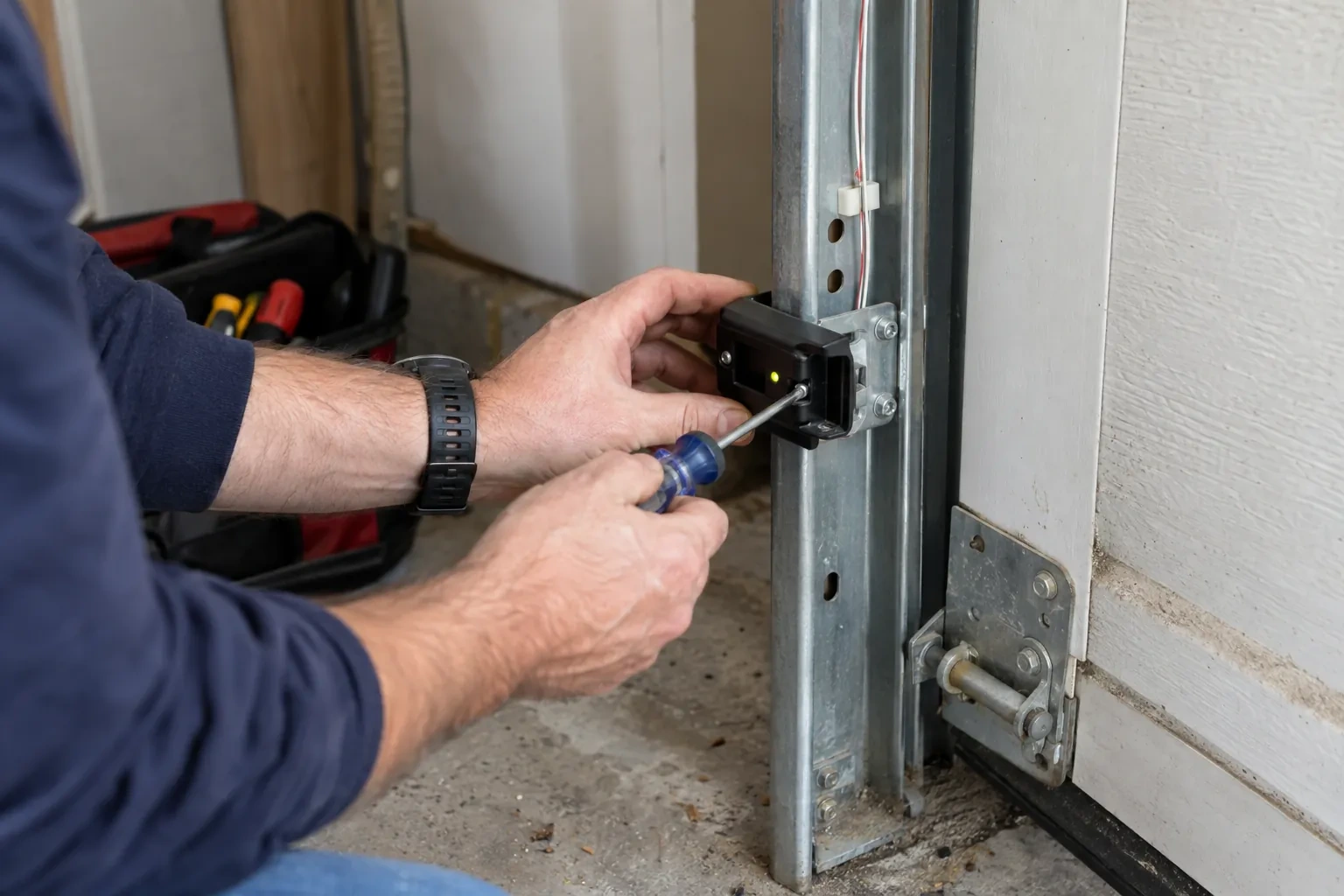
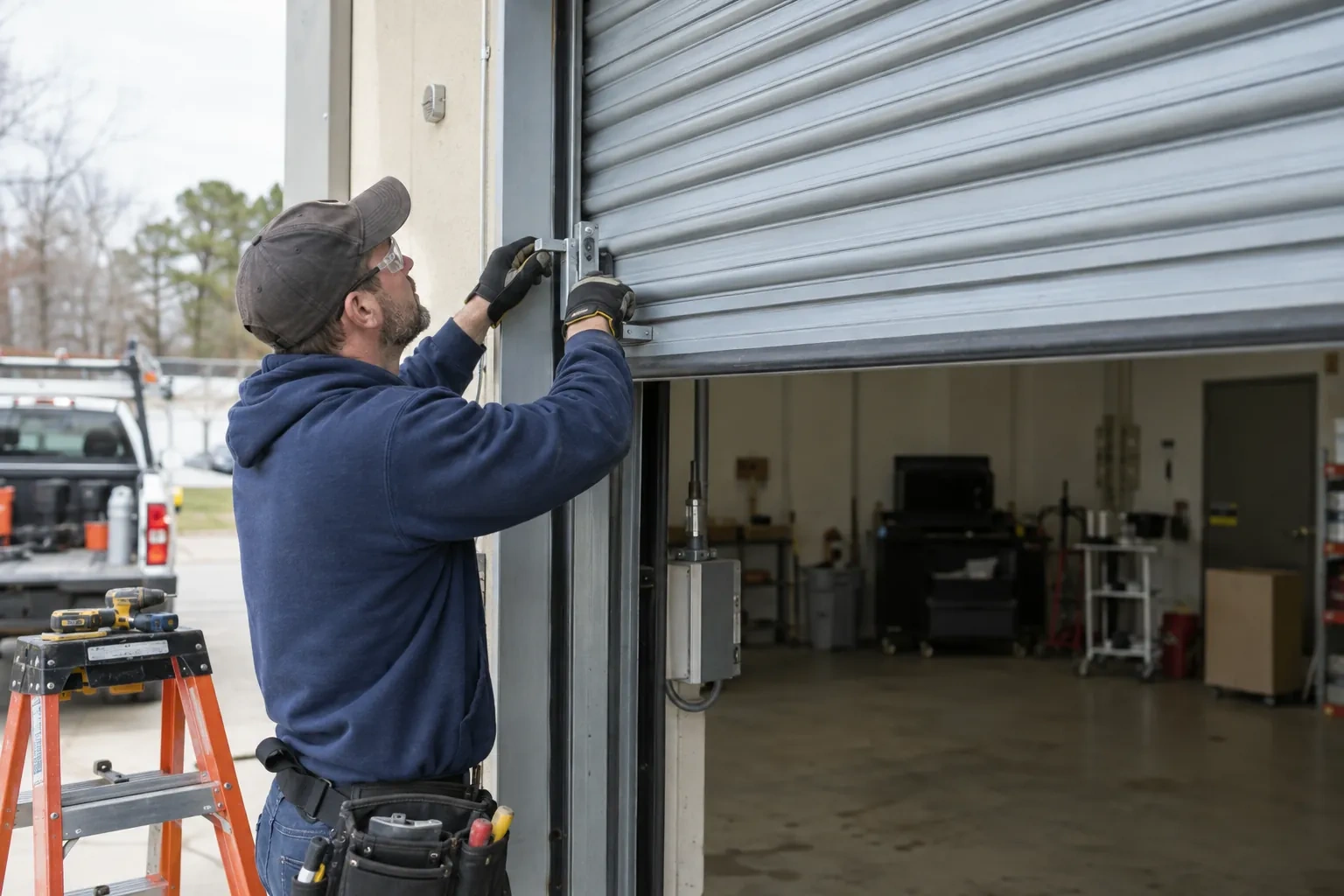
When the complaint is a trolley that runs but never reconnects, the technician looks for the usual reasons. The cord may have been pulled back toward the opener, which on many rails deliberately holds the lever out for repeated manual use, and simply never returned. The trolley may have been driven into the stop bolt or stop tab at the end of the rail after the travel limits drifted, so it sits jammed with the motor humming. The latch teeth may be worn, or the release arm bent so it can no longer drop into place. Each of these has a different fix, and telling them apart takes a minute with the cover off.
Freeing a trolley from the stop bolt
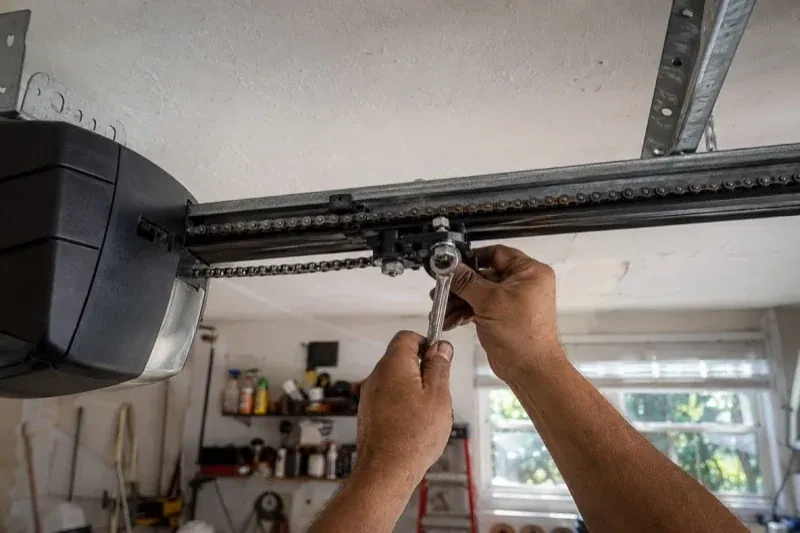
A trolley jammed against the stop at the end of the rail is freed rather than forced. The release is pulled so the door is out of the picture, the chain or belt tension nut is backed off a few turns to give the trolley room, and the motor is run so the trolley walks away from the stop. The travel limit that let it run too far is then adjusted, the chain or belt is re-tensioned to the sag the maker specifies for that rail, and the trolley is reconnected. Because the limits were touched, the door is cycled and the reversal tests are repeated before the job is called done.
A record of what was done
You receive a short note: the opener model, which release parts were replaced, the handle height as set, whether the trolley was freed or renewed, what the travel and tension settings are now, and whether an outside release was fitted. Keep it with the house papers. It tells the next technician what is on the ceiling, gives a buyer confidence the door has been cared for, and saves looking up the model when a replacement rope or key is needed years from now. Old parts are left with you or removed, whichever you prefer.
Emergency Release Repair
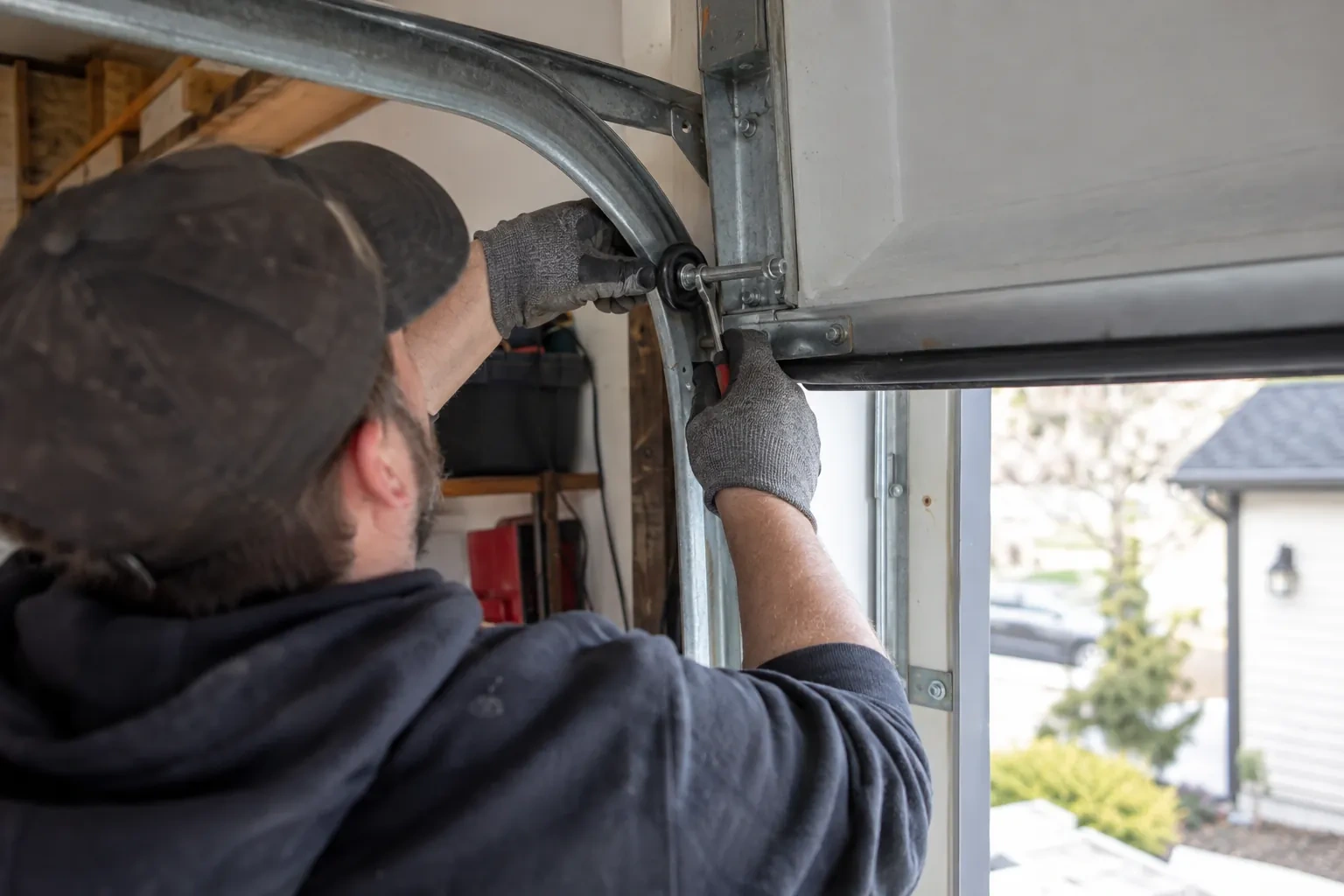
In the van
Chain or belt tension hardware
Track clamps to hold the door
Hole saw for the top section
2x4 offcut for the reversal test
Garage door lubricant
Emergency Release Repair
What affects the quote
Age and parts availability
Trolleys, levers and rope kits for openers from the last two decades are stocked. An older model may need a part sourced, and the quote says whether that is a wait or a reason to consider replacement.
Cord, lever or trolley
A rope and handle is the smallest item; a lever and spring sits in the middle; a complete trolley or carriage assembly is the larger part, and the diagnosis says which one you need.
Extra keys and a lockbox
Two keys come with an outside release. Additional keys cut for family members, or a small lockbox for the spare, are small add-ons listed as separate lines.
What to have ready
- Is anything stored under the rail or tied around the cord?
- Does the opener run along the rail on its own without moving the door?
- Does the garage have a side door or a door into the house?
Emergency Release Repair: questions
QuestionsHow do I keep the door in manual mode during a long outage?
On many rails, pull the cord straight down and then back toward the opener; the lever stays in the released position until you return it, so the trolley will not catch the door on its own. On others the trolley simply stays free until the opener is run. Lift and lower the door by its handle and use the slide bolt or manual lock to hold it shut. When power returns, reconnect first, then use the wall control.
Would battery backup mean I never need the release?
It covers most outages: the battery opens and closes the door on stored power, so the release stays on its hook. It is a wearing part that needs replacing every few years, and a status light or beep tells you when. The release is still the fallback for a flat battery or an opener that has itself failed, which is why the two are checked together. Many households on outage-prone streets keep both in working order.
My car is trapped inside and I have an appointment. Can I just push the door open?
Better not. A door forced against a jammed trolley or a locked door can bend the arm, the top section or the track, and a vehicle driven at a door releases the stored tension in the springs. The release is the tool for this moment: with the door closed, pull the handle and lift the door by its handle. If the handle is missing or the trolley will not let go, a technician can reach the lever and have the door moving by hand.
Related services
- Chain-Drive Opener RepairThe door closes, touches the floor, then climbs straight back up as if it hit something.
- Belt-Drive Opener RepairHalfway up, every single time, the door hesitates and there is a ratcheting sound from the motor head, then it carries on.
- Garage Door Opener ReplacementThe remotes only work from the end of the driveway now, and one of them disappeared with a set of keys last month.