Springs · Strathroy-Caradoc
Garage Door Balance Adjustment
Released from the opener, the door will not hold anywhere.
In plain words
On a torsion door the springs sit on a shaft above the opening, and balance is set by how many turns of wind they carry. A seven-foot door typically needs a little over seven full turns; a quarter turn either way changes how the door feels. The technician clamps the door, fits winding bars into the cone, loosens the set screws, and adds or releases tension one quarter turn at a time, locking the cone again before each test. Both springs on a two-spring door are set alike so the shaft carries the load evenly. That precision is what makes the door hold wherever it is stopped.
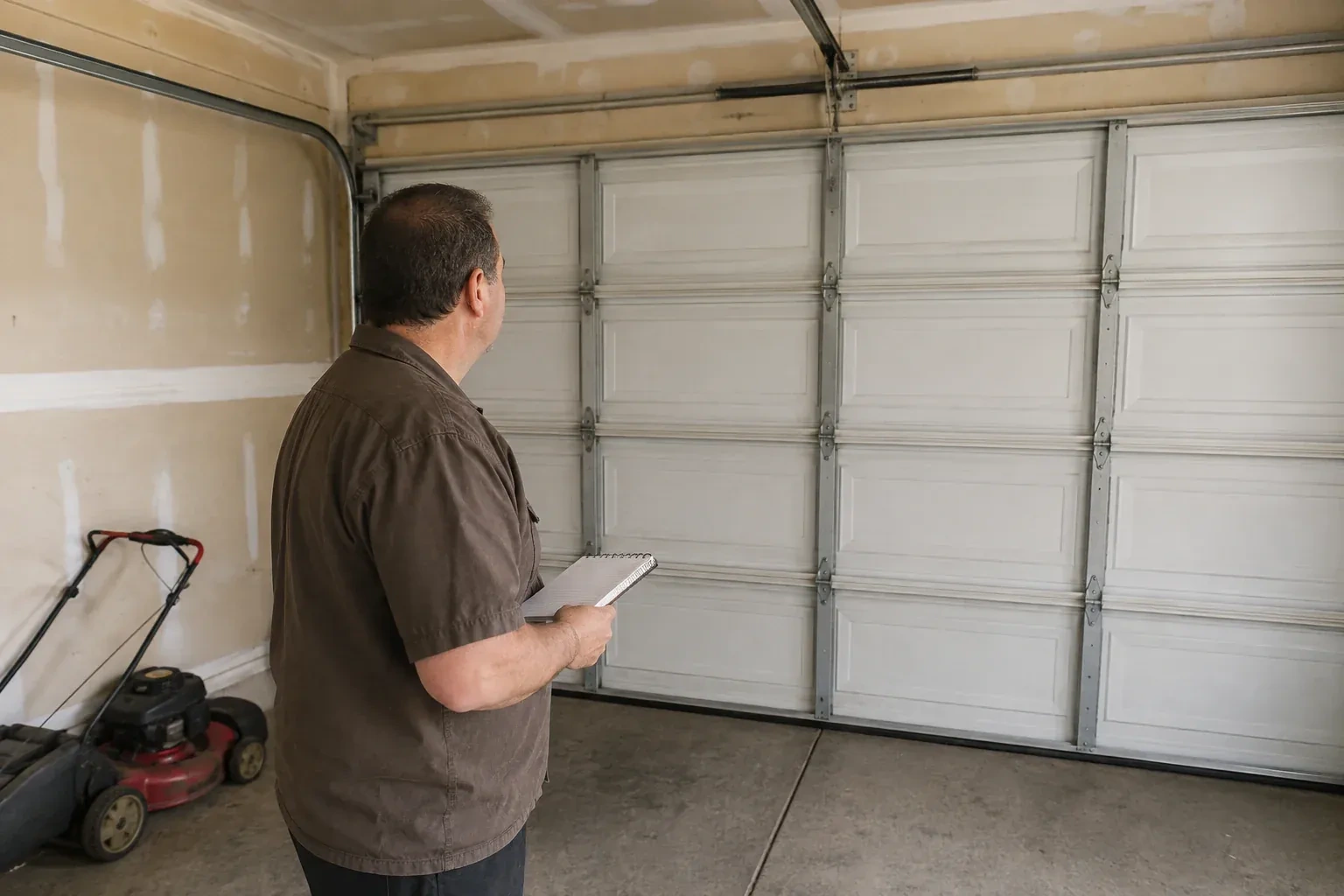
How the visit goesSince the new insulated panels went in, the door feels like a different animal. It closes with a thud, the opener labours where it used to hum, and lifting it by hand takes a proper heave rather than a fingertip.
Garage Door Balance Adjustment
How the visit goes
Friction along the path
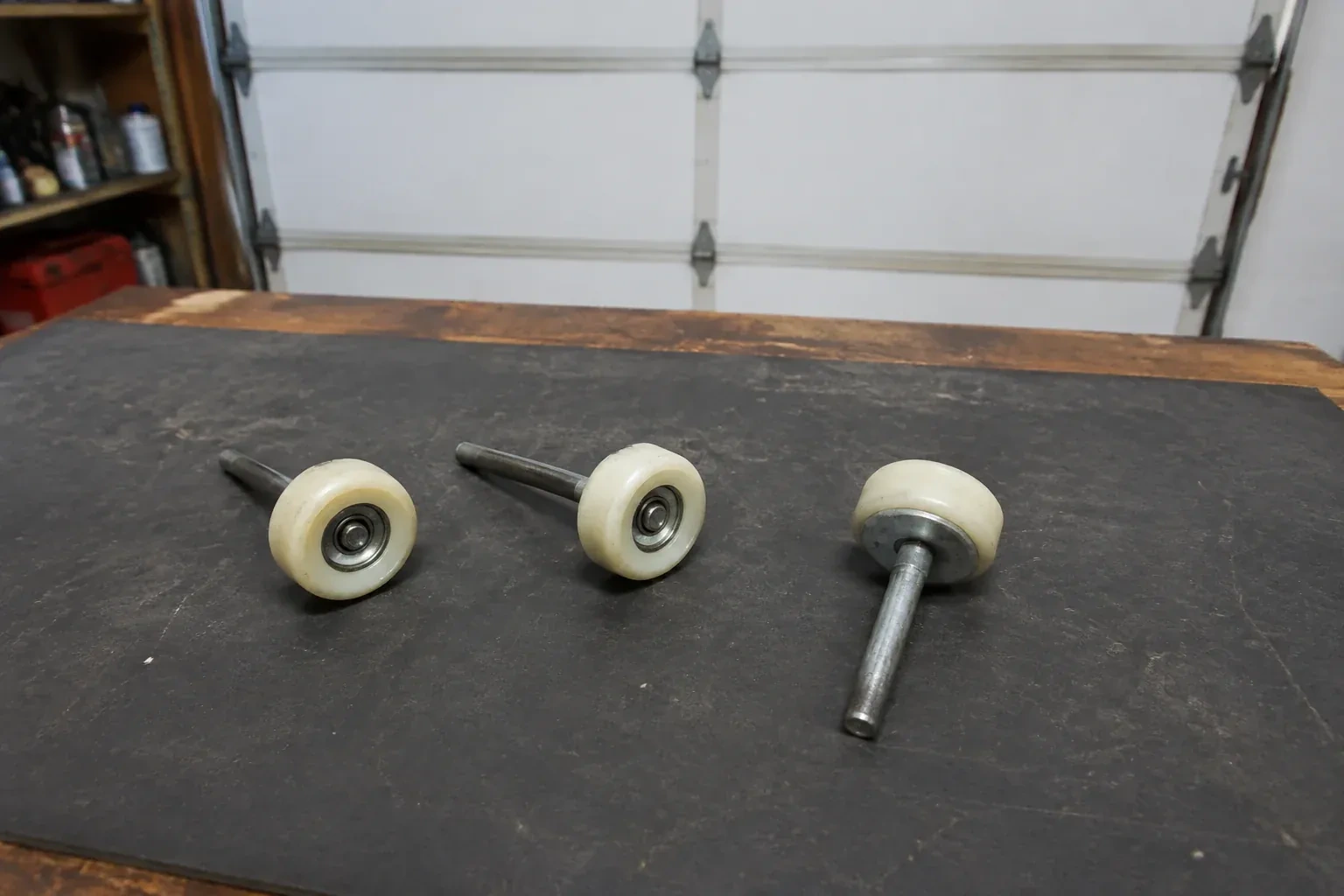
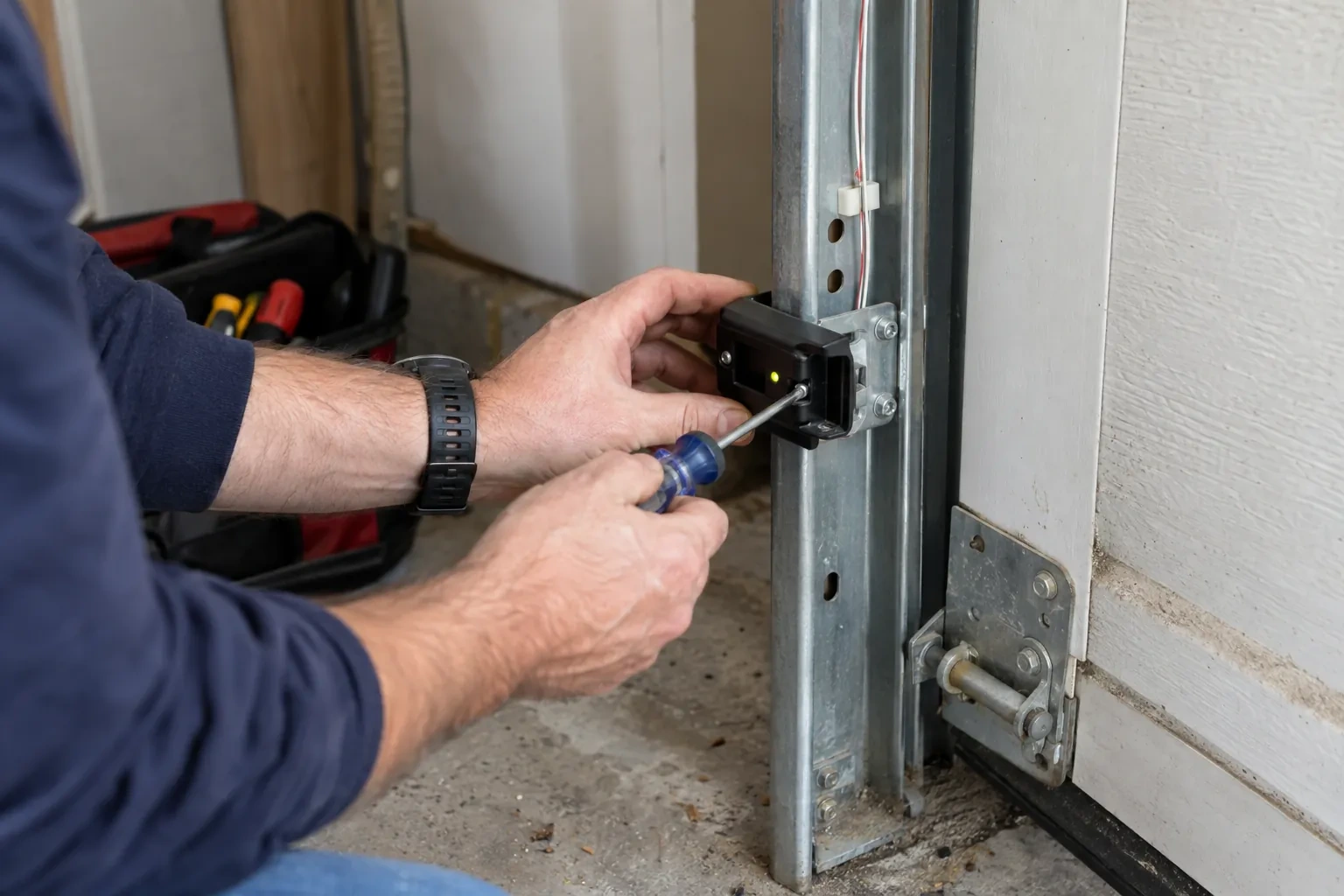
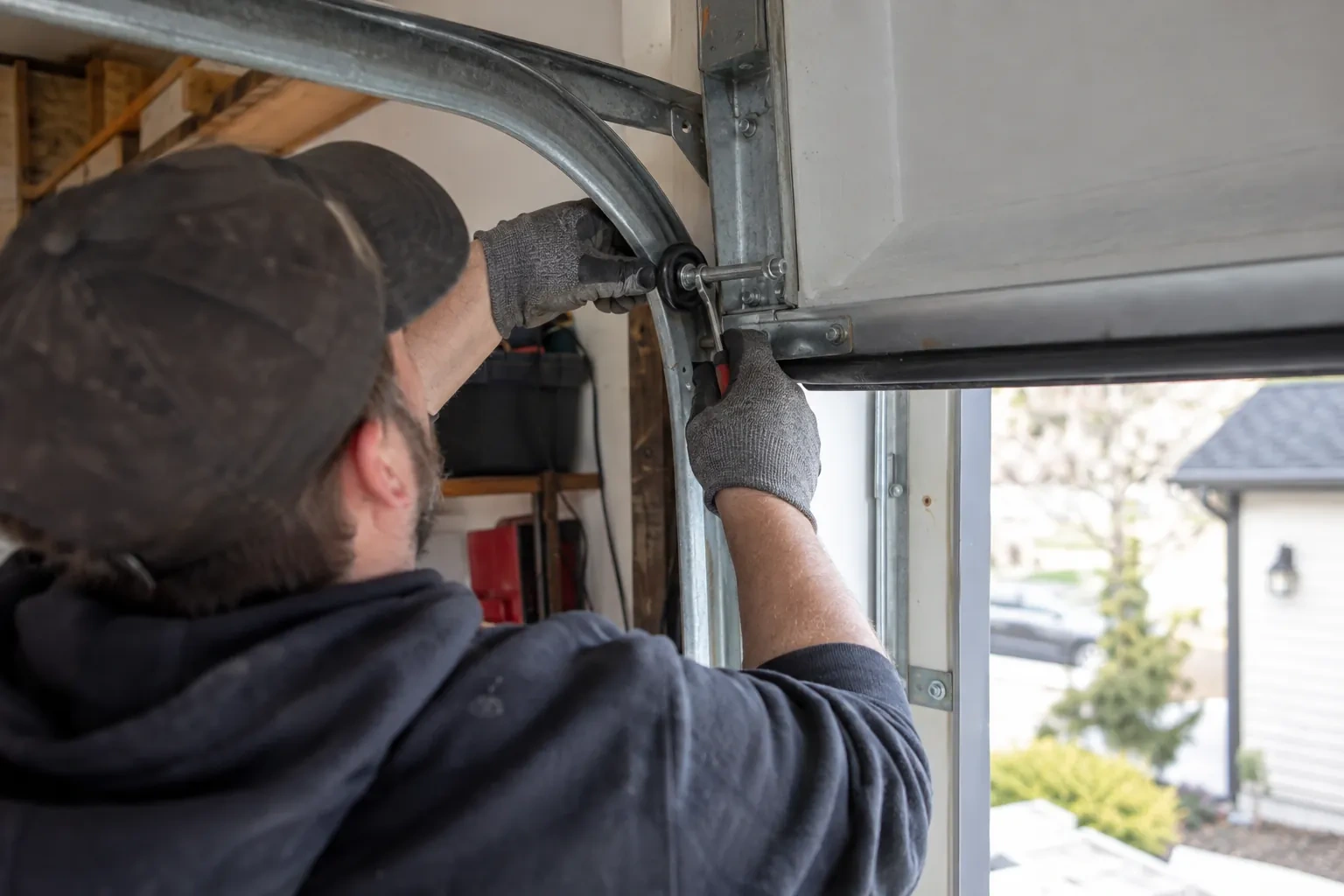
Some doors that feel heavy are not short of spring tension at all; they are dragging. The technician runs a hand and an eye along the vertical and horizontal tracks for dents, misaligned joints and brackets that have pulled away from the jamb, spins each roller to find seized bearings or cracked wheels, and flexes each hinge for play or splits. Dry, worn rollers alone can add real effort to every lift. Binding at one point in the travel, rather than heaviness everywhere, is the signature of a friction problem, and correcting it first means the springs are then adjusted to the door's true weight rather than to the drag.
Securing the door before the first turn
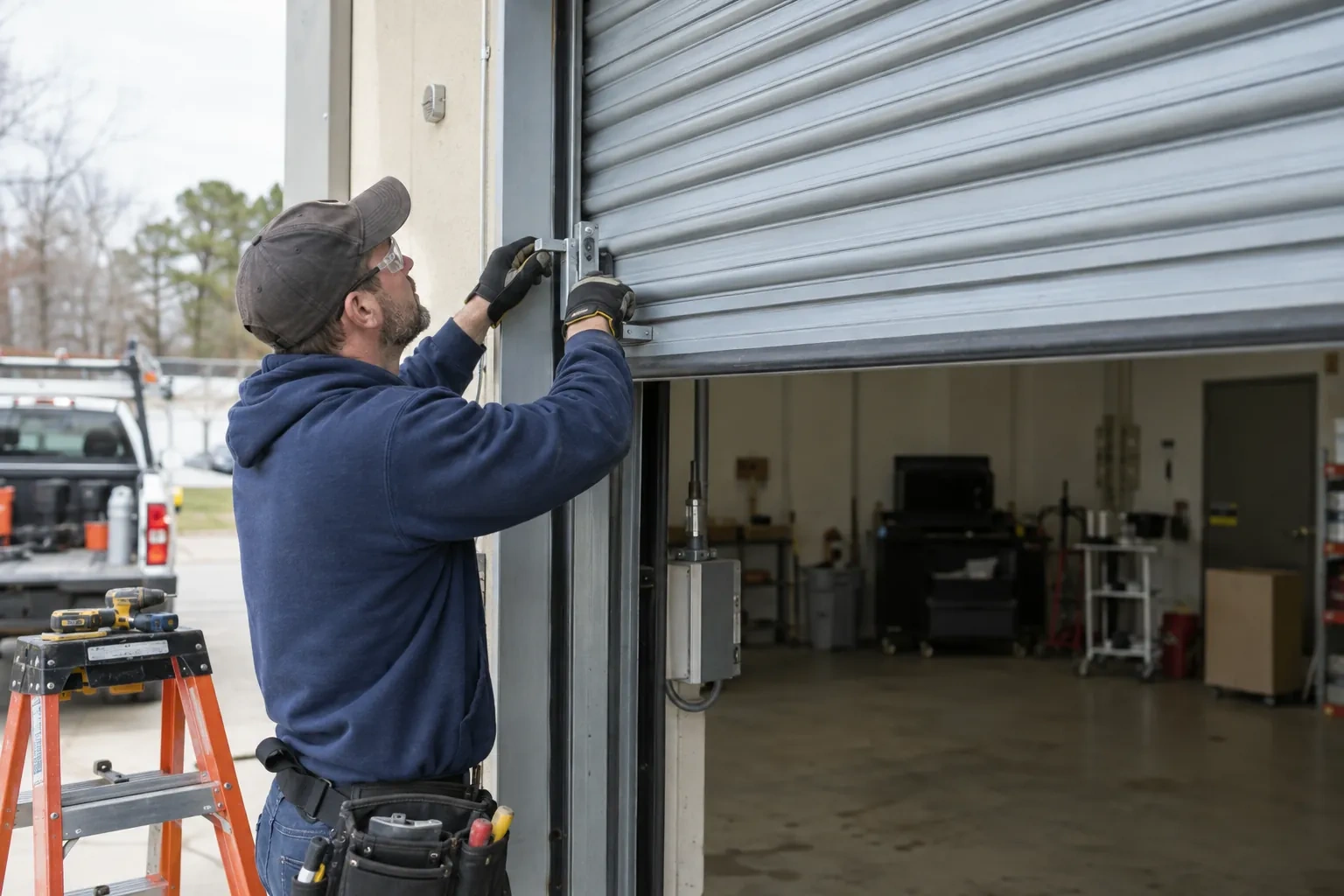
Before any tension changes, the door is made immovable. The technician disconnects the opener, clamps a pair of locking pliers on the track just above a roller so the door cannot rise, and clears the area under the shaft. On a torsion system the springs remain wound while the winding bars are used to add or subtract turns, so nothing has to be fully unloaded for a simple adjustment. On an extension system the door is raised fully and clamped there, which relaxes the springs so the hooks and clips can be moved safely. This setup takes a few minutes and is what makes the adjustment itself calm and controlled.
A door that is nearly weightless again
The difference is obvious the first time you lift the door by hand. It rises with light effort, pauses when you stop it, and stays fully open without drifting down. Closing it, the bottom seal meets the slab evenly along its length instead of thudding at one corner. Under power, the opener runs quieter because it is guiding a balanced door rather than hauling one, and it stops reversing near the floor for no reason. The door also moves at the speed of your hand, neither racing ahead nor dragging, which is exactly what the industry checklist describes as correct operation.
Garage Door Balance Adjustment
In the van
Torsion springs, matched pair
Containment cables
Garage-door lubricant
Lift cables
Door scale
Garage Door Balance Adjustment
What affects the quote
Access to the spring shaft
Shelving, bikes or storage close to the header, a very high ceiling or a tight low-headroom installation slow the work. Clearing the area beforehand helps the time quoted.
Single or double door
A double door commonly carries more spring than a single, but the exact count follows the manufacturer's engineered hardware package for that door's weight rather than width alone: one, two or more torsion springs, or one or two extension springs per side. More springs means more adjustment and testing.
Door out of level
A door with one corner high needs its cables reset on the drums before the tension is set, which adds a step to the visit and is listed as its own item.
What to have ready
- Is there storage or shelving near the spring shaft that needs moving?
- When were the springs last replaced or adjusted, if you know?
- Does the door sit level when closed, or is one corner higher?
Garage Door Balance Adjustment: questions
QuestionsThe door was fine until a power cut. Why is it heavy now?
During a power cut the door is often released and moved by hand for the first time in years, and what people discover is a door that had already grown heavy while the opener quietly covered for it. The outage did not change the springs; it revealed them. A balance check confirms what the door weighs against what the springs give, and resets them to match.
Why does my door sink or slam down when released?
Not enough spring tension for the door's weight. Springs lose a little pull as they age through thousands of cycles, and a door gains weight when insulation, windows or a heavier seal are added. Either way the door outweighs its springs. Adding tension in measured quarter turns restores the hold, provided the springs are sound; if they are near the end of their life, new ones are the right answer.
How often does a garage door need a balance adjustment?
There is no fixed interval; the door tells you. Many doors go years between adjustments, especially when they are lubricated and the springs were sized correctly. A hand test each season is the reliable guide: if the released door holds at about a metre and stays fully open, it is fine. When it starts to drift or sink, that is the time.
Related services
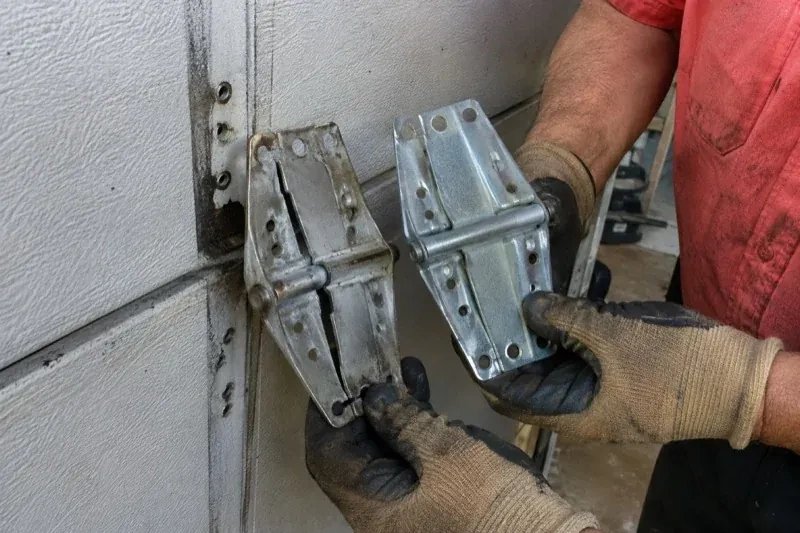
- Garage Door Hinge ReplacementWatching from inside as the door opens, you can see the gap between the second and third panels open up on one side as they turn the corner into the ceiling, then close again.
- Garage Door Track Repair or ReplacementThe horizontal rail toward the back of the garage sags noticeably.
- Garage Door Cable ReplacementSomeone left the snow shovel leaning in the opening and the door came down on it.