Repairs · Strathroy-Caradoc
Off-Track Garage Door Reset
Your car is inside and the door is stuck crooked across the opening.
In plain words
The reason to stop pressing the wall button is that an opener cannot tell a racked door from a heavy one. Each cycle drives the tilted sections harder into the rails, bending hinges, tearing the track from the jamb and stressing the cables that are already out of place. A reset begins by taking the opener out of the picture with the release cord and supporting the door where it sits. From that calm starting point the technician can re-seat rollers and cables in a controlled order, restore alignment and hand you back a door that the opener can move without fighting it.
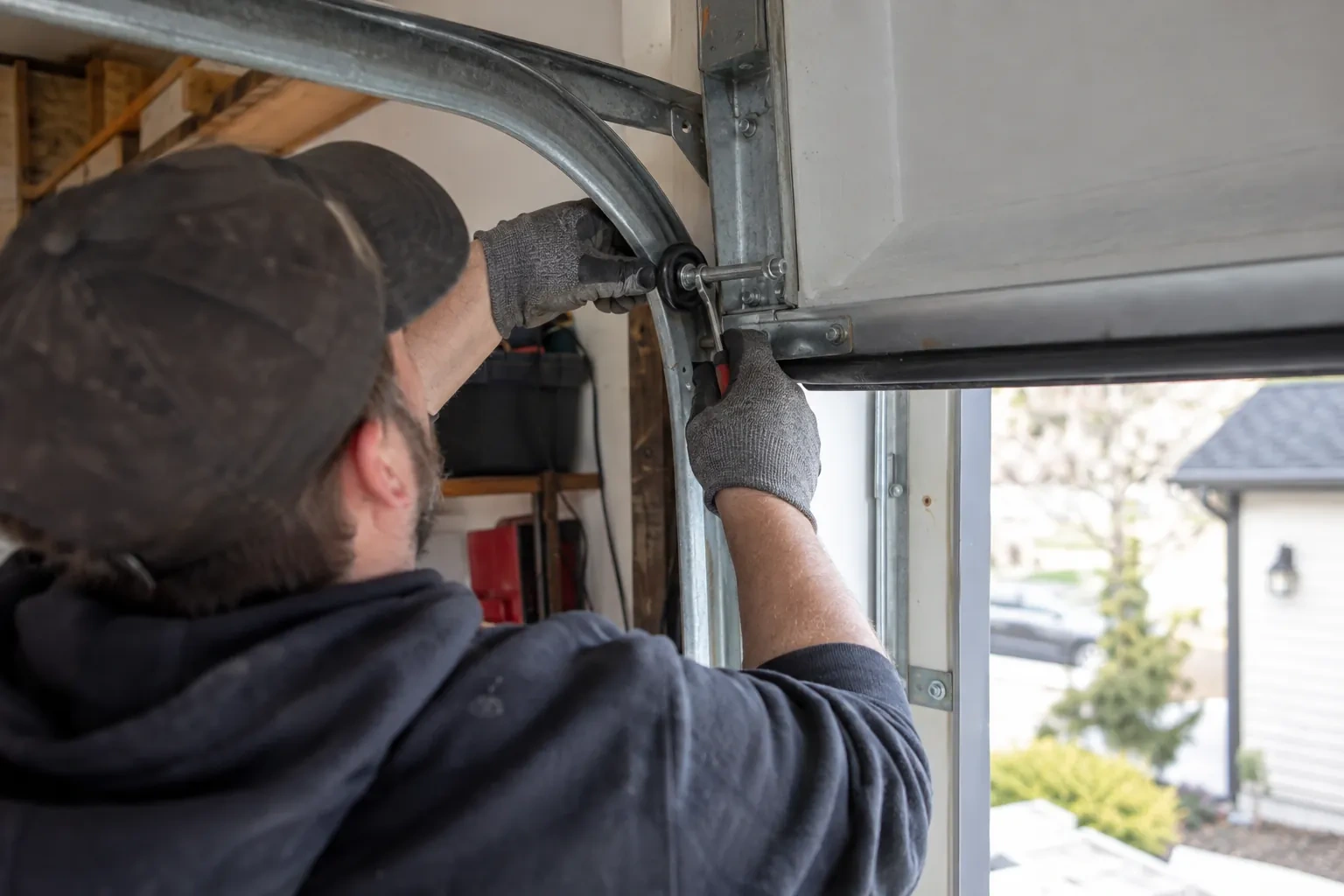
How the visit goesYour car is inside and the door is stuck crooked across the opening. Pushing the wall button just makes the motor hum, and one section is bent where a roller has climbed out of the curve at the top of the track.
Off-Track Garage Door Reset
How the visit goes
Springs and balance, read before the reset
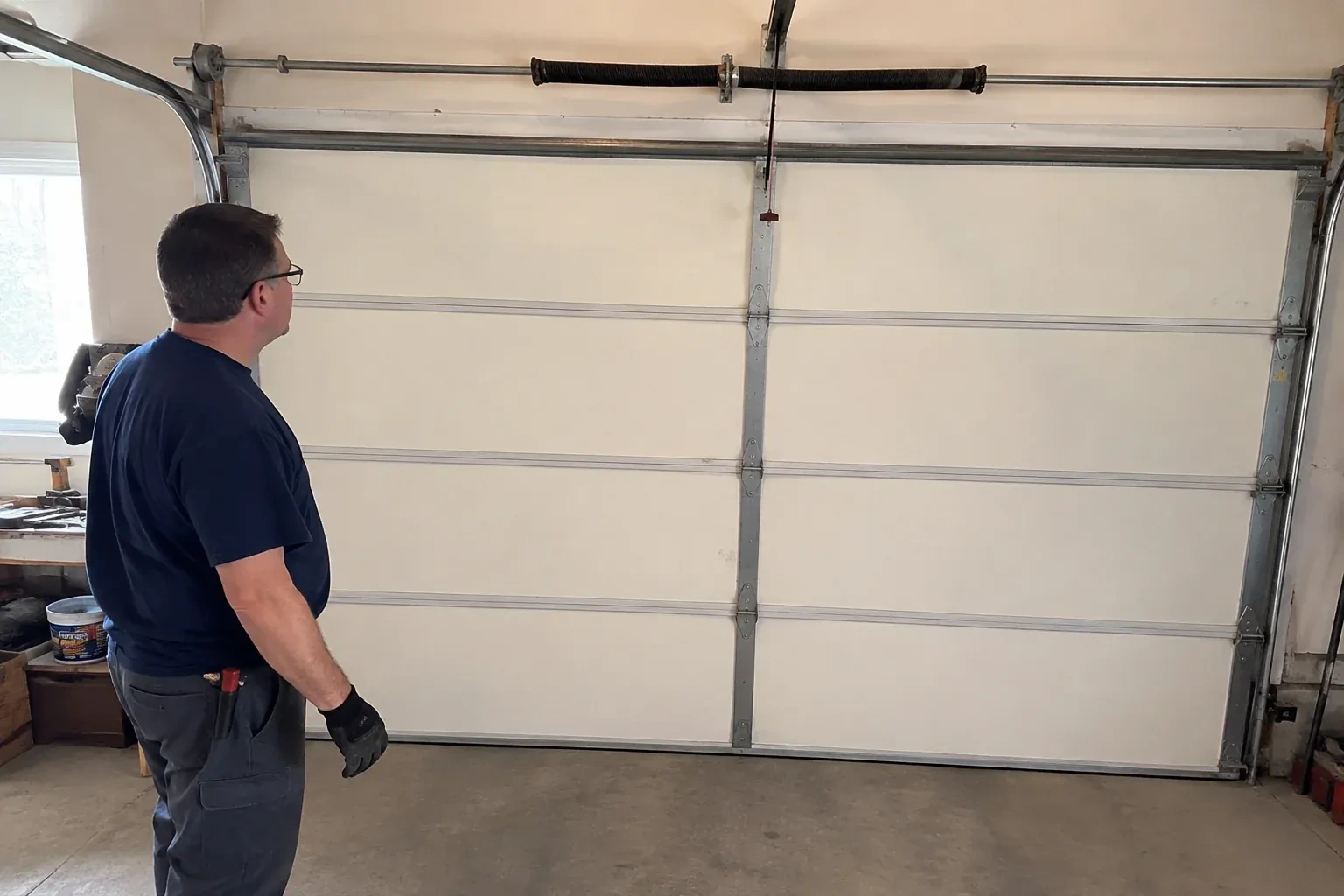
The counterbalance is what will carry the door once it is back on its rails, so its condition is assessed at the start. Torsion springs above the header are checked for a break in the coil, a gap between coils and a loose stationary cone; extension springs beside the horizontal track are checked for stretch and for the containment cable running through them. The technician also looks at whether the springs match the door's weight, because a door that was already heavy for its springs makes the opener drag the sections and is a common background cause of a roller working loose.
Running the door by hand
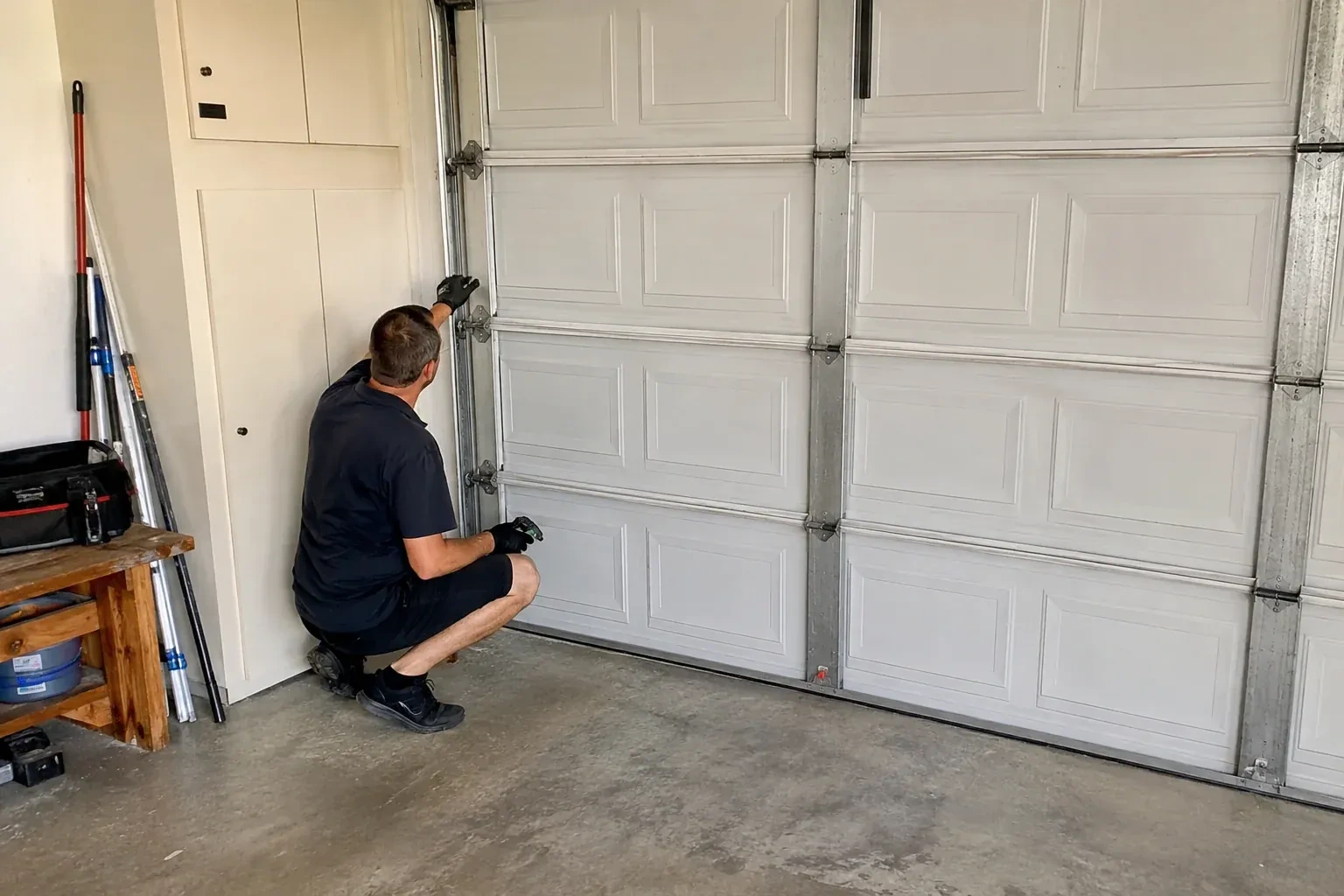
Before the opener comes back into the picture the door is proven manually. The clamps come off, the technician lifts the door slowly from the bottom, watching each roller pass through the curve and along the horizontal rail, and listening for any scrape that would mean a tight spot. At the halfway point the door is let go and should hold there with little drift. It is raised fully and must stay up. Then it is lowered and must close level along the floor. Any drag, sway or roller lift at this stage is fixed now, because the opener would only hide it until the next event.
A monthly look at the rollers and cables
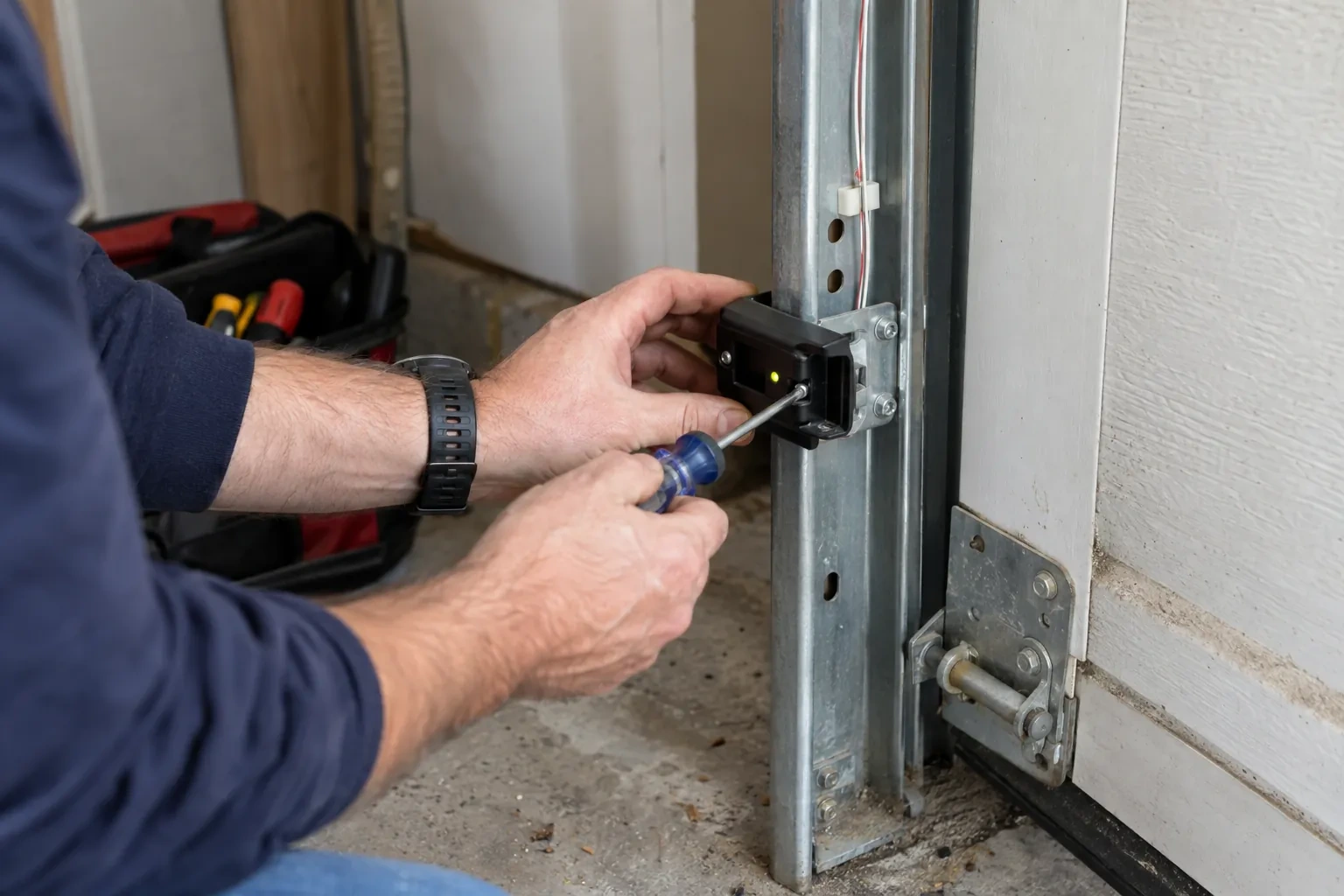
Once a month, with the door closed, stand inside and look along both tracks with a flashlight. Rollers should turn as the door moves and sit fully inside the rail; a wheel that wobbles, squeals or shows a worn flat is asking to be replaced before it drops out. Both cables should run taut from the bottom brackets to the drums with no fraying near the bottom, where salt and water collect. Hinges and jamb brackets should have no loose or missing screws. This two-minute walk catches almost every off-track event while it is still a small hardware job.
Off-Track Garage Door Reset
In the van
Level and plumb line
Torsion spring winding bars
Garage-door silicone lubricant
Replacement rollers, steel or nylon
Graduated edge hinges
Off-Track Garage Door Reset
What affects the quote
How far the door has left its track
One roller out at the bottom of a closed door is a different job from a door racked across the opening with rollers out on both sides. The quote follows the amount of resetting involved.
Size and weight of the door
A double door, an insulated door or a wood door carries more weight on every roller and cable, takes longer to support and reset, and uses heavier hardware. The quote reflects the door in front of the technician.
Whether the cables are involved
A cable that simply jumped its drum is rewound; one that is frayed or broken is replaced along with its partner, and the springs are unwound and rewound to do it. Each step is listed separately.
What to have ready
- Are the springs mounted above the door or stretched along the sides?
- Was the door frozen to the floor or was something under it when the opener ran?
- Roughly how old is the door, and when was it last serviced?
Off-Track Garage Door Reset: questions
QuestionsWill the door be as good as it was before?
In most cases it comes back better, because the reset includes truing the track, replacing worn rollers and correcting the misalignments that had been building unnoticed. The exception is a section creased by an impact: it may work perfectly well after the reset yet keep a visible dent, and the technician will tell you whether it is sound or worth replacing at some point. You are shown the door running before the visit ends.
Should I lubricate the track to help the rollers?
No. The track is meant to be clean and dry; grease on the rail gathers dirt and makes the wheels slide rather than roll, which wears them faster and can contribute to a roller leaving the rail. Put a silicone spray made for garage doors, or a lithium grease, on the hinge pins, roller bearings and spring coils, wipe off the excess, and give the tracks nothing more than a damp cloth.
Why does the door need a balance test after being reset?
Balance shows that the springs are carrying the door's weight so the opener only guides it. After a reset the door is disconnected from the opener, raised by hand to the halfway point and released; a balanced door holds there with little drift. If it falls or shoots up, the counterbalance needs adjusting before the opener is reconnected, otherwise the motor strains and the rollers are pushed out of line again.
Related services
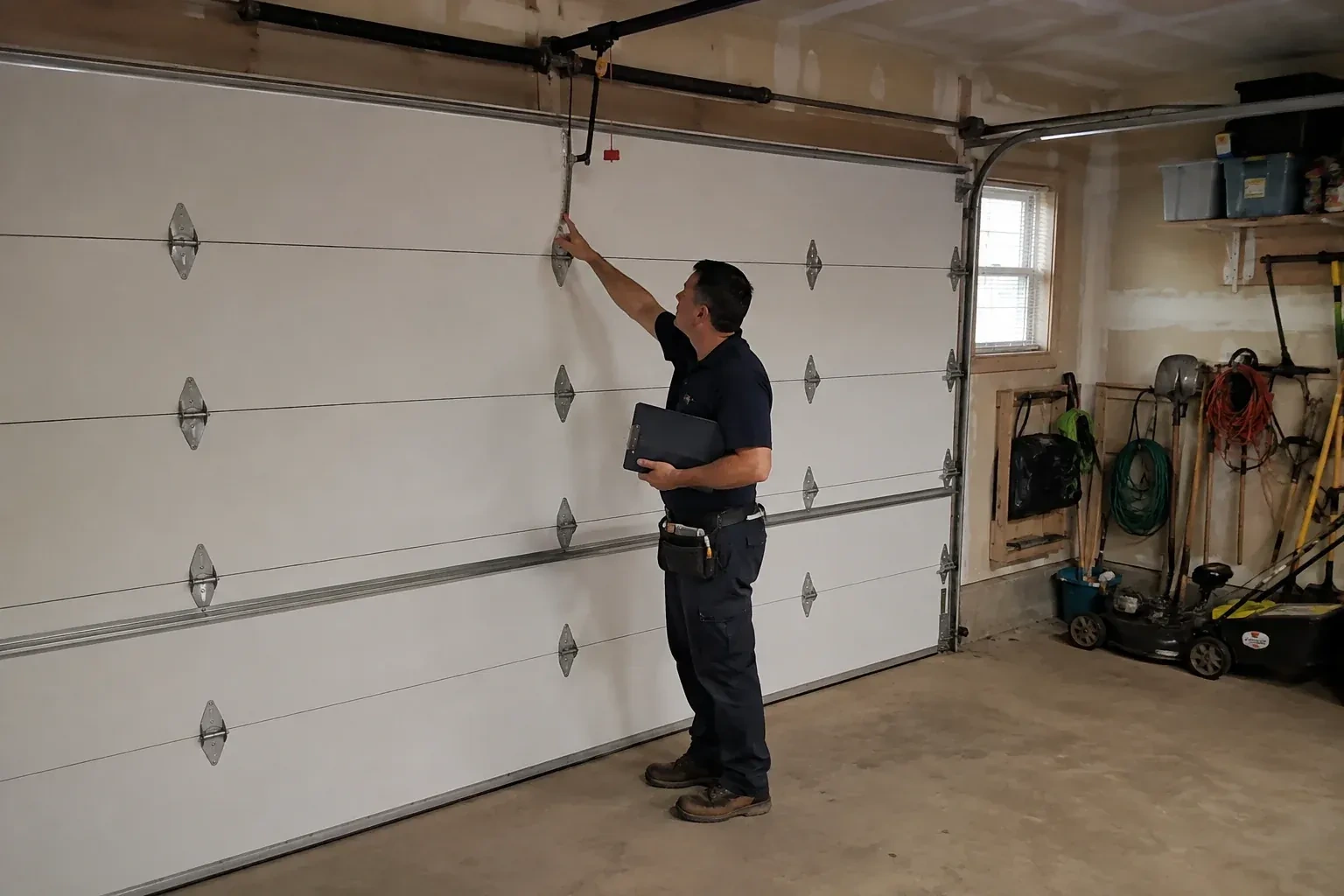
- Garage Door Tune-UpThe door lands with a thud you can feel through the kitchen floor, and sometimes it bounces back up a few centimetres before settling.
- Garage Door Panel ReplacementYou misjudged the last metre of the driveway and felt the bumper meet the door.
- Garage Door Bottom Seal ReplacementThe strip under the door has gone as hard as a hose left out for ten summers.