Openers · Strathroy-Caradoc
Belt-Drive Opener Repair
Halfway up, every single time, the door hesitates and there is a ratcheting sound from the motor head, then it carries on.
In plain words
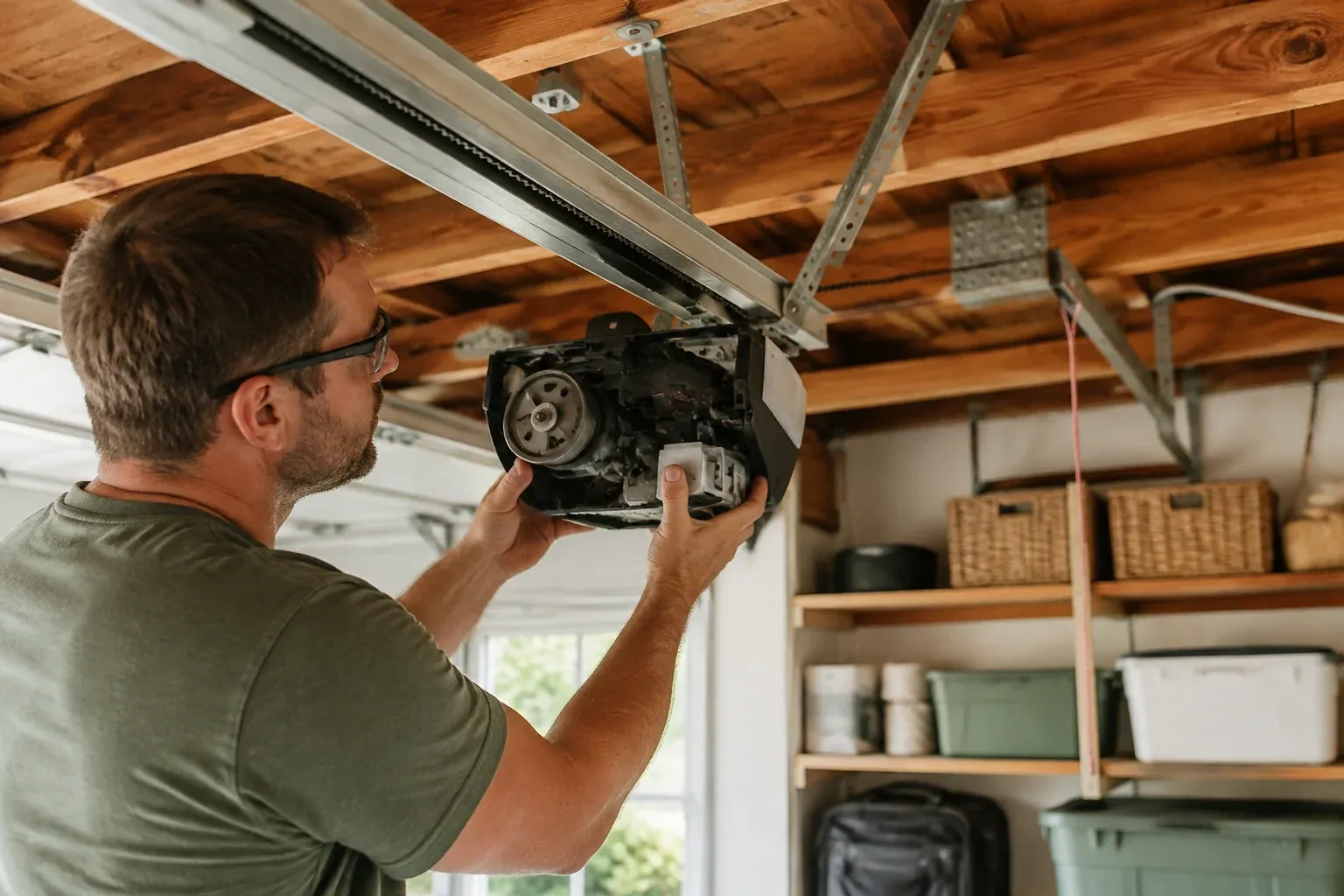
Belt-drive operators use a toothed belt reinforced with steel or fibre cords, and those belts wear in recognisable ways. Age and temperature swings make the rubber brittle, so it cracks across the back and eventually shows the cords. Rubbing on a bent rail or a misaligned joint frays one edge. A door that hits something can shear a stretch of teeth or throw the belt off the idler pulley. A small clip joins the belt to the trolley and takes every start and stop. Repair fits a belt of the right length and tooth pitch for that rail, a fresh clip, and sets the tension from scratch.
How the visit goesThe belt looks fine from a distance, but up close the rubber has cracked across the back in dozens of places and, in one spot, you can see the steel cords showing through.
Belt-Drive Opener Repair
How the visit goes
The garage in winter and what it does to a belt
For a detached or unheated garage the technician asks about the season the trouble started. Rubber stiffens in deep cold, so a belt that runs quietly in June can slap or bind in January, and tension set on a mild day may need a second look at minus twenty. A bottom seal frozen to the slab makes a modern operator reverse before the door has lifted, which looks like a belt fault and is not. Salt tracked in on tires corrodes the bottom brackets and cable ends that the balance test depends on. The belt's tension still follows the opener maker's specified measurement, not a temperature-based setting, though a cold-rated lubricant suits the door hardware in an unheated garage.
Relearning travel and force, then proving them
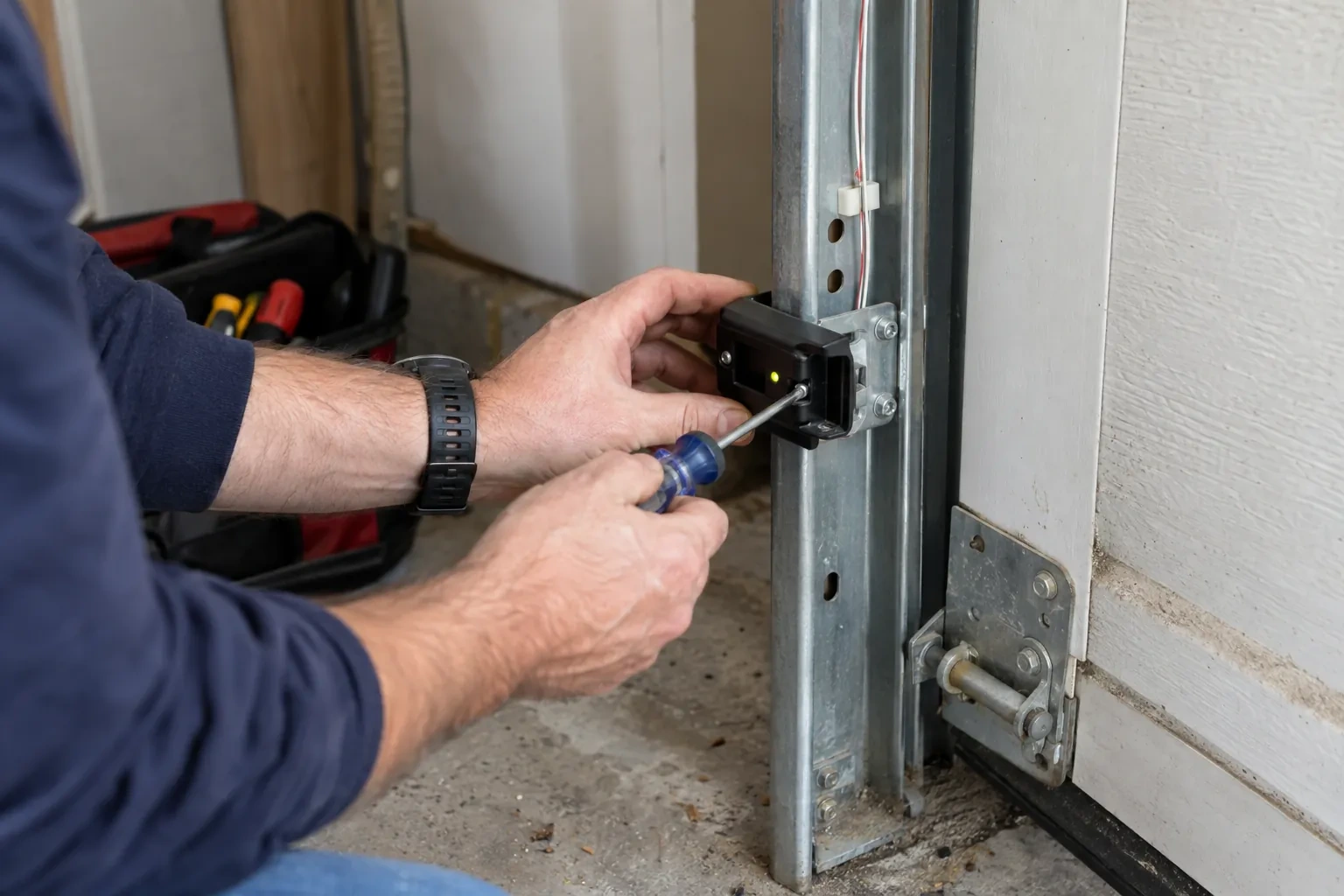
With the drive rebuilt and the door reconnected, the operator is taught its door again. Newer units run a learn cycle that records the full travel and the effort the door needs; older ones have limit screws and force dials set by hand. The close limit is set so the bottom seal meets the floor without the belt straining, and the open limit so the top section stops short of the header. Then the tests: a 2x4 laid flat under the door must send it back up on contact, and an object passed through the photo-eye beam must reverse it while closing. Any hesitation is adjusted and the tests are run again.
Ready for the cold
If the garage is detached or unheated, the belt has still been tensioned to the opener maker's specified measurement, and the door hardware carries a cold-rated lubricant for the season. Expect the operator to sound a little different at minus twenty; rubber stiffens and the hum deepens, which is normal. If the door reverses on a bitter morning before it has moved, the bottom seal is frozen to the slab and the force setting is protecting the belt and the door. Free the seal by breaking the ice along the threshold, then press the button again. Wiping the seal with silicone before winter stops it bonding to the concrete in the first place.
Belt-Drive Opener Repair
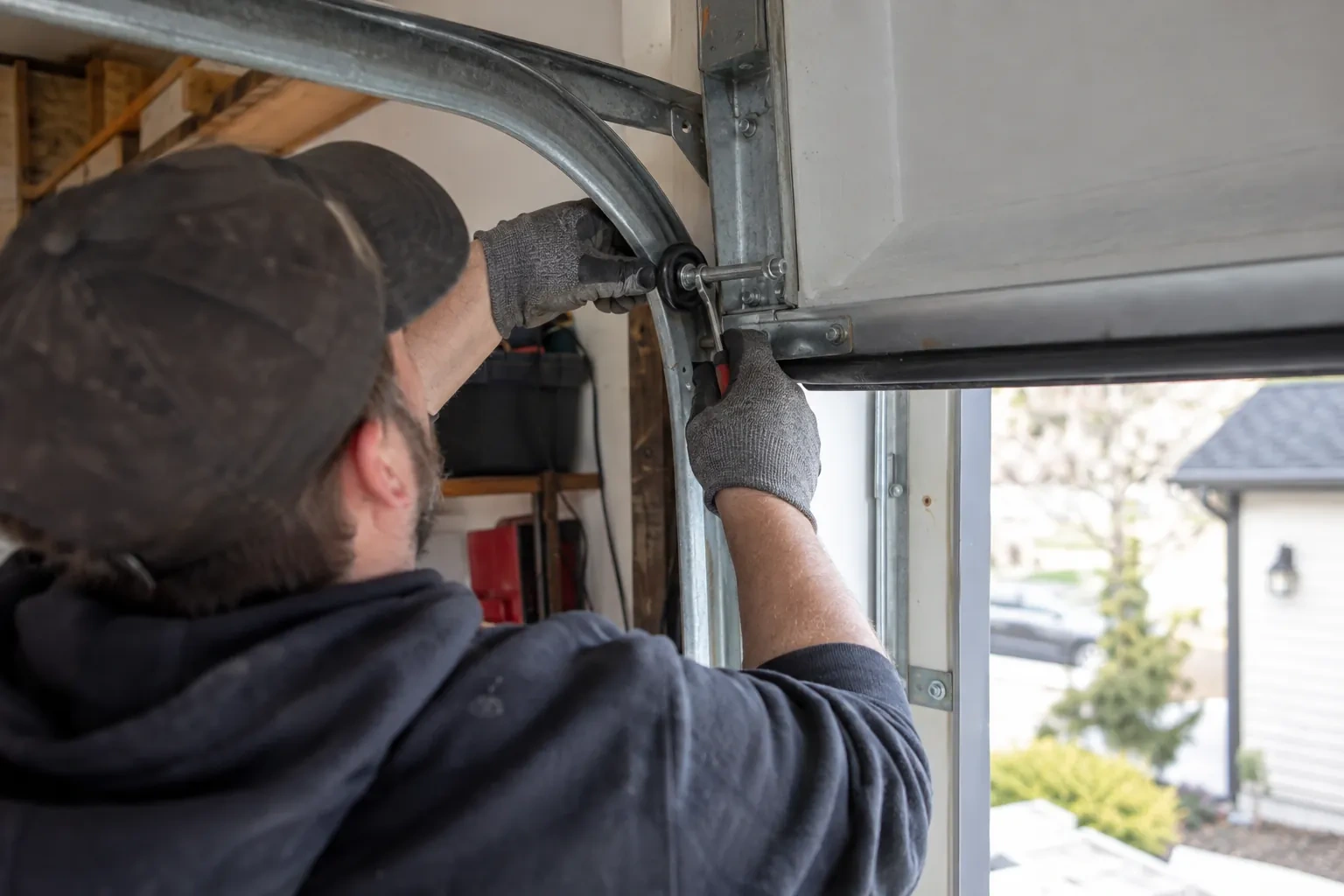
In the van
Inner and outer trolley
Door arm and clevis pins
Reinforced drive belt with clip
Belt tension spring and square nut
Rail joint brackets and stop bolts
Belt-Drive Opener Repair
What affects the quote
Sensors and controls needing attention
Photo eyes out of alignment or too high, a wall control below the recommended height or a release handle out of reach are corrected during the visit and listed separately.
Door size and weight
A wide double door or a heavy insulated one asks more of the belt and trolley, and the inspection may point to a suitably rated opener or a top-section strut for that door, alongside the belt matched to the rail and sprocket.
Rail straightening or re-hanging
A bent rail, a sagging hanger or a misaligned rail joint that has been fraying the belt is corrected as part of the repair so the new belt runs clean, and the labour appears on the quote.
What to have ready
- How wide is the door, and is it a single or a double?
- Does the motor run while the door stays still, or does the door stop partway?
- Has anyone tightened or adjusted the belt recently?
Belt-Drive Opener Repair: questions
QuestionsHow long does a belt-drive repair take?
A tension adjustment with the safety tests is a short visit. Replacing the belt, trolley or idler pulley, then phasing the motor, relearning limits and running the reversal tests, is usually an hour or two. A gear-and-sprocket kit at the motor head takes longer because the head unit is opened. If the balance test turns up spring work, that is agreed as a separate job with its own time.
Can a belt from any opener be used, or does it have to match?
It has to match. Belts are made in lengths for particular rails, so a 7 ft door rail and an 8 ft rail take different belts, and the teeth must match the sprocket's pitch. The clip or link that joins the belt to the trolley also differs between makers. The technician reads the model from the head unit's label and brings the belt made for it.
How do I know the belt is the problem and not something else?
Look and listen. A belt that hangs below the rail, slaps on the way up or clicks at the same point each cycle is a belt fault. A motor that runs with the door still might be a broken belt clip, a stripped gear or a belt off the sprocket. A door that is heavy when you lift it by hand with the operator released is a spring matter. The technician confirms which before any part is ordered.
Related services
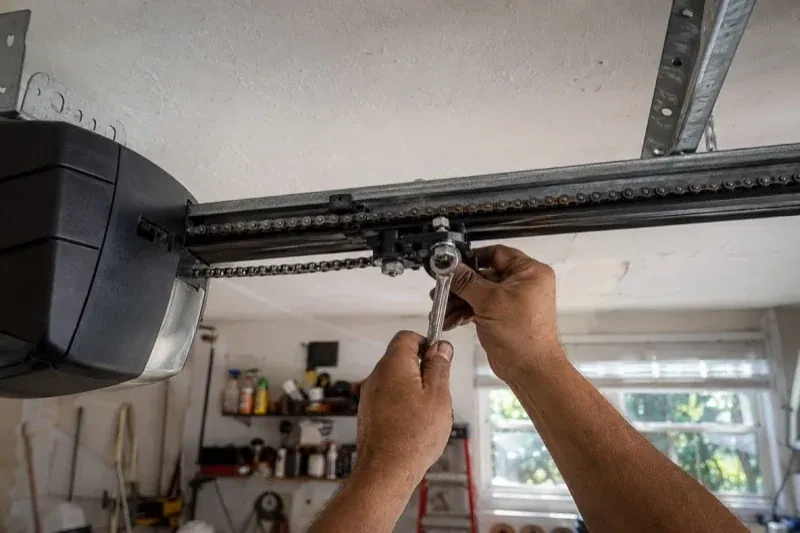
- Chain-Drive Opener RepairThe door closes, touches the floor, then climbs straight back up as if it hit something.
- Garage Door Opener ReplacementThe remotes only work from the end of the driveway now, and one of them disappeared with a set of keys last month.
- Photo-Eye Sensor Alignment or ReplacementAfter a cold night the door stays open until the garage warms up.