Openers · Strathroy-Caradoc
Garage Door Opener Diagnosis and Repair in Strathroy-Caradoc
Nothing.
In plain words
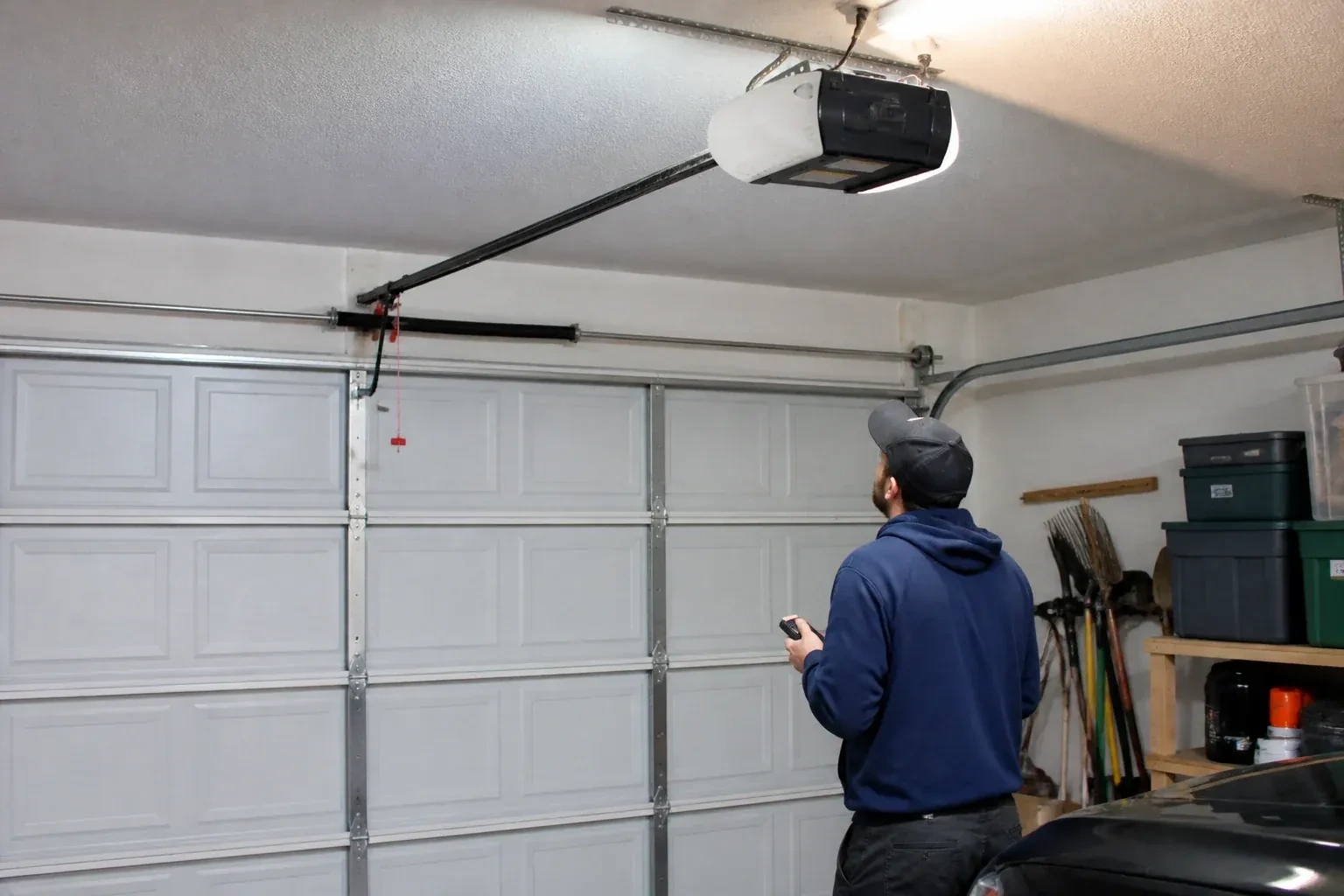
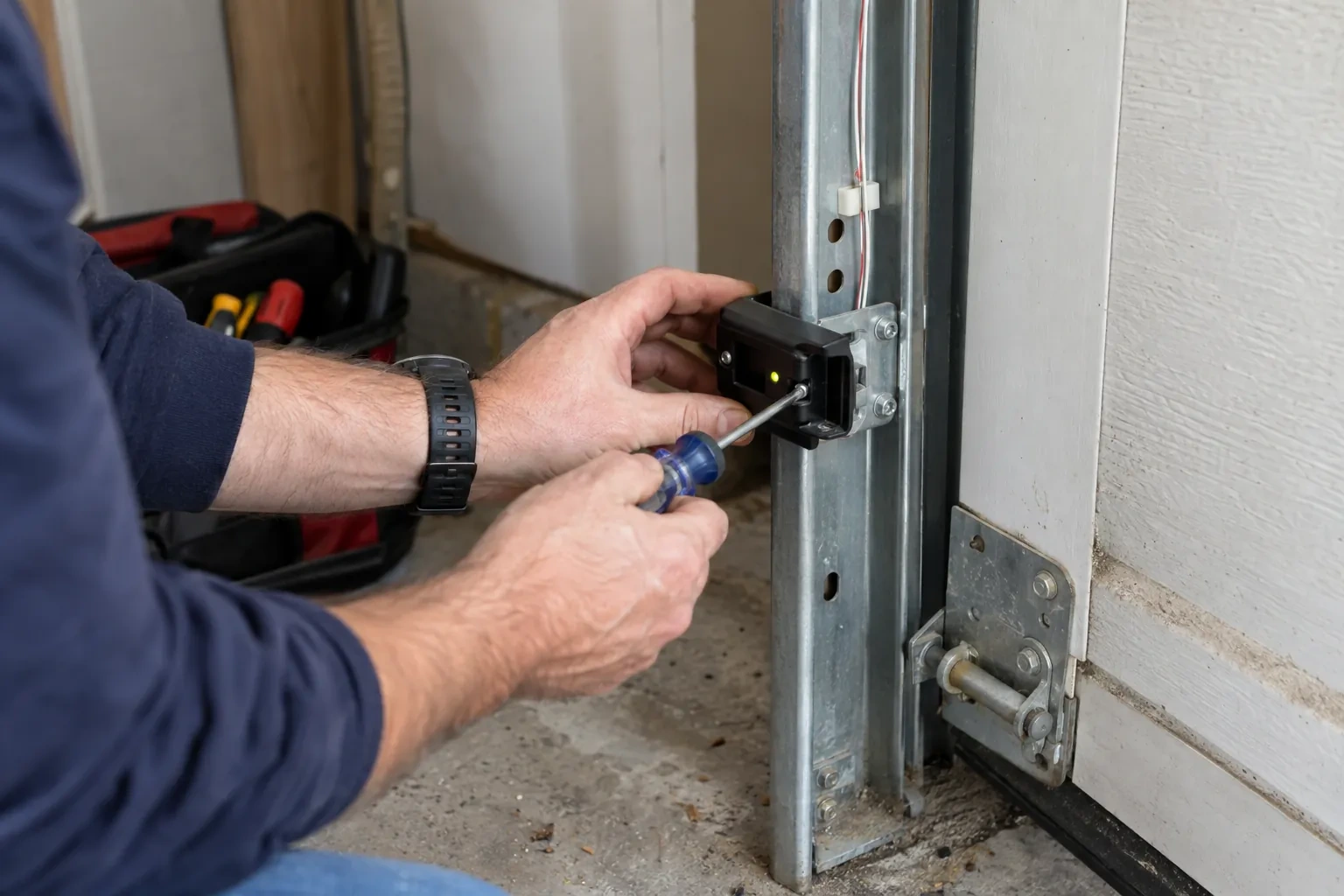
Garage door opener diagnosis is a fault-finding visit with a fixed order of tests. The technician confirms power at the ceiling receptacle, tries each control on its own, checks the safety sensors and their indicator lights, examines the drive train from motor to trolley, and reads any flash code the unit is showing. Only then is a part named, because a dozen different faults look identical from the driveway and guessing at the part costs you a second visit. When the cause is a small component, the repair is made while the technician is there; when it is not, you get a clear account of what comes next.
How the visit goesNothing. No light, no click, no hum from the unit on the ceiling. The remote is dead, the wall button is dead, the keypad is dead. It worked yesterday evening, before the storm knocked the power out for an hour and brought it back with a flicker.
Garage Door Opener Diagnosis and Repair
How the visit goes
Limits, force and the two safety tests
Finally the settings are checked against what the door actually does. Travel limits decide where the door stops at the top and how firmly it meets the floor; a limit set slightly long makes the door hit the slab, sense an obstruction and pop back open. Force settings decide how much resistance the opener tolerates before reversing, and these drift, or get turned up to hide a stiff door. Both are read, the door is run through full cycles, and the contact reversal test with a 2x4 and the beam-interruption test are performed. Any setting that only passes because force is cranked high is treated as a symptom.
Capacitor and motor work
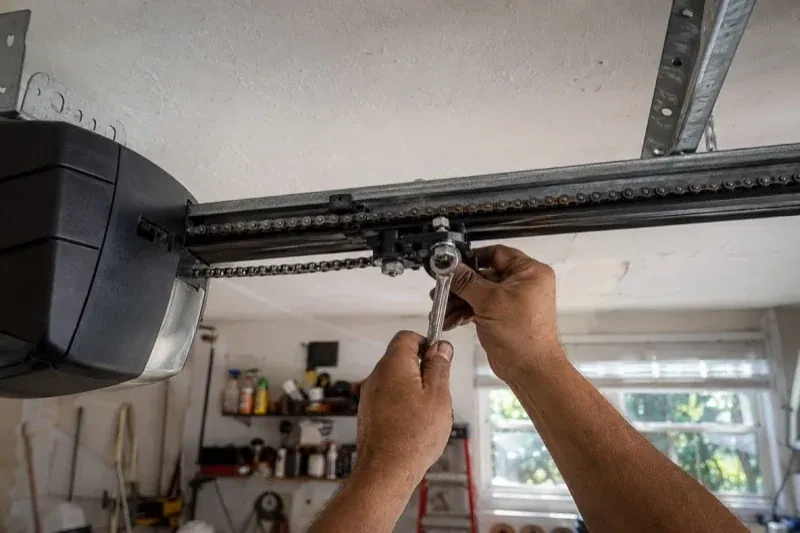
On an AC opener that hums and clicks but never turns, the start capacitor is the first suspect. It is discharged, tested and replaced with one of the same rating, a routine job that returns a dead-sounding opener to normal in many cases. If the motor still fails to turn with a good capacitor, the technician checks for a seized shaft, burnt windings or a failed thermal cut-out, and confirms the motor is not simply being stalled by a locked or bound door. A motor replacement is weighed against the age of the unit and the availability of the part, and that judgement is explained before any decision.
Knowing the red handle
The red cord hanging from the rail is the emergency release, and you now know how to use it properly. Pull it only when the door is closed, so a door that turns out to be unbalanced has nowhere to fall. The door then lifts by hand, useful during an outage. To reconnect, most units re-latch when the opener is run and the trolley meets the carriage, or when the door is lifted until it clicks. The handle should hang no higher than about 1.8 metres and clear of the car. If the door feels heavy when released, that is a spring message, not a test of strength.
Garage Door Opener Diagnosis and Repair
In the van
Photo-eye sensor pair
Bell wire and clips
Travel limit switch or RPM sensor
Wall control
Trolley and carriage
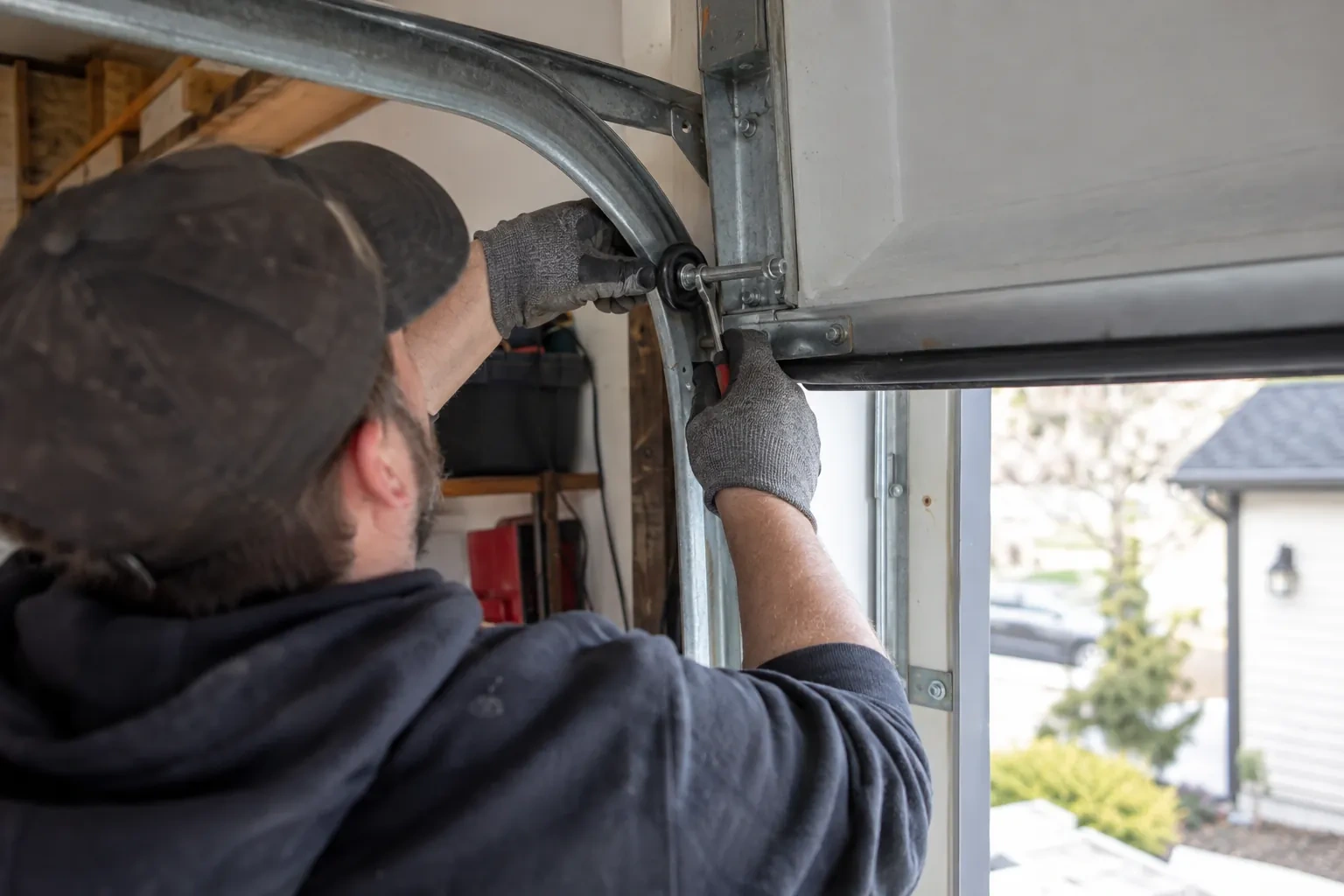
Garage Door Opener Diagnosis and Repair
What affects the quote
Condition of the mounting
A rail that has sagged, a header bracket pulling out of the wall, or ceiling angle iron that has loosened must be re-secured before the opener is set up, and that hardware work is itemized.
Sensor realignment versus replacement
Straightening a bracket and cleaning a lens is a small task. Replacing the sensor pair and running new wire along the wall and ceiling is a larger one, and the quote names which applies.
Whether the door needs work first
If the by-hand check shows a heavy or binding door, the balance, rollers or springs are corrected before the opener is judged, and that door-side work is quoted as its own item.
What to have ready
- Roughly how old is the opener, and is the model label readable?
- Can you see a gap in a spring above the door, or a loose cable?
- Did anything happen just before: a power outage, a storm, new bulbs, a bump?
Garage Door Opener Diagnosis and Repair: questions
QuestionsIs a smart, app-connected opener diagnosed any differently?
The mechanical and electrical checks are identical, since the app is just another control. What is added is the connection: whether the head unit is on the home network, whether the app reports a fault code you can read off your phone, and whether a door-position sensor or hub has lost its pairing. Because the wall control and remotes work independently of the network, a door that fails on every control is a hardware question, not a connection one.
Why does my door go back up when I try to close it?
The opener believes something is in the way. Either the photo-eye beam near the floor was broken, misaligned or blocked, or the door met more resistance than its force setting allows, often from a frozen seal, stiff rollers or a travel limit set slightly too long so the door hits the slab. The indicator light on the head unit usually tells which of the two it was, and the technician confirms it by testing rather than guessing.
Why will the door close only while I hold the wall button?
That is a built-in behaviour, not a new fault. When the sensor circuit reports a problem, most openers refuse to close from a remote but allow a constant-pressure close from the wall control, because someone standing there can see the doorway. It is a strong signal that the photo eyes or their wiring need attention, and once the sensor issue is corrected the door closes normally from every control again.
Related services
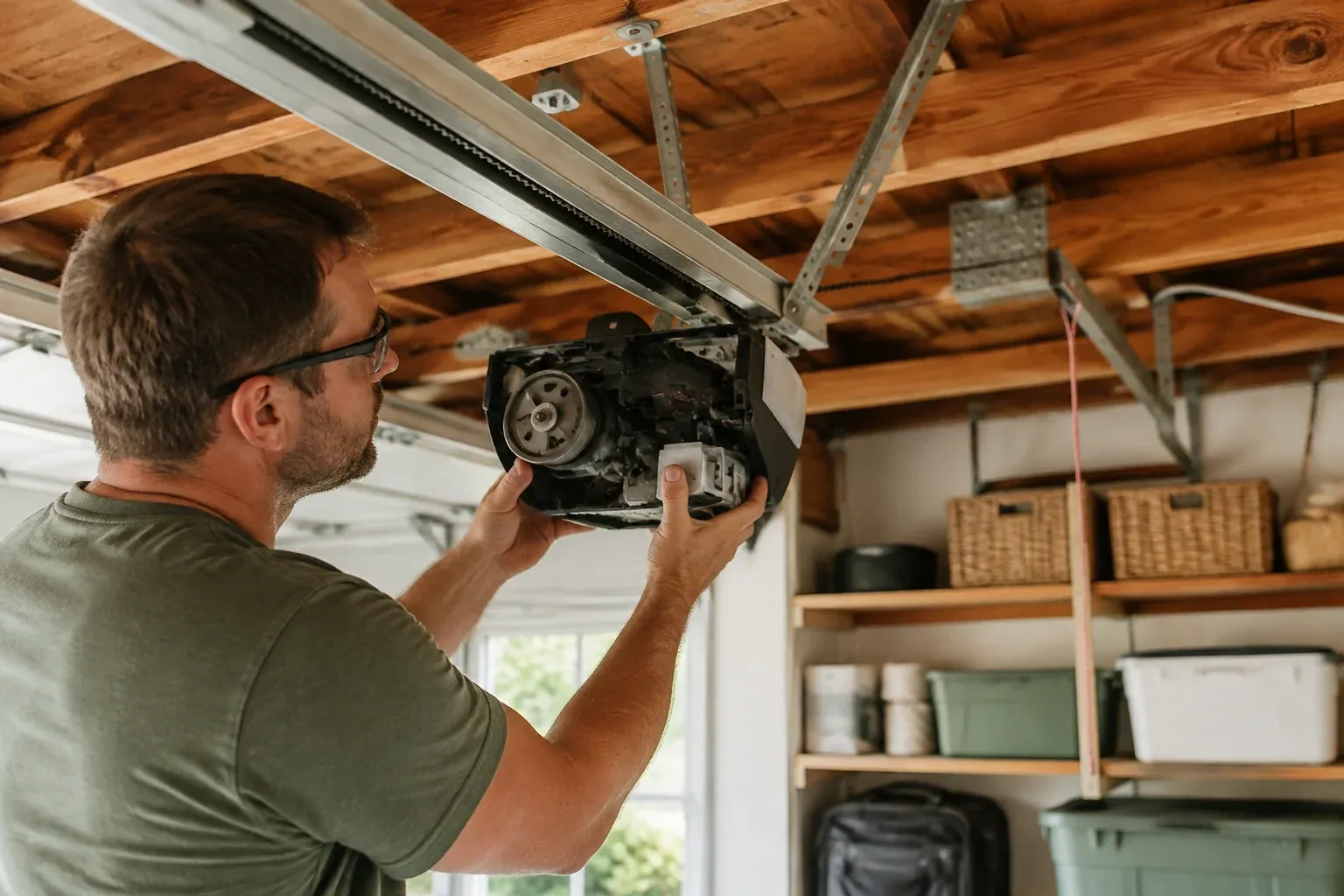
- Belt-Drive Opener RepairHalfway up, every single time, the door hesitates and there is a ratcheting sound from the motor head, then it carries on.
- Garage Door Opener ReplacementThe remotes only work from the end of the driveway now, and one of them disappeared with a set of keys last month.
- Photo-Eye Sensor Alignment or ReplacementAfter a cold night the door stays open until the garage warms up.